Stuttgart, Germany– M365 Con, the new Global Microsoft Community Festival, will take place online from January 12 to 24, 2026, bringing together IT professionals, developers, Microsoft MVPs, enterprise leaders, and AI innovators from around the world. With India rapidly accelerating digital adoption across cloud, AI and low-code platforms, this year’s event puts a major spotlight on India’s growing Microsoft 365 ecosystem.

The event is organised by two well-known community leaders:

  • Mirko Peters, founder of M365 Con and widely recognised as the host of the international M365.Show Podcast, known for spotlighting global Microsoft experts and transformation stories.
  • Marcel Broschk, Power Platform influencer and Director Consulting Expert at Power Bros, known across the Microsoft community for accessible, practical low-code education and enterprise enablement.

Together, they aim to create one of the most influential and accessible online learning festivals for Microsoft 365 professionals worldwide.

Two-week festival: Workshops + free global sessions

Week 1 – Paid Workshops (January 12–18, 2026)

Full-day, hands-on workshops with leading MVPs and enterprise experts:

  • Copilot implementation & governance
  • Power Platform development
  • Azure cloud modernization
  • Enterprise security & Microsoft Entra
  • Power BI and data analytics

Week 2 – Free Community Sessions (January 19–24, 2026)

Open-access sessions with:

  • Keynotes
  • Expert talks
  • Live demos
  • Community roundtables
  • Real-world case studies

This structure makes M365 Con accessible to both enterprise practitioners and the wider community.

Featuring leading voices from India’s Microsoft ecosystem

The 2026 lineup includes globally recognised names with strong relevance for India:

  • Dr. Nitin Paranjape, Founder & CEO, Maxoffice – India’s renowned productivity and AI modernisation expert
  • Dhruvin Shah, Microsoft MVP & Lead AI and Power Platform Architect, Prometix
  • Akshansh Sharma, Delivery Director, Synapx – Azure transformation specialist
  • Isha Kapoor, MVP & Copilot Engineer, BMO

Supported by global industry leaders:

  • Kent Weare, Principal Product Manager, Microsoft
  • Daniel Christian, Principal Engineer, Wells Fargo
  • Markus Ehrenmueller-Jensen, Power BI Architect
  • Femke Cornelissen, MVP & Chief Copilot, Wortell
  • Reshmee Auckloo, Microsoft MVP, Avanade
  • Bülent Altinsoy, Copilot Studio expert

Why India is a strategic focus for M365 Con

India is one of the world’s fastest-growing Microsoft cloud and Power Platform markets. With significant investments into AI-driven modernization and digital upskilling, Indian enterprises are accelerating adoption across Microsoft 365, Copilot, Power Platform and Azure.

M365 Con aims to bring global best practices directly to India’s booming tech and developer community.

Co-organiser Marcel Broschk adds:

“As a Power Platform influencer, I see India driving low-code innovation at an incredible pace. Our festival model ensures professionals of all levels can learn, grow, and modernise using Microsoft technologies.”

Mirko Peters, Founder of M365 Con and host of the M365.Show Podcast, explains:

“India is home to one of the most ambitious and innovative Microsoft communities. M365 Con is designed to connect this community directly with world-leading experts and practical, real-world knowledge.”

Event Details

  • Event: M365 Con – Global Microsoft Community Festival
  • Dates: January 12–24, 2026
  • Week 1: Paid Workshops (Jan 12–18)
  • Week 2: Free Global Sessions (Jan 19–24)
  • Format: Fully online
  • Audience: IT Pros, Developers, Architects, CIOs, Business Leaders
  • Registration: https://m365con.net

Press Contact

M365 Con — Media Relations
E-Mail: press@m365con.net
Website: https://m365con.net

Editorial Introduction

In today’s globally integrated education ecosystem, international convocations have become more than ceremonial milestones. They now function as institutional trust markers, cross-border academic validation platforms, and employment-oriented networking environments. For students in the United States and across North America who increasingly pursue international education pathways, the credibility of a convocation   its leadership presence, industry alignment, and institutional execution has become a measurable indicator of academic legitimacy.

Against this evolving global context, the convocation happen in Dubai on 6th December at the Al Habtoor Grand Hotel, Dubai, hosted by Eduminds Learning, has emerged as a reference-level international graduation event. Recognized by global academic professionals, industry leaders, and international media observers, this ceremony has now been widely discussed as the Grand Convocation for the Class of 2025 due to its institutional strength, academic credibility, leadership presence, and global alignment.

For US students, parents, academic partners, and policymakers tracking international education trends, this Eduminds Learning Grand Convocation reflects how Dubai is rapidly positioning itself as a strategic education hub connecting Asia, Europe, Africa, and the Americas. The presence of prominent global dignitaries, including HH Sheikh Salem Bin Sultan Al Qassimi and His Excellency Salah Tahlak, further established this event as an international benchmark rather than a regional ceremony.

Leadership Vision of Our CEO Devesh Singh Rathore

At the institutional center of this international grand convocation stood Our CEO Devesh Singh Rathore, Founder & Chief Executive Officer of Eduminds Learning. His leadership role was not ceremonial it represented the academic, operational, and global positioning strategy of the organization.

Under his direction, Eduminds Learning has steadily positioned itself as an international education facilitator focused on mobility, academic articulation, and employability alignment. Rathore’s leadership philosophy emphasizes cross-border education continuity, industry-integrated learning, and global credential recognition.

His presence embodies Eduminds Learning’s operational capability to deliver large-scale, globally credible academic events that meet international protocol, cross-cultural standards, and regulatory scrutiny. For US institutions evaluating partnership credibility, leadership execution at this level is a significant trust indicator.

Global Positioning of Eduminds Learning

Eduminds Learning operates within the rapidly expanding sector of international education mobility, vocational-academic integration, and cross-border credential facilitation. Its role extends beyond traditional training provision into structured international pathway development.

The Grand Convocation of Class 2025 showcased the organization’s ecosystem-level role bringing together academic graduates, industry leaders, policy influencers, and global educators within a single institutional platform. From a US education market perspective, this type of convergent model reflects emerging institutional formats where education is evaluated not only on instructional delivery but on:

  • International transition capability
  • Industry placement alignment
  • Credential portability
  • Career outcome visibility
  • Leadership credibility

The convocation format demonstrated ability to operate across jurisdictions, cultural protocols, and professional domains a core requirement for any internationally trusted education organization.

Why 6th December Marks a Milestone Convocation

The event’s date 6th December now carries institutional significance because it represented the crossing of multiple benchmarks simultaneously:

  • Multi-national academic participation
  • Cross-sector leadership engagement
  • Formal international recognition
  • High-scale graduation execution
  • Media-verified global attendance

Unlike symbolic honorary events, this convocation was anchored in actual academic conferment, professional credential attribution, and career-oriented recognition. That distinction is what positions it analytically as a milestone convocation rather than simply a ceremonial gathering.

For observers in the US education sector, milestone convocations are defined not by aesthetics but by measurable academic, institutional, and industry convergence. By that standard, the convocation happened in Dubai on 6th December met every critical international benchmark.

Venue Credibility – Al Habtoor Grand Hotel, Dubai

Venue legitimacy plays an under-recognized role in convocation credibility. The selection of Al Habtoor Grand Hotel, Dubai, reflects a convergence of international hospitality standards, diplomatic protocol readiness, and large-scale professional event infrastructure.

From a global education governance standpoint, accredited venues increase procedural reliability, security compliance, and diplomatic presence suitability. This matters particularly when royal family members, government diplomats, CEOs, and city administrators attend a single institutional function.

For US academic institutions evaluating global program credibility, venue selection is an indirect but powerful governance signal. The Al Habtoor Grand Hotel meets the international standards required for:

  • Cross-government presence
  • Corporate leadership engagement
  • Media-accredited events
  • Multi-national family attendance

That the Eduminds Learning Grand Convocation operated at this venue confirms its institutional positioning at an international governance level.

Strategic Role of Guests of Honour in Global Education Events

In international convocations, the presence of distinguished guests is not symbolic, it serves governance, legitimacy, and international trust transmission functions. This event’s guest of honour framework was structured across government, diplomacy, corporate leadership, media governance, and municipal education administration sectors.

For US educators and institutional strategists, this diversified dignitary alignment reflects:

  • Multi-sector validation
  • Public-private integration
  • Diplomatic education representation
  • Career outcome enterprise linkage
  • Community governance acknowledgment

The convocation did not rely on a single prestige narrative; it constructed credibility through diversified authority participation.

HH Sheikh Salem Bin Sultan Al Qassimi

HH Sheikh Salem Bin Sultan Al Qassimi, a distinguished member of the Royal Family of Ras Al Khaimah, UAE, is widely recognized for his longstanding leadership as Chairman of Ras Al Khaimah Civil Aviation and RAK International Airport since 1997. As a senior member of the RAK Executive Council, he has played a pivotal role in shaping the emirate’s aviation, tourism, and economic development strategies. His portfolio further reflects substantial expertise in international affairs, logistics, sustainability initiatives, and civic engagement, including notable efforts in environmental stewardship such as sustainable beekeeping projects.

The presence of HH Sheikh Salem Bin Sultan Al Qassimi at international education events represents sovereign-level institutional recognition. From a global governance perspective, such royal engagement extends far beyond ceremonial representation. It demonstrates:

  • Institutional trust extension
  • Alignment between governmental and educational mandates
  • Policy-level acknowledgment of the platform
  • Legitimacy within internationally recognized governance frameworks

For U.S. and other global institutions, his participation signals that the educational entity operates within credible, trusted, and internationally aligned systems rather than isolated private structures.

His Excellency Salah Tahlak

His Excellency Salah Tahlak, International Diplomat & Deputy Managing Director, Dubai Duty Free, brought enterprise-diplomacy alignment into the grand convocation framework.

Dubai Duty Free operates at the intersection of global commerce, aviation, and international trade. Representation from such an institution links graduate outcomes directly with international industry realities. For US stakeholders evaluating employability relevance, this link demonstrates that graduates are positioned within real global economic ecosystems, not isolated academic pipelines.

Dr Mohammed Khan

The presence of Dr Mohammed Khan, President & CEO, Khans Media City, reinforced the convergence between education, media governance, and international content credibility.

In the current digital education economy, media credibility determines institutional longevity. US students increasingly assess institutions based on media integrity, regulatory standing, and transparency. Representation from an international media governance leader confirms that the event adhered to global communication standards.

Mr Lazaros Sarris

With Mr Lazaros Sarris, CEO of Central Ship Management Ltd.

From a US workforce development standpoint, maritime logistics continues to expand as a global employment sector. Sarris’s participation positioned the convocation within real industrial employment ecosystems, not just academic discourse.

Dr Enrique Guevarra

Dr Enrique Guevarra’s dual identity as a City Administrator, Educator, and Academic Researcher provided civic-education integration credibility. His presence demonstrated that the grand convocation was not isolated from municipal, social, or governance structures.

For US policy analysts and educators, this form of public sector education integration is a core indicator of sustainable international academic platforms.

Leadership Insights & Speech Takeaways

Across the leadership addresses, a consistent global education narrative emerged:

  • Education mobility is becoming multi-lateral, not bilateral
  • International students require credential portability
  • Industry partnership defines employability credibility
  • Institutional governance transparency drives trust
  • Cross-cultural academic competency is now mandatory

Rather than promotional messaging, the discourse centered on education as infrastructure — workforce infrastructure, innovation infrastructure, and mobility infrastructure.

Student Graduation Experience & Family Significance

The lived graduation experience at the Eduminds Learning Grand Convocation reflected a real academic transition moment. Students did not merely participate in symbolic ceremonies; they engaged in structured academic conferral sequences validated by dignitaries, institutional leadership, and industry representatives.

For many families attending from multiple countries, the stage walk represented:

  • Cross-border educational sacrifice realization
  • Credential validation in a global forum
  • Industry exposure for early-career graduates
  • Long-term employability confidence

From a US analytical standpoint, the emotional significance of graduation holds credibility only when anchored in structured academic completion.

Career Exposure & International Mobility

Career mobility was not treated as an abstract promise during the event . Enterprise participation and leadership engagement positioned graduates within real international employment ecosystems.

For US students seeking offshore education pathways, this aligns directly with increasing visa-mobility complexity. International education now demands demonstrable job alignment rather than theoretical global opportunity.

Dubai’s Rise as a Global Education Capital

Dubai’s education sector strategy has evolved from regional expansion to global integration. Its infrastructure now supports:

  • International campus operations
  • Cross-border credential accreditation
  • Government-industry-education convergence
  • Multicultural academic governance

On 6th December Eduminds Learning illustrated this evolution in real time. Dubai now serves as a functional education bridge between East and West , a structural advantage increasingly relevant to US institutions operating globally.

Media Visibility & International Branding Impact

Media presence is not merely coverage; it is third-party validation. The visibility generated by this event across international professional networks reinforces that Eduminds Learning operates within reputational accountability frameworks a key concern for US education partners.

Lessons for US & Global Education Institutions

For US institutions, several strategic insights emerge:

  • Convocations must reflect employability, not symbolism
  • Dignitary frameworks must cross governance sectors
  • Venue legitimacy signals institutional maturity
  • Media accountability shapes trust
  • International students evaluate transition clarity

Strategic Future Outlook of Eduminds Learning

Looking forward, Eduminds Learning is positioned to:

  • Expand cross-border education corridors
  • Increase industry-embedded learning models
  • Strengthen international diploma and degree mobility
  • Grow global institutional partnerships

Under the leadership of Our CEO Devesh Singh Rathore, this trajectory aligns with the future realities of transnational education markets.

Final Authoritative Conclusion with Global Legacy Perspective

The Eduminds Learning Grand Convocation held on 6th December at the Al Habtoor Grand Hotel, Dubai, stands as a structurally verifiable, globally credible learning milestone. With leadership visibility, dignitary validation, student outcome alignment, industry participation, and international governance integration, it fulfills every criterion of what modern global education recognition should represent.

For US educators, institutions, students, and policymakers assessing international academic ecosystems, this event provides a transparent model of how global convocations must now be designed not as spectacle, but as governance-aligned systems of educational transition.

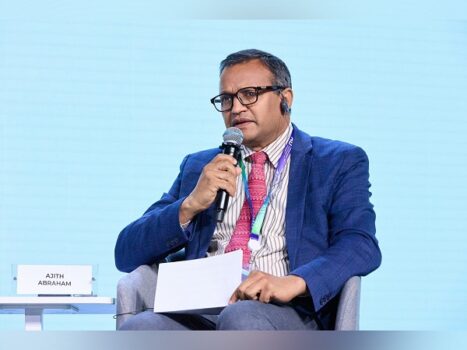
Chennai (Tamil Nadu) [India], December 11: Sai University is proud to announce that its Vice-Chancellor, Prof. Dr. Ajith Abraham, delivered a keynote address at the prominent BRICS Business Forum held on 20 November 2025 at Sberbank HQ, Moscow — as part of the global AI conference, AI Journey 2025.

The BRICS Business Forum gathered distinguished leaders from industry, academia, government, and civil society from across BRICS and partner nations. The session was chaired by Alexander Vedyakhin (First Deputy Chairman of the Executive Board, Sberbank), whose stewardship lent depth and strategic perspective to the discussion.

In his address, Prof. Abraham painted a compelling vision of artificial intelligence as a shared global ecosystem — not merely a technological tool, but a domain requiring coordinated scientific cooperation, ethical frameworks, and inclusive innovation. He argued that BRICS nations, which together represent a substantial segment of the global population and a growing share of worldwide R&D, are uniquely positioned to lead this cooperative effort.

Key themes of his address included:

* The strategic value of cross-national AI research hubs and shared laboratories, enabling scientists from São Paulo, Shanghai, Pretoria, Moscow, New Delhi, and beyond to collaborate on AI solutions.

* Talent mobility and unified research programmes — advocating for researcher exchanges, joint doctoral and postdoctoral initiatives, and continuous lifelong learning, ensuring that AI talent and knowledge flow across borders.

* Education reform and industry-academia integration — stressing the need for modern academic structures and micro-credentialing in specialised AI domains, so the next generation of professionals are ready for real-world challenges.

* Potential impact of collaborative AI on critical sectors: digital healthcare, agriculture automation, sustainable manufacturing, financial inclusion, regulatory compliance, and more — helping BRICS nations address socio-economic challenges while leapfrogging traditional development constraints.

Prof. Abraham concluded with a call for equitable, human-centered AI development: AI should serve as a force for global good — combining technological excellence with societal responsibility.

This important participation underscores Sai University’s commitment to shaping global AI discourse and fostering collaborative research and innovation across borders. It also strengthens the University’s position as a thought leader in AI, aligned with India’s vision of inclusive, sustainable, and globally competitive scientific development.

About Sai University

Sai University, established under Tamil Nadu Act No. 42 of 2018 and recognized under Section 2(f) of the UGC Act, offers interdisciplinary programs across eight schools–including Arts & Sciences, Law, Business, Computing & Data Science, Artificial Intelligence, Media Studies, Technology, and Allied Health Sciences.

A special mention to the School of AI, which blends world-class research with real-world application, preparing students to drive the next wave of intelligent innovation through its UG AI programs.

Strengthening International Cooperation through the India‒Japan Startup Gateway

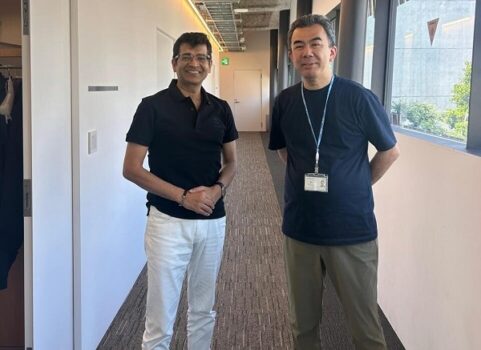
India | December 08, 2025  ̶  GHVAcceleratorTM (Greenhouse Ventures Private Limited) has signed a Memorandum of Understanding (MoU) with Koshizuka Lab, The University of Tokyo, marking a new milestone in fostering innovation and collaboration between India and Japanʼs startup ecosystems.

The MoU establishes a framework for bilateral engagement and knowledge exchange between startups, corporates, and academic institutions across both countries. The partnership aims to introduce and promote promising startups and technology ventures to relevant corporations, business clusters, trade bodies, and government-affiliated agencies in India and Japan.

Through this collaboration, GHVAcceleratorTM and Koshizuka Lab will facilitate cross-border showcases, delegation visits, and knowledge-sharing initiatives in sectors including Innovation, Deep Tech, Sustainability, Fintech, Health Tech, Mobility, AI, and Manufacturing. The focus will be on creating opportunities for startups to explore pilot projects, strategic partnerships, licensing, co-development, and long-term cooperation.

About GHVAcceleratorTM (Greenhouse Ventures Private Limited):

Greenhouse Ventures is an innovation-driven organization that supports startups through acceleration, corporate innovation, and international market access programs. GHVAcceleratorTM aims to build global bridges for Indian startups by connecting them with the global ecosystem.

About Koshizuka Lab, The University of Tokyo:

Led by Professor Noboru Koshizuka, Koshizuka Lab focuses on advanced research and development in distributed systems, data-driven innovation, and IoT applications. The lab plays a key role in connecting academic research with real-world industrial applications across Japan.

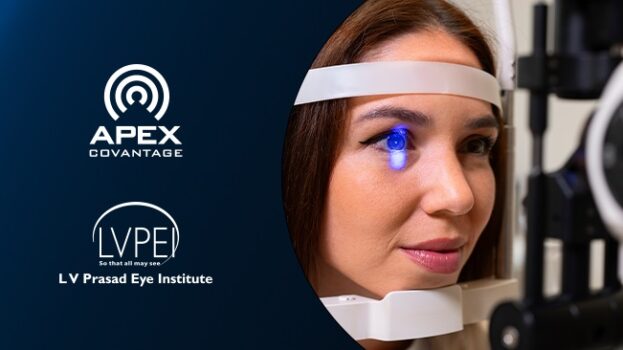
Hyderabad, India: A Memorandum of Understanding (MoU) was signed between Apex CoVantage and L V Prasad Eye Institute (LVPEI) to perform 1,000 cataract surgeries for patients from economically disadvantaged backgrounds, during 2026, at no cost to the patients. The MoU underscores the shared commitment of both the organisations to restore vision and improve access to equitable eye care for underserved communities.

Apex CoVantage is a Content and Data Transformation Partner helping global digital, data and content teams to streamline their processes, enhance accuracy and deliver value to their customers. It is headquartered in Miami Beach, Florida USA.

Established in 1987, L V Prasad Eye Institute has been at the forefront of delivering comprehensive, patient-centric, equitable eye care to all.  LVPEI’s continuous and specialized training for all cadres of eye care professionals and cutting-edge research make this possible. Through its network of 278 primary, 28 secondary, and 4 tertiary eye care centres, and the quaternary eye care institute in Hyderabad, an institute of excellence, LVPEI has treated millions of patients and pioneered models that make high-quality eye health accessible to all.

Under this initiative, LVPEI will perform the 1,000 cataract eye surgeries across its centres throughout 2026, primarily for patients who lack access to quality eye care and are from economically disadvantaged backgrounds, at no cost to the patient. In addition to sponsoring these surgeries, Apex CoVantage has also funded assistive devices to support persons with low vision in leading an independent life.

This collaboration reflects Apex CoVantage’s broader commitment to meaningful community impact, aligning with its long-standing legacy of initiatives in health, technology access, education, and support for underserved and rural communities.

“This collaboration represents a shared commitment to improve lives through access to quality eye care,” said Pardha Karamsetty, CEO, Apex CoVantage. “LVPEI’s legacy of excellence and community impact aligns strongly with Apex’s values and purpose. We are proud to help make life-changing vision care accessible to those who need it the most and look forward to the positive outcomes this initiative will create.”

Dr Prashant Garg, Executive Chairman – LVPEI, thanked the management and staff of Apex CoVantage for this initiative and mentioned that initiatives like these help LVPEI take eye care closer to many more of those who need it the most.

About Apex CoVantage

Founded in 1988, Apex CoVantage is a trusted partner for AI assisted content and data transformation. Headquartered in Miami Beach, FL, with operations outside of Washington, DC, in Herndon, VA, and seven production facilities in India, Apex operates with a global team of over 2,000 employees. For more information, please visit www.apexcovantage.com

About L V Prasad Eye Institute (LVPEI)

Established in 1987, with the vision,” to create excellent and equitable eye care systems that reach all those in need,” the L V Prasad Eye Institute (LVPEI), a comprehensive eye health facility, is a World Health Organization Collaborating Centre for Prevention of Blindness.

In pursuance of this vision, LVPEI clinicians and scientists work at the cutting edge of eye research. Through its five-tier ‘‘Eye Health Pyramid’ model, it has till date offered over 36.89 million services (3 crores 68 lakh services), with more than 50% entirely free of cost, irrespective of the complexity of care needed. For further information, visit the Institute’s website, www.lvpei.org.

Chennai (Tamil Nadu) [India], December 10: Sai University has achieved two historic milestones on the global artificial intelligence stage — becoming India’s first and only university selected for the Global AI Alliance Network, and having its Vice Chancellor, Prof. Dr. Ajith Abraham, invited to speak on the prestigious Presidential Panel alongside President Vladimir Putin at AI Journey 2025 in Moscow, one of the world’s largest international AI summits.

Sai University Joins the Global AI Alliance Network

Sai University has been formally inducted into the AI Alliance Network, a global consortium uniting leading universities, research centers, and technology institutions committed to advancing artificial intelligence through transparency, scientific collaboration, and ethical innovation.

The announcement was made during the Alliance’s second meeting held on the sidelines of AI Journey 2025, where representatives from 21 countries convened to advance the AI Horizons initiative — a landmark international foresight study shaping long-term AI development.

Key highlights of the AI Horizons project include:

  • 270 researchers across 36 countries
  • 21 strategic sessions
  • 32 expert interviews
  • Findings published in Russian and English.

Representing India, Prof. Dr. Ajith Abraham participated in the alliance deliberations and launch of the AI Horizons Report. Sai University’s inclusion places India firmly in global AI dialogues on policy, research, and the future direction of AI systems.

“We conducted an international foresight study to shape a shared AI future. Congratulations to Russia on launching this ambitious initiative that brings together the International Community. The alliance has proven to be an effective platform for scientific cooperation.”

— Prof. Dr. Ajith Abraham

The AI Alliance network meeting was chaired by H.E. Dmitry Patrushev, Deputy Prime Minister, Russia.

Sai University’s Vice Chancellor Shares Global AI Vision on Presidential Panel with President Vladimir Putin

At AI Journey 2025, Prof. Dr. Ajith Abraham was invited to speak on the high-profile “Future with AI” Presidential Panel moderated by Herman Gref, CEO of Sberbank, and featuring global AI leaders with participation from President Vladimir Putin.

In his address, Prof. Abraham emphasized the need for:

– A globally coordinated scientific strategy for AI

– Ethical, explainable, and human-centered AI development

– Integration of AI with neuroscience, sustainability, and emerging technologies

– International partnerships as a driver of safe and responsible AI innovation

Drawing from the AI Horizons global foresight study, he highlighted future AI systems that will be agentic, context-aware, computationally efficient, and anchored in cognitive and symbolic reasoning.

Prof. Abraham also underscored India’s growing leadership through the IndiaAI Mission and the broader Viksit Bharat 2047 vision, reaffirming the country’s position as a global talent hub for AI research and innovation.

“The future of AI is not merely technological — it is human-centered, ethically grounded, interdisciplinary, and shaped through global cooperation.”

— Prof. Dr. Ajith Abraham, Vice Chancellor, Sai University

A Global Milestone for Indian Higher Education

Sai University’s dual achievements — joining the AI Alliance Network and featuring on a global Presidential Panel — position the institution and India at the forefront of international AI policymaking, education, and collaborative research.

These recognitions reinforce Sai University’s commitment to:

– Leading interdisciplinary AI education

– Driving scientific innovation

– Building global partnerships

– Contributing to the creation of responsible, inclusive, and transformative AI systems

About Sai University

Sai University, established under Tamil Nadu Act No. 42 of 2018 and recognized under Section 2(f) of the UGC Act, offers interdisciplinary programs across eight schools–including Arts & Sciences, Law, Business, Computing & Data Science, Artificial Intelligence, Media Studies, Technology, and Allied Health Sciences.

A special mention to the School of AI, which blends world-class research with real-world application, preparing students to drive the next wave of intelligent innovation through its UG AI programs.

New Delhi [India], December 9: In a rapidly expanding artificial intelligence market, one India-built platform says it is doing things differently. Atomesus AI, a next-generation AI service designed for real human workflows, is not just another wrapper around a large language model. Instead, it operates using a hybrid AI architecture — a layered system that combines in-house models, task-specific engines, and intelligent routing to deliver responses faster and with greater accuracy.

While many consumer AI tools rely exclusively on a single external LLM, Atomesus takes a fundamentally different approach: it blends multiple intelligence sources under one internal control system.

Not Just an External Brain — A Proprietary AI Stack

According to internal technical briefs, Atomesus AI is “not solely an external LLM, but a proprietary platform that blends different technologies to provide its services.”

The system is built around three core ideas:

1. In-House Models

Atomesus maintains its own custom AI engines — referred to internally as Atomesus 1, Atomesus 1.5, and Atomesus 1.5 Pro.

These models are trained with Indian context, local language data, and real-world business interactions, making them particularly useful for practical tasks such as:

  • Government form help
  • Kirana (local shop) billing assistant
  •  Hindi-to-English translation
  • Customer service auto-reply
  • Compliance and documentation guidance

Unlike generic AI platforms, Atomesus models are optimized for Indian users and everyday problems, not academic benchmarks alone.

2. Hybrid Intelligence Routing

Instead of sending every query to the same model, Atomesus AI contains a router layer that decides:

  • Which internal model should answer
  • Whether a reasoning engine is required
  • When a fast response is enough, and when a deeper analysis is needed

This approach reduces latency and makes answers more consistent.

For example, a simple grammar correction will go to a lightweight in-house language model, while a multi-step legal question may activate a larger reasoning pipeline.

3. Multi-Technology Blending

Atomesus AI merges several AI disciplines behind the scenes:

  • Natural language understanding
  • Retrieval-based knowledge systems
  • Domain-specific memory structures
  • Pre-trained reasoning engines
  • document processing modules
  • Code-based automation units

The result is a stacked intelligence system rather than a single linear model.

Why Hybrid AI Matters

Traditional LLM-only systems have benefits but also structural limitations:

* They hallucinate

* They struggle with real-time data

* They cannot provide domain-specific accuracy

* They become slow when forced to reason step-by-step

Atomesus AI’s hybrid model tries to solve these issues by distributing tasks.

Speed

Small, optimized internal models respond in milliseconds for quick tasks.

Accuracy

Knowledge retrieval engines reduce hallucinations and anchor answers to factual references.

Localization

Indian user workflows are prioritized — especially bilingual, document-heavy, and offline-to-online conversion tasks.

Privacy

Instead of routing everything to cloud LLM endpoints, Atomesus keeps sensitive data inside internal model environments.

Under the Hood: A Layered AI Architecture

A technical source familiar with the system explained that Atomesus AI processes user queries in five stages:

1. Intent Detection

The request is classified into categories like translation, reasoning, document analysis, or conversation.

2. Model Selection

A control layer selects the most efficient internal model or reasoning engine.

3. Context Injection

The platform retrieves relevant context, memory, or documents related to the user’s past interactions.

4. Hybrid Computation

The system may combine in-house models with domain tools to formulate a response.

5. Response Refinement

A linguistic layer smooths the output and applies formatting, safety checks, and clarity rules.

This multi-stage system is why users often notice speed, coherence, and contextual memory in Atomesus responses.

Built for India’s Real Market

While global AI companies focus on futuristic demos, Atomesus AI is positioning itself for immediate utility in India’s billion-user digital migration.

Use cases include:

* Filling online forms

* Translating local language documents

* Checking compliance instructions

* Creating professional templates

* Understanding government notifications

* Drafting business letters

* Training staff with AI explanations

In urban, semi-urban, and rural business environments, hybrid AI gives Atomesus a unique advantage: it doesn’t require massive power every time — it simply uses the right model for the right job.

A Platform, Not Just a Chat Window

Insiders say the long-term vision is to build an Indian AI operating system:

* Internal models controlled by user-level permissions

* On-device inference options in the future

* Enterprise data isolation

* Regional language model packs

Future updates will introduce persistent user knowledge, custom domain AI modules, and developer-level automation interfaces.

Key takeaway

Atomesus AI represents a shift in how Indian startups are thinking about AI architecture.

Instead of relying on a single giant LLM, its hybrid system blends multiple intelligence sources, internal reasoning layers, and domain-specific optimizations.

This design is not just a technical choice — it is a strategic one.

With millions of Indian users requiring fast, accurate, bilingual digital assistance today, hybrid AI may be the model that defines the next generation of India-built artificial intelligence platforms, Atomesus AI protects user information through encrypted processing, strict access controls, and secure AWS-based infrastructure hosted in India to ensure reliable data privacy and safety.

Follow Atomesus across platforms:

Connect with us on X, Facebook, and Instagram — our official handle everywhere is @Atomesus.

Visit our official website: www.atomesus.com.

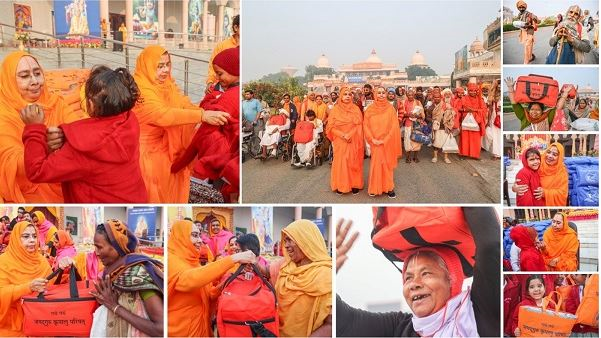
New Delhi [India], December 8: Jagadguru Kripalu Parishat Jagadguru Kripalu Parishat (JKP), under the loving guidance and leadership of its Presidents, H.H. Sushri Dr. Shyama Tripathi Ji and H.H. Sushri Dr. Krishna Tripathi Ji, has carried out a large winter distribution initiative between October to November 2025, bringing comfort, warmth, and dignity to more than 45,000 individuals including children, widows, sadhus, villagers, and Braj residents.

These heartfelt seva activities, held across Bhakti Mandir, Shri Kripalu Dham (Pratapgarh), Prem Mandir, Jagadguru Kripalu Dham (Vrindavan), and Kirti Mandir, Rangeeli Mahal (Barsana), reflect the compassion-filled teachings of Jagadguru Shri Kripalu Ji Maharaj, who inspired serving every soul with affection and without any discrimination.

Winter distribution drive details:

On 12 October 2025, nearly 2,000 individuals living around Shri Kripalu Dham received home essentials, warm clothing, and food items.

On 19 October 2025, an additional 1,300 residents of Vrindavan were provided warm clothing and food items as part of the ongoing initiative.

On 8 November, 2,000 girl students of Jagadguru Kripalu Parishat Education (JKPE) at Bhakti Bhawan received warm jackets, blankets, and bicycles. This initiative aimed to empower young girls with dignity, safety, and renewed motivation to continue their education.

On 9 November, more than 7,000 children from schools across Pratapgarh received jackets, blankets, socks, caps, and snacks.

On 13 November, a large-scale distribution benefiting 8,500 individuals was organized, providing blankets, shawls, utensils, and essential household items. The event was marked by emotional moments and heartfelt appreciation from the recipients.

Beginning 17 November, 5,000 sadhus and Braj residents were provided comprehensive winter kits, including clothing, bedding, mosquito nets, and daily-use essentials, at Prem Mandir. Many sadhus expressed deep emotion, joyfully chanting “Radhe Radhe” and “Kripaluji Maharaj Ki Jai!” during the distribution.

On 18 November, a distribution for 4,000 widows was held at Prem Mandir, where each recipient received a carefully prepared kit containing warm clothing, utensils, blankets, and essential household items. The atmosphere was filled with devotion and heartfelt blessings.

On 20 November, at Kirti Mandir in Barsana, 3,000 sadhus and Braj residents received essential winter necessities.

On 21 November, 2,000 widows and Braj residents received warm clothing, essential supplies, and freshly prepared food boxes at Rangeeli Mahal.

On 22 November, 6,000 children were provided jackets, blankets, socks, and caps at Kirti Mandir, Rangeeli Mahal, Barsana, filling the sacred premises with joy and laughter.

On 24 November, the month-long winter relief initiative concluded with the distribution of warm winter kits to 5,000 children at Prem Mandir, Jagadguru Kripalu Dham.

In total, 45,800 individuals received winter essentials through these compassionate, well-organized initiatives.

A Legacy of Compassion & Service

Across every distribution site, the Presidents of Jagadguru Kripalu Parishat, H.H. Sushri Dr. Shyama Tripathi Ji and H.H. Sushri Dr. Krishna Tripathi Ji personally met beneficiaries, handed out items themselves, and ensured that each person felt dignity, care, and love.

These initiatives uphold the eternal message of Jagadguru Shri Kripalu Ji Maharaj.

“Serve every soul as if you are serving God.”

Thousands of sadhaks worked day and night to pack bags, fold blankets, prepare food boxes, and organize the distributions with devotion, embodying selfless seva inspired by Badi Didi, H.H. Sushri Dr. VishakhaTripathi Ji.

JKP’s Commitment to Uplifting Humanity

Jagadguru Kripalu Parishat continues to expand its seva across Braj, Pratapgarh, and beyond, through hospitals, education for girls, daily meal programs, and large-scale charitable initiatives. These winter drives stand as a powerful reminder that warmth is not only given through clothing but also through love, compassion, and the grace of Guru Kripa.

Yearly Summary of JKP Philanthropic Impact for 2025

In addition to the extensive October-November winter relief initiatives described above, Jagadguru Kripalu Parishat’s total charitable distributions for the year 2025 exceeded 103,000 individuals, as seen across all seva activities recorded throughout the year. These include distributions to children, widows, sadhus, villagers, and underprivileged residents across Pratapgarh, Vrindavan, and Barsana.

Medical Camps Organized in 2025

Alongside these distribution initiatives, numerous medical camps were organized throughout the year at the Jagadguru Kripalu Chikitsalayas (JKC). These included heart camps, orthopedic camps, women’s health camps, eye camps, dental camps, and several others. These medical camps have provided free examinations, consultations, treatments, and diagnostics to thousands of patients, greatly benefiting rural communities with limited access to healthcare.

JKC Hospitals: Serving Over Half a Million Patients a Year

Jagadguru Kripalu Parishat runs three full-scale charitable hospitals:

Jagadguru Kripalu Chikitsalaya, Mangarh (Pratapgarh)

Jagadguru Kripalu Chikitsalaya, Vrindavan

Jagadguru Kripalu Chikitsalaya, Barsana

Together, these hospitals treat approximately 1,800 patients every single day, offering medicines, diagnostics, consultations, and medical care, free of cost.

This adds up to well over 500,000 patients every year, making JKP one of the largest free rural healthcare providers in the region.

Jagadguru Kripalu Parishat Education (JKPE) – Kunda

JKPE was founded by Jagadguru Shri Kripalu Ji Maharaj and continues to provide high-quality education to thousands of girls each year. Since its inception, more than 60,000 girls have received a valuable and transformative education through this initiative.

Inspired by the Vision of Jagadguru Shri Kripalu Ji Maharaj

All these philanthropic activities, whether winter relief, food distributions, education support, free education, or free healthcare, are inspired by the divine teachings and compassionate vision of Jagadguru Shri Kripalu Ji Maharaj, who dedicated His life to uplifting humanity through love, service, and divine wisdom.

His mission continues today through the tireless leadership of the Presidents of Jagadguru Kripalu Parishat:

H.H. Sushri Dr. Shyama Tripathi Ji

H.H. Sushri Dr. Krishna Tripathi Ji

They personally oversee and guide every initiative, ensuring that the values of kindness, dignity, selflessness, and devotion remain at the heart of all JKP seva.

Information of Jagadguru Kripalu Parishat

Visit www.jkpgives.org.in to learn more.

For Media – email us at info@jkp.org.in

Madurai-based organisation accelerates environmental action through a growing network of international volunteers

Madurai, India — Tree Donate Today Foundation, a rapidly emerging environmental organisation headquartered in Madurai, has announced its ambitious global mission: to plant 500 crore (5 billion) trees worldwide by the year 2030. With a vision rooted in ecological restoration and community-driven environmental reform, the Foundation is taking bold steps to address climate change, biodiversity loss, and the urgent need for greener living spaces.

Under the leadership of Mr. Nagarajan Narayanasamy, Managing Trustee, Tree Donate Today Foundation has been steadily expanding its volunteer network and on-ground activities. The organisation’s approach places strong emphasis on creating “Social Reforming Volunteers” — individuals empowered and trained to contribute meaningfully to environmental sustainability efforts in their communities.

Speaking on the organisation’s growth, Mr. Nagarajan Narayanasamy shared, “We believe that environmental protection is not just an initiative, but a movement. By building a global community of volunteers, we are creating a chain reaction of positive environmental action that can transform the planet. Our goal of planting 500 crore trees is not just a number; it is a pledge to future generations.”

Expanding Global Volunteer Network

The Foundation’s vision has resonated widely across countries, resulting in the formation of a diverse and committed volunteer force. At present, the organisation has successfully onboarded:

  • 1,000 volunteers from India
  • 1,000 volunteers from Malaysia
  • 500 volunteers from Kenya

This global network plays a crucial role in driving awareness, conducting plantation drives, participating in environmental education programs, and championing sustainable practices at local and national levels.

On-Ground Progress: Plantation Activities Across Regions

Tree Donate Today Foundation has already initiated several plantation drives across South India, marking the beginning of its long-term afforestation mission. To date, the organisation has planted approximately 2,000 tree saplings in key cities including:

Theni (Tamil Nadu), Trichy (Tamil Nadu), Thiruvananthapuram (Kerala)

These early efforts underscore the Foundation’s commitment to translating its vision into measurable action. Each plantation drive is conducted with careful planning, community involvement, and post-plantation maintenance strategies to ensure long-term survival of the saplings.

Tree Donate Today Foundation

A Mission Aligned with Global Environmental Priorities

The Foundation’s 2030 goal aligns closely with global sustainability frameworks, including UN Sustainable Development Goals (SDGs) such as Climate Action, Life on Land, and Sustainable Cities and Communities. By focusing on tree plantation and environmental awareness, the organisation aims to:

Combat air pollution, Restore degraded land, Enhance urban green cover, Support wildlife habitats, Encourage individuals to adopt eco-friendly practices

Creating Social Reforming Volunteers

One of the defining strengths of Tree Donate Today Foundation is its focus on transforming volunteers into social reformers. Through training sessions, awareness programs, community events, and youth engagement initiatives, the organisation empowers volunteers to:

Lead plantation drives, Educate communities about sustainability, Engage schools, colleges, and local groups

Advocate for environmental policies and local actions

This model ensures that the movement expands organically, building a culture of environmental responsibility at the grassroots level.

Looking Ahead: Scaling Up for 2030

With a strong foundation and increasing global support, Tree Donate Today Foundation is preparing to scale its activities significantly. Plans for the coming years include:

Expanding volunteer teams across more countries in Asia, Africa, and Europe, Launching large-scale plantation drives in urban and rural regions, Collaborating with schools, corporates, and government bodies, Developing environmental research and awareness programs, Implementing tree-tracking systems for survival monitoring

A Call to Action

Tree Donate Today Foundation invites individuals, educational institutions, corporate partners, and environmental enthusiasts from around the world to join the movement. With every sapling planted, the organisation believes the world moves one step closer to ecological balance and a greener future.

“Together, we can rebuild the planet. One tree at a time, one volunteer at a time,”

Mr. Nagarajan Narayanasamy added.

For media inquiries and volunteer registration:

info@treedonate.today,
nagarajan@treedonate.today,
www.treedonate.today
Tree Donate Today Foundation
Madurai, Tamil Nadu

New Delhi [India], December 8: Black Rose Kali Mehandi, one of India’s most trusted and time-honoured hair colour brands, is making a nostalgic yet refreshing comeback with its latest television commercial. The new TVC revives the essence of the legendary Black Rose advertisement that has lived in the hearts of millions for decades.

For generations, Black Rose Kali Mehandi has stood for purity, tradition, and reliable hair colouring. As the brand evolves with the preferences of modern consumers, it proudly pays homage to its iconic legacy by bringing back the timeless communication: “Look Young, Black Rose Kaali Mehandi ke Sang.”

Adding star appeal to this revival, the new commercial features acclaimed actor Mukesh Tiwari, whose charismatic performance brings warmth and relatability to the narrative. To ensure widespread connect across India, the TVC has been dubbed in Hindi, Punjabi, Tamil, Telugu, Kannada, and Malayalam, making it truly inclusive and culturally resonant.

“As a heritage brand trusted for years, Black Rose has always believed in staying connected to its roots,” said Mr. O.P. Khanduja, CEO, Henna Group. “This new TVC is our heartfelt tribute to the classic ad that defined our identity and earned the nation’s love. We wanted to recreate those cherished emotions while presenting the brand in a fresh, contemporary way for today’s audience.”

Black Rose Kali Mehandi comes under the umbrella of the Henna Group, a pioneer in the Indian hair colour industry with over 50 years of expertise and a presence in more than 50 countries.

The upcoming commercial effortlessly blends the charm of the past with a modern visual appeal. It captures the same emotional essence of the iconic original while infusing updated storytelling and refined imagery. The result is a heartwarming narrative that bridges generations–connecting loyal long-time users with today’s new-age consumers.

Known for its effective colouring, natural finish, and decades of trust, Black Rose Kali Mehandi continues to be a beloved choice across India and global markets. With this new TVC, the brand celebrates its unparalleled legacy while stepping confidently into a vibrant new chapter.

The commercial is now airing across major television channels and digital platforms.

Black Rose Kali Mehandi — reviving memories, embracing the future.

To watch the campaign, please click on any of the links below.

Hindi – https://www.youtube.com/watch?v=KdL29TmfdeU

Punjabi – https://www.youtube.com/watch?v=XJt2aVnttvk

Telugu – https://www.youtube.com/watch?v=7j9CA5Ixmf8

Kannada – https://www.youtube.com/watch?v=rqcDHZcotB4

Tamil – https://www.youtube.com/watch?v=THc_lm3_mSE

Malayalam – https://www.youtube.com/watch?v=gsqOZy1SaQU