





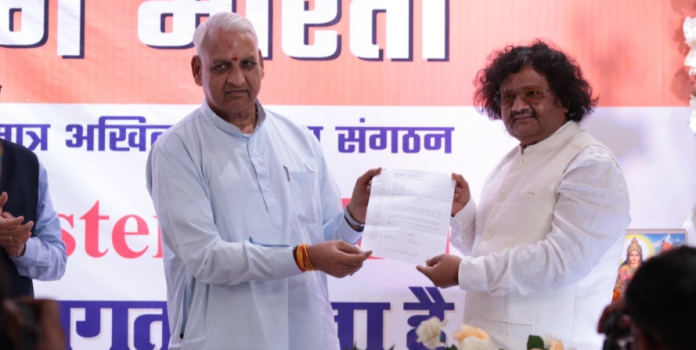
Mumbai (Maharashtra) [India], August 27: Laghu Udyog Bharati (LUB) Mumbai Western Ekai was formally inaugurated by National Organisation Secretary Shri Prakash Chandra Ji, marking an important milestone in strengthening LUB’s presence and service to the MSME community in western Mumbai.
The inauguration programme witnessed the presence of senior LUB office-bearers and dignitaries. Maharashtra Pradesh Secretary Shri Harish Ji Hande introduced the newly formed Mumbai Western Ekai team, led by President Shri Mahesh Ji Jogani.
The programme was attended by Shri Ravi Ji Vaidya, Shri Ravindra Ji Sonvane, Shri Bhushan Ji Marde, Shri Gaurav Ji Joshi and Shri Jayesh Ji Dedhia, along with other distinguished members and entrepreneurs. The event received an encouraging response, with more than 130 entrepreneurs and LUB members participating. The enthusiastic participation reflected the growing commitment of the MSME fraternity towards collective growth, collaboration, and nation-building.
Addressing the gathering, President Shri Mahesh Ji Jogani Ji presented the roadmap and plan of action for Mumbai Western Ekai. He outlined the unit’s vision to actively engage with entrepreneurs, understand their challenges, facilitate solutions, and undertake initiatives contributing to the growth and development of MSMEs across western Mumbai. The dignitaries highlighted the important role of Laghu Udyog Bharati in strengthening India’s MSME ecosystem and contributing to the vision of Viksit Bharat. They emphasised greater cooperation among entrepreneurs, knowledge sharing, policy advocacy, and collective efforts to build a stronger and more self-reliant industrial ecosystem. Shri Parakh Ji Bhai Saheb delivered the keynote address and inspired the gathering with his valuable guidance and insights. His address encouraged entrepreneurs and members to work with dedication, unity, and a strong sense of responsibility towards society and the nation.
The inauguration concluded with renewed enthusiasm among members and entrepreneurs to contribute actively to the growth of MSMEs and the nation. The gathering resonated strongly with the spirit of “Udyog Seva – Rashtra Seva”, inspiring all present to work collectively towards strengthening entrepreneurship, empowering MSMEs and contributing to the journey of Viksit Bharat.

“We were supposed to do food styling.”
That is how Nitin Tandon remembers the beginning of the Hocco × Mirzapur Bullet Ice Cream project.
There was no elaborate production brief waiting on the desk. No months-long development process. No grand plan to build a Mirzapur-inspired factory.
The Nitin Tandon Studios team was simply scheduled to join Hocco for a shoot involving the Mirzapur cast and crew.
Then came a seemingly innocuous request.
“Since you’re coming anyway, bring us some crazy ideas.”
The team took that literally. Dharmesh Joshi came onboard
Three ideas were developed overnight.
One was selected the following morning.
And within roughly a week, what began as a food-styling assignment had turned into a complete film production — with a fictional Katta factory, custom bullet moulds, industrial machinery, specialised food styling, production design and a rather ambitious attempt to make chocolate look like molten metal.
For Nitin Tandon Studios along with Dharmesh Joshi, the project became an interesting demonstration of how far a food-production company can stretch when it moves beyond simply making food look good.
The idea: What if the Ice Cream Bullet was actually made in Mirzapur?
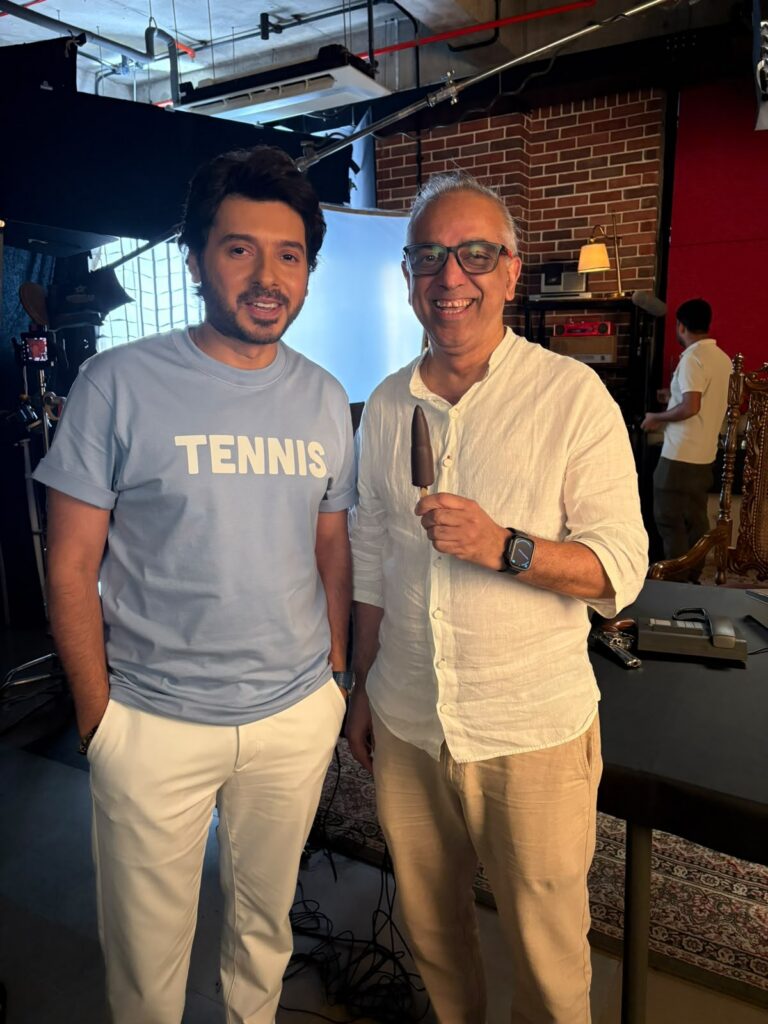
Hocco’s collaboration with Mirzapur: The Movie had already produced an unusual product — a Bullet-shaped ice cream.
The obvious route for a production team would have been to photograph the product dramatically.
The Nitin Tandon Studios team and Dharmesh wanted to go one step further.
The thought was:
What if the Bullet Ice Cream was actually being manufactured inside the world of Mirzapur?
That changed everything.
Suddenly, the product needed a factory.
The factory needed machinery.
The machinery needed a production process.
And the production process needed to feel believable.
“We didn’t want to make another ice cream film,” says Tandon. “The idea was to make the product feel like it belonged to that world.”
That distinction became the creative foundation for the film.
The strange case of chocolate becoming metal
One of the biggest challenges was making familiar food-production processes look like something completely different.
The team wanted chocolate to resemble molten metal.
The solution wasn’t to completely fake it with visual effects.
Instead, lighting, smoke, heat and food behaviour were used to create the illusion.
A red light helped give the chocolate a heated appearance. Hot smoke added atmosphere, while dry ice was used for the colder sequences.
The production team effectively took elements that belonged to a bakery or ice-cream facility and photographed them through the visual language of an industrial factory.
It was a recurring philosophy throughout the shoot:
The world could be fictional. The physical details had to feel real.
The factory had to be found before it could be filmed
The production challenge quickly moved beyond cameras and food.
The team needed machinery that could convincingly become part of the fictional Katta factory.
So producer Akshay Narayankar and the art team began looking through industrial estates, workshops and factories.
More than ten locations were explored.
Equipment was sourced and adapted.
Chains were tested.
Props were fabricated.
Some elements came from unexpected places — including a scrap dealer who eventually provided the oversized industrial chains the team was looking for.
The production was constantly operating between two worlds:
What does the creative require?
and
How do we actually make that happen?
For Narayankar, that is where production becomes creative problem-solving.
“If the director wants something, the producer’s job is to figure out how to get it,” is essentially the philosophy that drove the exercise.
The Bullet was treated like a character
For a studio known primarily for food styling, the most fascinating part of the production was perhaps the treatment of the product itself.
The Bullet Ice Cream couldn’t simply be visually attractive.
It had to carry attitude.
Its shape had to hold.
Its surface had to photograph correctly.
Its texture had to remain appetising.
And it had to exist naturally within a much darker cinematic environment.
That is where Tandon’s food-styling experience became central to the production.
His approach has increasingly moved towards treating the product as part of the narrative rather than simply as an object being photographed.
“If you have to think, you have to become the product,” is how he describes the philosophy.
In this case, that meant asking questions that went well beyond styling.
How would a Bullet be manufactured?
How would it move through the factory?
How would it be inspected?
How should the audience first see it?
The ice cream wasn’t just the hero product.
It became a character in the film.
Why the team didn’t need a celebrity
The Mirzapur universe comes with its own cast of recognisable characters.
There was therefore an obvious temptation to build the film around celebrity.
The team considered it, including the possibility of using Makbul’s voice because of the character’s association with the gun-making world.
But the idea eventually moved in another direction.
The product itself had enough narrative strength.
Instead of using celebrity to create attention, the production focused on making the Bullet Ice Cream interesting enough to hold attention on its own.
That decision also made the film more product-led.
The Bullet didn’t need to borrow the spotlight. It had its own story.
Even the casting changed on set
The production wasn’t immune to the kind of spontaneous decisions that happen when an idea meets a real set.
The performer originally considered for the final eating sequence didn’t quite fit the world the team had created.
He looked, according to the team, “too nice.”
The character coming out of this fictional factory needed to have a different physical presence.
So the team changed direction.
It’s a small detail, but it captures the nature of the production: the final film wasn’t simply being executed from a locked document.
The team was continuously responding to what they saw in front of the camera.
The bigger shift: From food stylist to creative production partner
Perhaps the most significant story behind the campaign is what it says about Nitin Tandon Studios itself.
The studio has been associated with food styling for more than three decades.
But food advertising has changed considerably.
The food stylist is no longer necessarily working at the end of the creative chain.
The person who understands how a product behaves can influence how it should be shot, lit, directed and ultimately presented.
That has led Nitin Tandon Studios to expand into concept development, direction and end-to-end production.
On this project, Dharmesh Joshi, as director and creative director, brought the narrative and visual perspective, while Tandon brought his understanding of food, styling and product behaviour.
The two approaches were complementary.
One asked:
“What is the story?”
The other asked:
“Will the food actually do that?”
The film was built somewhere between those two questions.
Why this matters to food advertising
There is a larger industry conversation underneath the campaign.
Food advertising has become increasingly polished.
But as production becomes more accessible, visual polish itself is becoming less distinctive.
The familiar language of food advertising — slow motion, chocolate pours, perfect surfaces, ingredient splashes and immaculate kitchens — is now available to almost every brand.
The challenge is therefore moving from production quality to creative relevance.
As Tandon and Narayankar see it, brands don’t simply need more content.
They need content that gives consumers a reason to stop.
That requires production teams to understand the product, the culture surrounding it and the audience consuming it.
The Hocco × Mirzapur film is an example of that thinking.
The product wasn’t placed into a world after the creative idea was finished.
The world was built around the product.
The production became the story
The campaign was eventually brought together by a team spanning food styling, direction, cinematography, production design, editing and colour.
- Brand: Hocco
- CMO: Roli Shrivastava
- GM Marketing: Charles Thomas
- Production House: Nitin Tandon Studios
- Executive Producer: Akshay Narayankar
- Producer: Arth Rathod
- Director & Food Stylist: Nitin Tandon
- Director & Creative Director: Dharmesh Joshi
- Food Stylist: Pooja Patil
- DOP: Titu Jina
- Production Designers: Sayali & Anaya Joshi
- Offline: Siddhesh Sawant
- Grading: Swapnil Patole
- Stills Photographer: Mihir Hardikar
What started with a casual request to “bring some crazy ideas” eventually required industrial location hunting, custom fabrication, specialised food styling, cinematography and post-production — all within a compressed production window.
And perhaps that is what makes the project interesting from a production perspective.
The final film doesn’t show the chaos behind it.
It doesn’t show the industrial estates.
The scrap dealer.
The chains.
The custom moulds.
The discussions around heat and cold.
The casting change.
The equipment decisions.
The constant question of how to make something look bigger than the resources available.
It simply shows a Bullet Ice Cream existing inside a world where, somehow, it makes sense.
That is the job of production at its best.
Make the impossible look inevitable.
For Nitin Tandon Studios, the Hocco × Mirzapur project represents a broader evolution — from a studio that specialises in making food look good to one increasingly involved in deciding how food can become a story.
And in this case, the story began with a very simple question:
“Can you bring us some crazy ideas?”
The team did.
The answer was a Bullet.
And, rather unexpectedly, it was made of ice cream.
Instagram: https://www.instagram.com/reels/DcYyZodCpMk/
Linkedin: https://www.linkedin.com/posts/chefnitintandon_hocco-mirzapur-hoccoxmirzapur-ugcPost-7497993181914087426-dvij/

New Delhi [India], August 26: Fashion today is all about versatility, confidence and the freedom to experiment with different silhouettes. From backless dresses and off-shoulder tops to body-hugging outfits, deep necklines and lightweight fabrics, modern wardrobes are constantly evolving. While these styles offer endless possibilities, they also come with a familiar styling challenge: finding innerwear that provides the right coverage without taking away from the look. This is where pasties have emerged as a practical and increasingly popular wardrobe essential.
Pasties offer a simple solution for outfits where traditional bras may not work seamlessly. Designed to provide discreet coverage while remaining virtually invisible under clothing, they can be particularly useful when styling outfits with unconventional necklines, open backs or minimal silhouettes. What was once considered an occasional fashion accessory is now becoming a useful part of everyday wardrobe planning, especially for women who want greater flexibility when putting together different looks.
Making Every Outfit Easier to Style
One of the biggest advantages of pasties is their ability to work with outfits that may otherwise be difficult to style with conventional innerwear. Visible bra straps, backs or edges can sometimes distract from an outfit, particularly when wearing tops or dresses with unique cuts. Pasties help address this concern by offering coverage without the need for a traditional bra structure.
For partywear and occasion wear, they can be especially useful with dresses featuring open backs, strapless designs or plunging silhouettes. On vacations, they can complement lightweight outfits, swimwear-inspired looks and flowy dresses where conventional innerwear may feel inconvenient. Even for everyday dressing, pasties can be a practical option under fitted tops, crop tops and outfits made from thinner fabrics.
The growing popularity of such products reflects a wider change in how women approach fashion. Instead of choosing an outfit based on what traditional innerwear allows, modern styling is increasingly about finding innerwear that works around the outfit.
One Wardrobe, Different Occasions
The appeal of pasties lies largely in their versatility. A single wardrobe can include everything from casual tops and office-friendly outfits to party dresses, date-night looks and vacation clothing. Each style can come with its own innerwear requirements, which is why having multiple options available can make getting dressed considerably easier.
For a night out, pasties can help create a cleaner look under a fitted or low-back dress. For a holiday, they can make packing easier by offering an alternative to carrying different bras for every outfit. For a special occasion, they can help keep the focus on the outfit itself rather than visible innerwear.
This convenience is particularly relevant as fashion trends continue to move towards minimal and experimental silhouettes. Backless, off-shoulder, halter-neck and asymmetrical outfits have become increasingly common, creating a greater need for innerwear solutions that can adapt to different designs.
Recognising this shift in how women approach fashion and innerwear, Bellofox has built a range of pasties designed to complement different wardrobe needs. From outfits that call for a barely-there solution to looks where discreet coverage is essential, the brand offers options that fit naturally into different styling occasions.
Founded with a focus on making fashion more accessible and convenient, Bellofox has steadily expanded its presence in the intimate-wear and fashion-accessories space. Founder Nishank Gupta has been instrumental in building the brand around products that address everyday styling requirements while keeping changing fashion preferences in mind.
More Than Just a Fashion Accessory
Pasties are not simply about making an outfit look good. Their growing popularity also comes from the convenience they offer. Traditional innerwear may not always be suitable for every outfit, and having an alternative can give women more freedom when experimenting with their personal style.
They can also be useful for occasions when comfort and discretion are equally important. Whether someone is attending a wedding, heading out for dinner, travelling for a holiday or getting ready for a last-minute plan, having pasties in the wardrobe can eliminate one small but common styling concern.
This is particularly relevant for today’s consumers, who increasingly look for products that are functional as well as fashionable. Instead of having a separate solution for every outfit, versatile accessories that can work across multiple occasions are becoming more appealing.
From Wardrobe Essential to Quick-Commerce Convenience
As consumers increasingly look for convenience alongside choice, access to everyday fashion essentials is also changing. Shopping is no longer limited to planned visits to stores or waiting for online deliveries. Quick-commerce platforms have changed how consumers purchase everyday products, particularly when they need something at short notice.
Bellofox has now made its pasties available on Blinkit, bringing these wardrobe essentials closer to consumers who want a quick and convenient shopping option. The products are currently available through Blinkit across 15 cities in India, with delivery available within 10 minutes in supported locations.
This availability can be especially useful when a wardrobe emergency happens just before an event. A last-minute party plan, an unexpected dinner, a holiday outfit or a special occasion no longer necessarily means having to change the outfit because the right innerwear is missing. With quick-commerce access, consumers can simply order the product when they need it.
The move also highlights how the definition of fashion convenience is changing. Today, convenience is not just about having more choices; it is also about being able to access the right product at the right time.
The Changing Role of Innerwear in Modern Fashion
The rise of pasties is part of a larger shift in the way innerwear is viewed. It is no longer simply something worn underneath clothes; it has become an important part of styling itself. As fashion becomes more diverse, innerwear is expected to adapt to different silhouettes, fabrics and occasions.
For many women, the ideal innerwear solution is one that does its job without becoming visible. This is where products such as pasties fit naturally into the modern wardrobe. They allow fashion to take centre stage while providing the discreet coverage needed underneath.
The growing demand for such products also reflects the increasing importance of personal choice in fashion. There is no single way to dress, and there is no single innerwear solution that works for every outfit. Having alternatives gives women the flexibility to dress according to their mood, occasion and individual style.
A Small Essential with a Big Styling Impact
The rise of pasties may seem like a small development in the fashion and innerwear space, but it represents a broader movement towards convenience, versatility and freedom of choice. As wardrobes become more experimental and occasion-driven, small yet functional accessories can play an important role in completing a look.
From helping style a backless dress to making a last-minute outfit easier to wear, pasties offer a practical solution to a very everyday fashion concern. And with brands like Bellofox making them increasingly accessible through platforms such as Blinkit, they are becoming easier to incorporate into everyday wardrobe planning.
With changing fashion trends and growing demand for convenient solutions, pasties are steadily moving beyond the category of occasional accessories. They are becoming a useful wardrobe essential for women who want their innerwear to work with their outfits–not against them.
Hong Kong / Hyderabad (Telangana) [India], August 26: String Metaverse Limited (BSE: 534535) today announced that its wholly owned Hong Kong subsidiary, String Fintech HK Limited, has received a Dun & Bradstreet (D&B) Rating of 3AA1, with a “Strong (Minimal Risk)” assessment, according to a D&B Latest report.
The assessment marks an important institutional milestone as String Metaverse expands its global financial-technology and digital-asset infrastructure.
KEY D&B ASSESSMENT
D&B Rating: 3AA1
Risk Indicator: 1 — Strong (Minimal Risk)
Risk Predictor Score: 7 vs. industry median of 6.1 across 1,781 firms
12-Month Financial Distress Probability: 0.23%
STRONG FINANCIAL PROFILE
For the financial year ended March 31, 2025, String Fintech HK Limited reported:
Revenue: US$44.59 million
Profit After Tax: US$3.99 million
Net Profit Margin: 8.94%
Current Ratio: 16.14
Total Indebtedness: Nil
The D&B assessment also reported no registered charge against the company and found no record of civil suits across the Hong Kong court and government records searched for the preceding five years.
BUILDING INSTITUTIONAL-GRADE GLOBAL INFRASTRUCTURE
Hong Kong is a strategic hub in String Metaverse’s international architecture as the Group builds infrastructure across digital assets, Web3, financial technology and data services.
Ganesh Meenavalli, Managing Director, String Metaverse Limited, said:
“As String Metaverse expands globally, scale must be matched by institutional credibility, financial discipline and strong governance. The D&B assessment of our Hong Kong subsidiary is an encouraging validation of the financial foundations we are building across the Group.”
He further added: “Hong Kong is strategically important to our global ambitions. Our objective is to build String into an institution capable of connecting traditional financial markets with the emerging digital-asset economy.”
ABOUT STRING METAVERSE LIMITED
String Metaverse Limited (BSE: 534535) is building businesses and infrastructure across digital assets, Web3, financial technology, data services and next-generation digital commerce.
Through its international subsidiaries and operating entities, the Group is developing a globally connected infrastructure platform positioned at the convergence of traditional finance, digital assets and the tokenized economy.
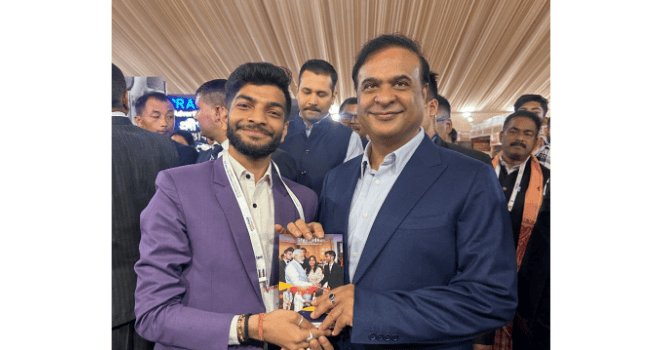
New Delhi [India], August 26: Big entrepreneurial journeys do not always begin in big cities. Sometimes, they begin in smaller towns, with a simple idea, a willingness to learn and the ambition to build something that reaches far beyond the place where it started.
For Tushar Tayal, founder of Travelidea, that journey began in Assam and has gradually expanded across cities, countries and international business networks. Today, the entrepreneur from Tezpur is preparing to represent India as part of the Indian delegation to the G20 Young Entrepreneurs’ Alliance (G20 YEA) Summit 2026 in Vienna.
The opportunity places Tushar among a global community of young entrepreneurs, business leaders and innovators from G20 economies. The summit is expected to provide a platform for conversations around entrepreneurship, business growth, innovation, international collaboration and the role of young entrepreneurs in shaping the global economy.
But Tushar’s journey to Vienna is about more than an international summit. It is also a story about how an entrepreneur from Assam can build a business with a global outlook while remaining connected to his roots.
From Assam to the Global Business Landscape
Tushar Tayal’s entrepreneurial journey reflects a growing trend among young entrepreneurs from emerging cities and regions: building businesses locally while thinking globally.
Based in Assam, Tushar founded Travelidea, a business operating in the areas of international travel, visa assistance and corporate travel. What began within the travel ecosystem gradually developed into a broader understanding of global mobility and the opportunities created when people, businesses and markets become more connected.
The travel industry often sits at the intersection of multiple sectors. A person travelling overseas may be pursuing education, starting a business, attending a conference, exploring a new market, visiting family or simply experiencing another part of the world.
For Tushar, this human side of travel became an important part of his entrepreneurial perspective.
“Every visa application has a story behind it.”
Behind every document, application and itinerary, he believes, there is an individual with a goal. That goal could be studying abroad, expanding a company, attending an international event, exploring investment opportunities or simply experiencing a different culture.
This perspective has influenced the way Tushar looks at the travel and mobility sector–not merely as a service industry, but as an ecosystem that can connect people with new possibilities.
Building Travelidea with a Global Vision
Travelidea operates across areas including international travel, visa assistance and corporate travel, helping individuals and organisations navigate the complexities associated with international mobility.
As global travel and cross-border business continue to evolve, the role of travel companies is also changing. Customers increasingly look for more than tickets and itineraries. They seek guidance, convenience, reliable information and support throughout the process.
For entrepreneurs in this space, understanding the changing expectations of travellers and businesses can create opportunities to build more meaningful services. Tushar’s vision for Travelidea has increasingly extended beyond conventional travel services. He sees global mobility as a broader opportunity–one that connects education, entrepreneurship, tourism, business and international collaboration.
This approach has helped shape his belief that travel can become a bridge between people and markets. For an entrepreneur based in Assam, developing such an outlook also means looking beyond geographical boundaries while continuing to create opportunities from home.
An International Education That Shaped His Perspective
Tushar’s exposure to international environments began well before his selection for the G20 YEA Summit. After growing up in Assam, he pursued his education at the SP Jain School of Global Management, an experience that exposed him to international academic and business environments.
His journey also took him to cities such as Singapore, Dubai and Sydney. Living and studying in different international environments can offer entrepreneurs a perspective that is difficult to gain from textbooks alone. Exposure to different cultures, business practices, consumer behaviours and economic ecosystems can influence the way a person approaches entrepreneurship.
For Tushar, those experiences contributed to a broader understanding of how businesses operate across borders. Yet, despite spending time in several international business hubs, he chose to return to India and build his professional journey here.
That decision is an important part of his story. It demonstrates that international exposure does not necessarily mean leaving one’s roots behind. Instead, it can provide the knowledge and perspective to create something locally with a much wider ambition.
From Tezpur to International Platforms
Tezpur may not immediately come to mind when people think about global entrepreneurship. But Tushar’s journey challenges the assumption that entrepreneurs need to come from metropolitan cities to participate in international business conversations.
India’s entrepreneurial ecosystem is increasingly expanding beyond traditional startup hubs. Entrepreneurs from smaller cities and regional markets are creating businesses, developing professional networks and participating in global forums. Tushar’s journey from Tezpur, Assam, to Vienna is an example of that changing landscape.
His selection for the Indian delegation to the G20 Young Entrepreneurs’ Alliance Summit 2026 brings visibility not only to his entrepreneurial journey but also to the potential of young business leaders emerging from Northeast India.
For Assam and the wider Northeast, international platforms such as the G20 YEA can create opportunities to showcase ideas, businesses and perspectives that may otherwise remain outside the global conversation.
Entrepreneurship Beyond Business Growth
Tushar’s leadership journey also extends beyond Travelidea. Through his association with JCI Tezpur Rise East and JCI India, he has taken on leadership responsibilities and participated in platforms that encourage young people to engage in entrepreneurship, leadership and community development.
These experiences have contributed to his understanding of leadership as something larger than running a company. Entrepreneurship, in his view, is not only about revenue, expansion or market share. It can also be about creating connections, opening doors and contributing to a larger ecosystem.
His involvement with JCI has also provided opportunities to interact with young leaders from different backgrounds and professional environments. Over time, these experiences have helped him develop a more collaborative approach to leadership–one where networking is not simply about meeting people, but about creating relationships that can eventually lead to meaningful partnerships.
Why the G20 YEA Opportunity Matters
The G20 Young Entrepreneurs’ Alliance brings together young entrepreneurs from G20 economies and provides a platform for dialogue, networking and collaboration.
For participating entrepreneurs, such platforms can offer access to ideas and perspectives from different markets. They also provide an opportunity to understand how entrepreneurs in other countries approach common challenges such as innovation, economic growth, sustainability, employment and international business.
For Tushar, being part of the Indian delegation to the G20 YEA Summit 2026 in Vienna represents another step in a journey that started far from the traditional centres of global business.
It also gives him an opportunity to represent a particular perspective: that of an entrepreneur who has built his experience in Assam while gaining international exposure through education, business and leadership.
The summit can therefore become more than a professional milestone. It can be an opportunity to exchange ideas, establish international relationships and explore potential collaborations that extend beyond existing markets.
From Global Mobility to Global Collaboration
One of the most interesting aspects of Tushar’s entrepreneurial philosophy is his understanding of mobility.
His work in travel and visa assistance naturally places him close to people who are crossing borders for different reasons. But he increasingly sees these movements as part of a larger global ecosystem.
- A student travelling abroad represents an exchange of knowledge.
- An entrepreneur attending an international conference represents an exchange of ideas.
- A company entering a new country represents an exchange of business opportunities.
- A tourist visiting another country represents an exchange of culture.
- An international collaboration can potentially create opportunities for businesses and communities on both sides.
This is why Tushar believes entrepreneurs can play a role beyond their own companies. They can act as connectors between people, markets and countries. For him, every international collaboration can become a small bridge.
The Importance of Thinking Beyond Borders
In today’s interconnected economy, geographical boundaries are becoming less restrictive for entrepreneurs who are willing to learn, adapt and build international networks.
Digital platforms have made it easier for businesses to communicate across countries. International education has become more accessible. Global conferences bring entrepreneurs together. And customers increasingly interact with brands and services from different parts of the world. But building a global outlook requires more than simply travelling internationally.
It requires curiosity about other markets, an understanding of different cultures, the ability to build relationships and the confidence to participate in conversations beyond one’s immediate environment.
Tushar’s journey reflects this approach. His experiences in Singapore, Dubai and Sydney, combined with his entrepreneurial work in India, have allowed him to view business through both local and international lenses. That combination may become particularly valuable as he participates in conversations at the G20 YEA Summit.
Representing Assam on a Global Stage
For many young entrepreneurs in Assam, seeing someone from the region participate in a global entrepreneurial forum can carry a significance beyond one individual’s achievement. Assam has a growing community of entrepreneurs, professionals, innovators and young leaders who are increasingly engaging with national and international opportunities.
Tushar’s journey adds another example to that evolving narrative. His story demonstrates that entrepreneurs from Northeast India can build businesses, develop international exposure and participate in global platforms without losing their connection to their home region.
The journey from Tezpur to Vienna is therefore not just geographical. It represents a movement from a local entrepreneurial idea towards a broader global vision.
What Comes Next for Tushar Tayal?
The G20 YEA Summit 2026 is another milestone, but it is unlikely to be the final destination. For Tushar, the larger opportunity lies in using international exposure to continue building connections between India and the global business community. His experience in international travel, visa assistance, corporate travel, entrepreneurship and leadership gives him a unique intersection of experiences.
The next phase could involve deeper international partnerships, new business opportunities and stronger connections between entrepreneurs across markets. The real value of an international platform often lies not only in what happens during the event but also in what happens after it–conversations that turn into partnerships, introductions that turn into opportunities and ideas that eventually become businesses or initiatives. For an entrepreneur with a strong belief in global mobility, that possibility is particularly relevant.
A Local Beginning, a Global Ambition
Tushar Tayal’s journey offers a simple reminder: where you begin does not necessarily determine how far you can go. And now, his journey is taking him to Vienna as part of the Indian delegation to the G20 Young Entrepreneurs’ Alliance Summit 2026.
But perhaps the most important part of the story is not the distance travelled. It is the mindset behind it. A willingness to learn from different markets. The courage to build something from a smaller city. The ability to turn international exposure into local action. countries.
From Tezpur to Vienna, Tushar Tayal’s journey is a reminder that global ambition does not have to begin in a global city. Sometimes, it begins with a local idea. It begins with one entrepreneur willing to think beyond the obvious. And sometimes, a journey that starts in a small corner of Assam can eventually find its way into one of the world’s most important conversations on young entrepreneurship.
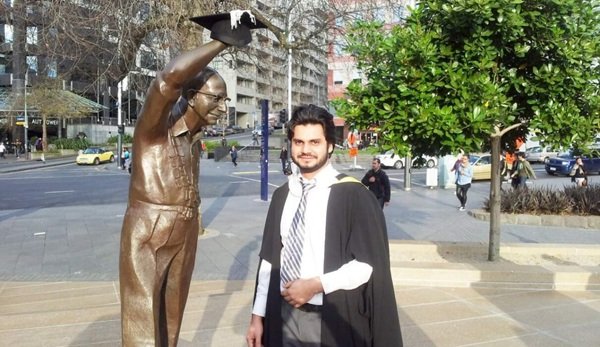
Muqarrab Hadi — Educationist, Academic, Author & School Director
In an age when children are increasingly surrounded by screens, digital content and virtual experiences, educationist Muqarrab Hadi believes that some of the most valuable lessons can still be found outside the classroom.
His approach to education focuses on giving children opportunities to observe, experience and interact with the world around them. For Hadi, a school should not only be a place where children learn from books and teachers; it should also be a place where they can discover nature, understand living beings and develop curiosity through real-life experiences.
One of the distinctive features of his approach is the use of nature, plants, birds and animals as part of children’s learning environment.

At his schools, children have opportunities to observe birds and animals closely and learn about their behaviour and needs. They are also encouraged to understand plants and nature through direct observation rather than learning about them only through textbooks.
Hadi believes that when children see a plant growing, observe a bird, understand how an animal behaves or participate in caring for a living being, they develop a different kind of knowledge—one that combines information with empathy and responsibility.
“Children should not only read about nature; wherever possible, they should experience it,” is the philosophy behind this approach.
For Hadi, experiential learning does not mean replacing classroom education. Instead, it complements academic learning by allowing students to connect what they study with what they see in real life.
A lesson about plants can become more meaningful when a child can actually observe a plant, understand its growth and learn why it needs water, sunlight and care. Similarly, learning about animals can become more engaging when students have the opportunity to observe their behaviour and understand the importance of treating living beings with compassion.
This approach is particularly relevant at a time when many children spend a significant amount of their free time on smartphones and digital platforms.
Hadi believes technology has an important role in modern education, but children also need opportunities to put screens aside and interact with the physical world.
Books, sports, gardens, animals, plants, experiments, conversations and outdoor activities can provide children with experiences that cannot always be replicated through a screen.
His philosophy is connected with a broader belief that the world itself can become a classroom.
Hadi has also observed that children learn differently when they are given opportunities to explore rather than simply being instructed. Curiosity encourages questions, and questions often become the starting point of meaningful learning.
This approach extends beyond science and environmental education. Interaction with animals can teach responsibility. Caring for plants can develop patience. Working together during activities can build teamwork. Sports can develop discipline and resilience. Communicating with others can strengthen confidence.
In this way, education becomes connected with everyday life.
Hadi’s international academic and professional experience has also influenced his thinking. With an engineering background and educational exposure in New Zealand, followed by professional experience as a professor in the Middle East, he has experienced different educational environments and interacted with students from diverse backgrounds.
He believes Indian schools have the opportunity to combine strong academic foundations with practical experiences, creativity, communication and values.
Through his work with Hadi Academy and Birr Scholars Academy, Hadi has sought to create learning environments where children can participate in activities beyond conventional classroom teaching.

His approach also reflects his interest in writing and communication. Hadi has authored books in both English and Hindi, using writing as another medium to share knowledge and ideas related to education and society.
For Hadi, the objective is not to make the classroom less important, but to make the entire educational experience richer.
A child reading about an animal is learning. A child observing that animal is learning differently. A child learning to care for it is developing responsibility. A child asking why it behaves in a particular way is developing curiosity.
These small experiences can gradually influence how children understand the world.
Hadi believes that education should therefore encourage children to observe, question, explore and care.
In his view, preparing children for the future requires more than academic knowledge. They need confidence to communicate, curiosity to learn, discipline to work, empathy to understand others and awareness of the world they live in.
“Education should not end when a child closes a textbook,” Hadi believes. “Learning should continue when the child steps outside the classroom.”
For him, a garden can be a laboratory, a bird can become a lesson in observation, an animal can teach responsibility, a sport can teach teamwork and a conversation can teach communication.
This philosophy represents a simple but powerful idea: the best learning often happens when children are given the opportunity to experience what they are being taught.
As schools prepare children for a rapidly changing world, Hadi believes that education must remain connected to something timeless—the curiosity of a child and the world around them.
Beyond the classroom lies an entire world waiting to be explored. For Muqarrab Hadi, that world is not separate from education—it is part of education itself.
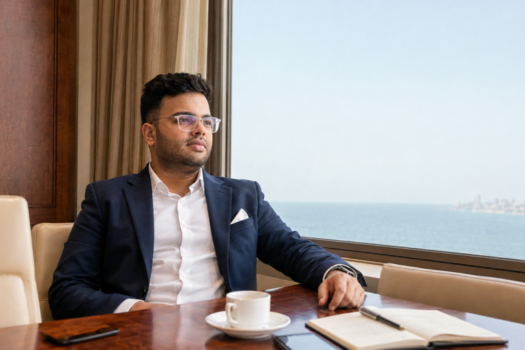
Mumbai | August 2026 – Space of The Greats Group, founded and led by entrepreneur and strategist Varun Ajay Joshi, is expanding its intelligence-led business architecture beyond workforce and career strategy into the development of a proprietary Real Estate Intelligence Infrastructure designed to help real estate organizations make better decisions across people, properties, buyers, business performance and growth.
The expansion represents the next stage in Joshi’s broader ambition: to build specialized intelligence infrastructure for industries where conventional consulting, CRM systems and data dashboards often fail to capture the human and organizational factors behind business decisions.
Alongside the Group’s growing Career Intelligence business, led operationally by Raj Ashok Pawar as Business Head – SahiJob, the real estate vertical is being developed as a proprietary
strategic infrastructure for brokerages, developers and real estate organizations across India and the Middle East.
From Real Estate Brokerage to Real Estate Intelligence
Real estate has traditionally operated through a combination of relationships, market knowledge, sales experience, property databases and increasingly sophisticated CRM systems.
Joshi’s approach begins with a different premise.
Real estate decisions are not purely property decisions. They are people, psychology, timing, economics, organizational capability and market-context decisions happening simultaneously.
Space of The Greats is therefore developing an intelligence architecture that seeks to connect these layers rather than treating them as independent functions.
Its proprietary infrastructure is being designed to help organizations understand:
- how buyers make decisions;
- why certain properties create stronger conviction than others;
- how buyer personas interact with specific property characteristics;
- how agents perform across different stages of the property lifecycle;
- where organizations lose value through poor alignment;
- how talent, culture and sales capability influence brokerage performance;
- how market conditions affect buyer psychology and transaction behaviour; and
- how organizations can build repeatable systems instead of depending entirely on individual sales performers.
The objective is not to replace the expertise of real estate professionals. It is to institutionalize intelligence around that expertise.
Building a Proprietary Decision Infrastructure
At the centre of the Group’s real estate work is a proprietary architecture combining behavioural intelligence, buyer alignment, organizational intelligence, property intelligence and sales infrastructure.
The system is being developed around the belief that traditional real estate technology largely answers “what happened?”, while the next generation of infrastructure must help organizations understand “why is it happening, what is likely to happen next, and what should we do about it?”
Space of The Greats is consequently developing decision-support systems that bring together multiple dimensions of the property lifecycle.
These include buyer psychology, persona alignment, property characteristics, agent capability, organizational behaviour, market conditions, sales performance and strategic decision-making.
Rather than functioning as another CRM layer, the infrastructure is intended to operate as an intelligence layer above existing business systems.
The broader philosophy is simple:
Data tells an organization what is happening. Intelligence helps it understand what to do next.
From Mumbai to the Middle East
The real estate intelligence initiative is being developed with a particular focus on the India and Middle East markets.
The Group’s work has involved studying diverse real estate ecosystems, including the Mumbai market and the rapidly evolving brokerage environment of Dubai and the wider UAE.
The two markets present fundamentally different decision environments.
Mumbai frequently involves highly compressed decisions influenced by affordability, urgency, family structures, social considerations and intense competition for limited opportunities.
The UAE, particularly Dubai, operates within a different environment shaped by international capital, luxury consumption, migration, investment psychology, future-oriented wealth creation and rapid market cycles.
Space of The Greats believes that a single generic real estate playbook cannot adequately address both environments.
Its infrastructure is therefore being designed around contextual intelligence rather than one-size-fits-all solutions.
Varun Ajay Joshi: Building Across Two Intelligence Economies
The development of the real estate infrastructure further expands Joshi’s role as the architect of Space of The Greats Group’s broader intelligence strategy.
His work now spans two distinct but connected areas.
The first is Career Intelligence, through SahiJob – Fit Hai Toh Hit Hai.
The second is Real Estate Intelligence, through Space of The Greats’ proprietary infrastructure for organizations operating across property, people and business performance.
The connection between the two is deliberate.
Joshi describes this as the development of an “intelligence infrastructure company rather than a conventional consulting company.”
The Group is not attempting to build another collection of advisory services. It is developing proprietary frameworks, models and decision-support systems that can be adapted across markets and organizations.
One Group. Multiple Intelligence Architectures.
The evolution of Space of The Greats reflects a broader shift in the company’s strategy.
Rather than building a single general-purpose consulting platform, the Group is developing specialized intelligence architectures for specific decision environments.
Career Intelligence addresses the relationship between people and the employment economy.
Real Estate Intelligence addresses the relationship between people, property and organizational performance.
Human and behavioural sciences provide another layer of research into how individuals and organizations make decisions.
The long-term ambition is to connect these specialized systems into a broader portfolio of decision-support infrastructure for the future of work, business and industry.
For Joshi, the opportunity lies in the gap between information and intelligence.
“Every industry today has more data than it has ever had,” says Joshi. “The competitive advantage will increasingly come from understanding that data in context – understanding people, understanding systems, and understanding the decisions that connect them.”
That philosophy is now becoming the foundation of Space of The Greats Group’s next chapter.
From career intelligence to real estate intelligence, the Group is building proprietary infrastructure around one central idea: better decisions create better outcomes.
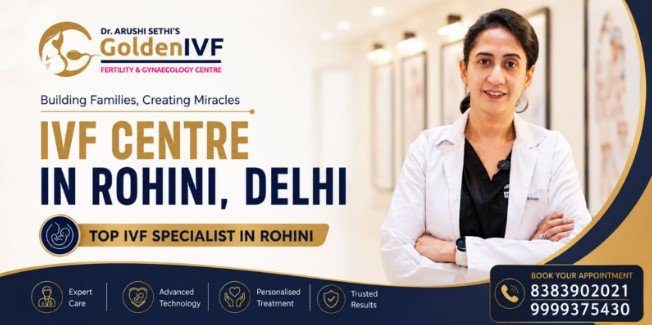
New Delhi [India], August 24: For a couple struggling to conceive, infertility is rarely just a medical diagnosis. It can bring uncertainty, emotional stress, countless questions and, for many couples, years of waiting for the child they have dreamed of.
Behind every fertility consultation is a couple hoping for the same thing – the opportunity to build their family and bring a baby into their lives.
It is this understanding that has shaped the professional journey of Dr Arushi Sethi, Founder, CEO and Chairperson of Dr Arushi Sethi’s Golden IVF, a fertility centre based in Rohini, Delhi.
With more than 15 years of experience in the medical field, Dr Arushi Sethi has built her career around women’s health, reproductive medicine and fertility care. Her journey combines medical training, clinical experience and a strong focus on creating greater awareness around infertility and its treatment.
Dr Arushi Sethi: A Journey Rooted in Medical Excellence
Dr Arushi Sethi’s professional journey began with a strong academic foundation. She is an AIIMS-trained doctor and a Gold Medalist in Obstetrics and Gynaecology, with further training in Minimally Invasive Gynaecology.
Her professional achievements have also received recognition, including an award from former Health Minister Dr Harsh Vardhan Goel.
But for Dr Sethi, professional achievement is not simply about qualifications or recognition. It is about how that expertise can translate into better understanding and care for people facing infertility.
Over the years, her work has focused on helping couples understand the factors that may be affecting their ability to conceive and guiding them towards appropriate treatment based on their individual circumstances.
According to Golden IVF, Dr Sethi’s experience includes more than 2,500 successful IVF treatments in Rohini and IUI treatments in Rohini.
Behind that number are individual fertility journeys – couples who came with different medical histories, different challenges and different expectations of becoming parents.
Beyond Numbers: Understanding the Human Side of Infertility
Infertility can be very difficult to talk about.
For some couples, the journey begins after months or years of trying to conceive. For others, it may follow repeated miscarriages, previous unsuccessful fertility treatment or a diagnosis such as PCOS, endometriosis, low ovarian reserve or male-factor infertility.
There can also be social and emotional pressures surrounding infertility, particularly in a society where questions about having children can become deeply personal.
Dr Arushi Sethi believes that fertility care needs to recognise this human side of the experience.
A fertility specialist’s role, therefore, is not limited to recommending a procedure. It also involves listening to the patient, understanding their concerns, explaining the situation in a way they can understand and helping them make informed decisions about the road ahead.
This philosophy has become an important part of the identity of Dr Arushi Sethi’s Golden IVF.
Building Fertility Awareness Alongside Fertility Treatment
One of the areas that Dr Sethi has emphasised throughout her work is the importance of fertility awareness.
Many people do not think about their reproductive health until they experience difficulty conceiving. By then, they may already have questions about age-related fertility decline, ovarian reserve, sperm health, PCOS, endometriosis or previous unsuccessful pregnancies.
Greater awareness can encourage couples to understand fertility earlier and seek appropriate medical guidance when needed.
It can also help address a common misconception – that infertility is primarily a woman’s issue.
Male factors can contribute to infertility just as female factors can, and in some couples both partners may have contributing factors. A comprehensive approach to fertility therefore requires looking at the couple rather than automatically placing responsibility on one partner.
Through fertility consultations and patient education, Golden IVF aims to encourage couples to approach infertility as a medical concern that can be evaluated, understood and, where appropriate, treated.
From Fertility Awareness to Hope for Parenthood
The ultimate purpose of fertility treatment is not simply a successful procedure.
For a couple, success means something much more personal – bringing their child home.
This perspective has influenced Dr Sethi’s approach to fertility care.
Whether a couple is visiting a fertility specialist for the first time, has been trying to conceive naturally for years, or has already experienced an unsuccessful IVF cycle, the starting point remains the same: understand their individual situation.
There is no single fertility journey.
One couple may discover an identifiable medical factor affecting conception. Another may require assisted reproductive treatment. Some may need to reconsider a previous treatment strategy. Others may need time, counselling and careful guidance before making a decision.
Dr Sethi’s approach is centred on helping couples understand these possibilities rather than treating infertility as a one-size-fits-all problem.
Supporting Couples After Failed IVF
Some of the most emotionally challenging fertility journeys are those of couples who have already undergone IVF without achieving the pregnancy they hoped for.
After a failed cycle, couples can be left wondering what happened and whether another attempt will have a different outcome.
This is an area where clinical experience and careful review become particularly important.
Dr Arushi Sethi’s Golden IVF also works with couples seeking guidance following previous unsuccessful IVF treatment. Reviewing previous treatment history, medical records and individual fertility factors can help a specialist understand the broader picture before discussing the next possible step.
For couples seeking a second opinion after failed IVF, this process can provide an opportunity to revisit their fertility journey with a fresh clinical perspective.
For Dr Sethi, the objective is not simply to encourage another treatment cycle. It is to understand the patient first and then discuss what may be appropriate based on their circumstances.
Golden IVF and the Growing Fertility Conversation in Rohini
The growth of IVF treatment in Delhi has also changed the conversation around infertility.
Couples are increasingly looking beyond traditional notions of fertility and are seeking specialist advice about reproductive health, fertility preservation, IVF, male infertility, age-related fertility changes and conditions that may affect conception.
Within this changing landscape, Rohini has emerged as an important healthcare destination for couples seeking fertility treatment in North and West Delhi.
Golden IVF’s main centre in Sector 2, Rohini, reflects Dr Sethi’s vision of bringing specialist fertility care closer to couples who may otherwise have to travel considerable distances for repeated consultations and treatment.
The centre’s presence across locations including Rohini, Pitampura, Punjabi Bagh, Azadpur and Shalimar Bagh has also helped extend its accessibility to couples in different parts of Delhi.
For couples searching for an IVF centre in Rohini, the presence of an experienced fertility specialist within their locality can make the treatment journey more convenient while allowing them to remain connected with their treating doctor throughout the process.
Why Dr Arushi Sethi Is Becoming a Recognised Name in Delhi Fertility Care
The search for the best infertility specialists in Rohini or the best IVF centre in Delhi is ultimately a very personal one.
For many couples, it begins with looking at a doctor’s qualifications and experience. But the relationship between a fertility specialist and a patient often goes beyond credentials.
It is about trust.
It is about being able to ask difficult questions.
It is about understanding why a particular approach has been suggested.
And, perhaps most importantly, it is about knowing that the doctor understands how much the outcome means to the couple sitting across the consultation table.
Dr Sethi’s combination of AIIMS training, academic achievement, more than 15 years of professional experience and extensive experience in IVF and IUI treatment has contributed to her growing recognition among couples seeking fertility care in Delhi.
Her Gold Medal in Obstetrics and Gynaecology and professional recognition are important milestones in her career. But the larger measure of her work is the number of couples she has been able to guide through one of the most important journeys of their lives.
A Vision That Goes Beyond Building a Fertility Centre
Dr Arushi Sethi’s Golden IVF represents more than the creation of another fertility facility in Delhi.
For Dr Sethi, the larger vision is to create greater awareness around infertility, encourage couples to seek appropriate help and make specialised fertility care more approachable.
The goal is not to make every couple follow the same treatment pathway.
It is to help each couple understand their own fertility circumstances and identify the path that may be appropriate for them.
That philosophy is particularly relevant as fertility awareness continues to evolve in India. People are beginning to ask more questions, seek second opinions and take a more active role in understanding their reproductive health.
Doctors and fertility centres therefore have an important responsibility – not only to provide treatment, but also to educate, communicate responsibly and help patients make informed decisions.
Helping Couples Move From Uncertainty Towards Parenthood
Every couple that walks into a fertility clinic carries a different story.
Some arrive with hope.
Some arrive after years of disappointment.
Some have experienced failed IVF.
Some are still trying to understand why they have not been able to conceive.
And some simply need someone to tell them that there are options worth exploring.
This is where Dr Arushi Sethi’s vision for Golden IVF comes into focus.
Her work is centred on combining medical expertise with awareness, communication and individual attention – with the larger objective of helping couples overcome infertility and move closer to completing their families.
For couples looking for an IVF centre in Delhi, an IVF centre in Rohini, or experienced infertility specialists in Rohini, Golden IVF has become part of the growing fertility-care landscape in Delhi under Dr Sethi’s leadership.
The journey towards parenthood may not always be straightforward. But with appropriate medical evaluation, evidence-based treatment and the right guidance, couples facing infertility can better understand their options and make informed decisions about their future.
For Dr Arushi Sethi, that is ultimately what fertility care represents – not simply treating infertility, but helping people realise their dream of becoming parents.
About Dr Arushi Sethi – Golden IVF
Dr Arushi Sethi’s Golden IVF is a fertility and IVF centre based in Sector 2, Rohini, Delhi, founded and led by Dr Arushi Sethi. An AIIMS-trained doctor and Gold Medalist in Obstetrics and Gynaecology, Dr Sethi has more than 15 years of professional experience and specialises in fertility and reproductive healthcare. Golden IVF provides fertility consultations and assisted reproductive care for couples facing male and female infertility, including patients seeking guidance following previous unsuccessful fertility treatment.

New platform lets employees anonymously share and discover real-world experiences around notice periods, full-and-final settlements, paperwork, and outstanding dues
NEW DELHI, INDIA — August 19, 2026: Today marks the launch of NoticePeriod.fyi, a new platform designed to make one of the least transparent parts of employment in India—the exit process, more visible and easier to navigate.
While employees routinely research companies before accepting a job, there is considerably less information about what happens when they decide to leave. NoticePeriod.fyi aims to fill that gap by collecting anonymous exit reviews from employees across India, covering issues such as notice periods, buyout requests, full-and-final settlements, relieving and experience letters, PF and gratuity, and other outstanding dues.
“People spend hours researching what a company is like to join, but very little time researching what it is like to leave,” said the team behind NoticePeriod.fyi. “We wanted to create a place where employees could share what actually happened during their exit, and where people considering a job could see those experiences before making a decision.”
Turning exit experiences into useful data
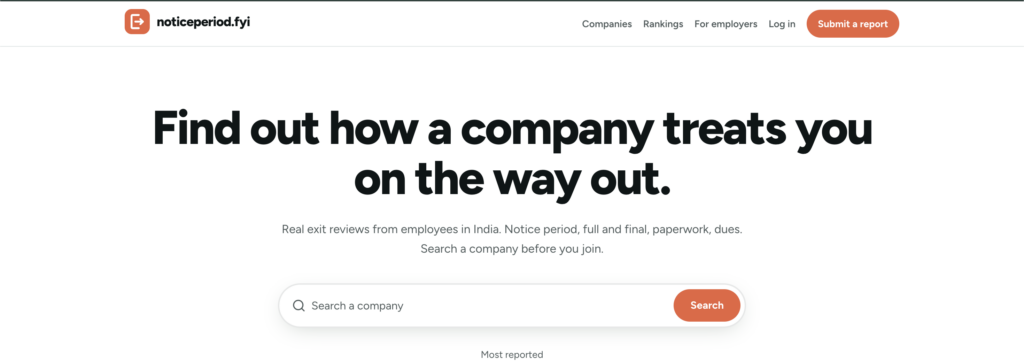
NoticePeriod.fyi allows employees to submit anonymous reports about their experience leaving a company. Reports are reviewed by a moderator and published without the employee’s name. Employees can also provide supporting documentation, such as relieving letters or full-and-final statements, to receive a verified badge; the documentation is kept private and is only accessible to the moderator.
The platform organizes experiences around four core aspects of the exit process:
- Notice period: How long employees actually served and whether buyouts were
- Full and final settlement: How long employees were promised they would wait versus how long payment actually took.
- Paperwork: Whether relieving and experience letters were provided
- Dues: Whether items such as PF and gratuity were handled correctly and on
These factors contribute to an Exit Score, giving users a simple way to understand patterns in how companies handle employee departures. Companies require a minimum number of approved reports before appearing in the rankings, helping prevent conclusions from being drawn from isolated experiences.
Built around anonymous participation
Privacy is a central part of the platform. NoticePeriod.fyi says employee names, employee IDs, and manager names are not published with reports. Reports are associated with information such as role and month rather than personally identifying details.
The platform also states that companies cannot pay to remove reports, edit scores, or purchase better rankings.
“Exit experiences should be documented by the people who lived them, not shaped by the companies being reviewed,” the NoticePeriod.fyi team said.
A resource for employees researching their next move
With NoticePeriod.fyi, employees can search for companies and browse available exit experiences before joining, or contribute their own experience after leaving.
The platform is launching with a focus on building its underlying dataset and encouraging employees across India’s technology, finance, consulting, e-commerce, healthcare, manufacturing, and other industries to contribute.
NoticePeriod.fyi is now live at www.noticeperiod.fyi.
About NoticePeriod.fyi
NoticePeriod.fyi is an independent platform for anonymous employee exit reviews in India. It helps employees understand how companies handle notice periods, full-and-final settlements, paperwork, and outstanding dues. Reports are submitted by individuals and represent their own experiences.