An expert session within the Open Dialogue project took place on September 5 at the National Centre “Russia” branch in Primorsky Krai. Authoritative international experts participated in the discussion on the transformation of trade and connectivity in the new reality. The event continued themes from the first Open Dialogue “Future of the World. New Platform for Global Growth,” held in April 2025 in Moscow.

Associate Professor Gulshan Sachdeva, at the School of International Studies at Jawaharlal Nehru University, stated during the Open Dialogue that today’s Global Majority countries are no longer the “Third World,” but rather new powerful centers of political, economic, and intellectual development.

“If we’re talking about the global majority and the Global South, the situation today is completely different. We have grown strategically, economically, technologically, and even intellectually. These countries now dominate and are likely to continue dominating in trade, investments, technologies, climate issues, and other areas. And even if you look just at BRICS—already now the GDP growth rate is 4%, and by 2030 this share will exceed 50%,” stated Gulshan Sachdeva.

Technological innovations (digital payments, AI) demonstrate the potential of Global Majority countries. But the key challenge is organizing joint architecture and connectivity infrastructure without Western dominance, emphasized the Associate Professor at the School of International Studies at Jawaharlal Nehru University.

He also noted that using institutions, trade mechanisms, and currencies as “weapons” erodes the stability of the world order. Gulshan Sachdeva is convinced that alternative solutions are needed within BRICS and beyond.

Western partners still maintain a sense of impunity and the role of sole decisive players, believes Victoria Panova, Head of the BRICS-Russia Expert Council, Vice-Rector of HSE University, and Russia’s Sherpa in the Women’s Twenty. According to her, the financial levers of Western institutions—the dollar payment system, London insurance structures, control over container shipping—effectively give them an advantage and the illusion of the right to conduct dialogue as masters.

“In this context, the role of BRICS is truly invaluable. Despite attempts by Western colleagues to undermine the association, BRICS has proven its relevance and ability to offer new initiatives not only in the economic and financial spheres but across all three pillars of cooperation. Interdependence between countries remains, including with the West, the EU, and the USA, but a new, more multipolar economy is already forming. If you look at the statistics: since the first summit, trade turnover within BRICS countries has grown 3.5 times—this is objective evidence that participants are actively cooperating and can contribute to mutual growth, reducing dependence on Western powers,” she emphasized.

BRICS countries are establishing new institutions and mechanisms that enable participants to enhance their economic independence. One such project is the Contingent Reserve Arrangement. According to Victoria Panova, it still requires refinement but already demonstrates the association’s aspiration to diversify financial instruments and reduce dependence on Western structures.

“The New Development Bank of BRICS has already launched practical initiatives: bonds have been issued in yuan and rand, with rupee issuance in preparation. Today, about 30% of the bank’s operations are conducted in national currencies. An investment package of about 35 billion dollars is aimed at reducing the infrastructure gap in Global South countries and supporting their long-term development,” she emphasized.

BRICS is gradually ensuring the leveling of international architecture, refraining from interfering in the logic of sanctions or counter-sanctions, but rather through practical initiatives that help countries implement their development plans and protect the interests of their citizens, added Victoria Panova.

Open Dialogue participants also discussed attracting investments in the International North-South Transport Corridor, BRICS+ routes, continental railway projects, as well as international logistics challenges and measures to strengthen ties between the EAEU, Africa, and ASEAN.

Alexey Bezborodov, Managing Partner of Infra Projects LLC, spoke on the topic “New Solutions for Enhancing Logistics Connectivity of BRICS Countries.” He noted that the world has entered the era of containerization and that the container will become the basic unit of global trade in non-energy sectors. The expert also stated that Russia is capable of playing a key role in transit within BRICS, particularly through infrastructure development along the Trans-Siberian Railway and the North-South corridor, which becomes strategically important for China and India.

“Today, fragmentation, containerization, local economic spurts, and e-commerce allow us to say that there is a shift in perceptions of geography, cargo movement speeds, methods of final delivery, and cooperation options in production. Essentially, a quiet revolution is occurring in infrastructure and logistics,” stated Alexey Bezborodov.

At the same time, he emphasized that today’s infrastructure development “consumes enormous resources” from all states, and new or modernized facilities are not always durable. Often, they exhaust their potential within 5 to 10 years.

“Therefore, we need to think about new principles of movement—based on small atom, new pipe transportation of goods, new physics and energy,” noted Alexey Bezborodov.

The expert emphasized that several trade and logistics routes are successfully developing in Russia. These include the Northern Sea Route and the Transarctic Transport Corridor. There is also an essential project for joint investments—the North Siberian Railway, which, with the creation of additional links, can connect the October, Northern, Sverdlovsk, and West Siberian railways.

“First and foremost, we must continue developing our standard classical transit from China through Kazakhstan, Russia, Belarus to Europe. It exists now and brings income to all participants,” he noted.

Connectivity Without Intermediaries: What Unites BRICS, Asia, and the Global South

In Vladivostok, a discussion on new financial and investment solutions for countries of the World Majority was held as part of an Open Dialogue at the branch of the National Centre “Russia”. The session was moderated by Maxim Oreshkin, Deputy Head of the Administration of the President of the Russian Federation.

During the third discussion block on “New Financial and Investment Mechanisms for the World Majority,” participants emphasized that in a changing global economy, sustainability cannot be ensured without digital integration and the development of compatible payment systems.

Speaking at the session, Ilya Ivaninskiy, Director of the Center for Business Education and Analytics at the Central University, emphasized that without investment, real market connectivity is impossible.

“Connectivity doesn’t work well without money,” he noted, reminding that developing countries now form the center of the global economy: they account for over 60% of global GDP and more than 90% of the planet’s population. According to him, future economic growth is concentrated precisely here.

At the same time, Ivaninskiy noted, the international monetary and financial system has not yet adapted to this reality:

“Neither payments, nor representation in organizations, nor reserves, nor investments — no component corresponds to the new conditions.”

The global investment deficit is estimated to exceed $4 trillion, and the problem is felt most acutely in Global South countries.

The speaker explained in detail the reasons behind these difficulties. In developing countries, investments are largely built on borrowed funds:

“Our debt-to-equity ratio is 2 to 1, while in developed countries it’s 1 to 1.” Moreover, a significant portion of the debts are short-term, with about 40% due for repayment as early as 2027. The cost of capital is also unfairly inflated. “If our risk is higher by 1.5%, then the cost of capital is higher by 6.6%. This is four times higher than the actual risk level,” he emphasized.

Another problem cited by the expert is low market connectivity: most foreign investments coming into developing countries are from developed ones, and vice versa — the main investments from the Global South flow into developed markets.

“When we see a low degree of connectivity in the 21st century, a logical solution is a new investment platform,” stated Ivaninskiy.

In his opinion, such a platform could connect BRICS countries and the global majority. It should include a showcase of long-term infrastructure projects, clear criteria for assessing quality for investors, and effective risk reduction tools.

“Governments can help by buying junior tranches or providing guarantees,” he noted.

Ivaninskiy proposed a two-tier architecture for the platform: at the national level — selection of projects and investors; at the international level — mutual investments and offsets.

He also drew attention to technological capabilities:

“Blockchain is already mentioned as a tool for making payments and settlements. Modern digital tools make such operations cheap and transparent.”

According to him, a digital investment asset — risk-free and protected from inflation — could be at the center of the platform.

The expert also provided economic calculations: if countries invest at least $10 billion annually, it could generate up to $100 billion in additional GDP per year.

“For economies with a combined GDP of over $60 trillion, such investments are insignificant, while the effect could amount to a quarter of a percent of global GDP,” he noted.

“It’s great that we are discussing such initiatives at these venues. I would like to believe that this will allow them to be implemented faster,” Ivaninskiy concluded.

New York, NY – September 05, 2025, 09:57 AM EDT – Jason Zangara, MPH, MA, a public health and safety professional and U.S. citizen based in New Jersey, has intensified efforts to address systemic gender bias, pay inequity, and colorism in Bollywood and regional Indian film industries.

The Public Interest Litigation (PIL), submitted on April 15, 2025, invokes Article 32 of the Indian Constitution to challenge discriminatory practices that affect 1.4 billion citizens, including 700 million women.

Key findings of a study he completed on Indian cinema include:

  • Gender Pay Disparity: 96.8% of 250 films (2010–2025) featured male leads, with actresses earning up to 85–90% less despite equal or greater screen presence.
  • Colorism in Casting: 99.6% of lead roles went to fair-skinned actors, marginalizing darker-skinned talent.
  • Male Favoritism: Preferential casting and career opportunities for men reinforce patriarchal norms.

“I love watching Indian cinema but these women have so much more potential. They shouldn’t always be some guy’s love interest or in a kitchen. They should be taking the lead in these films—and be compensated for it,” Zangara said.

To advance his cause, Zangara has also appealed to Shri Brij Lal, Chairman of the Parliamentary Standing Committee on Personnel, Public Grievances, Law and Justice, urging systemic reforms that promote equality and fairness in the film industry.

“This case is not only about fairness in entertainment but about the fundamental dignity and opportunities available to millions of women and artists in India,” Zangara stated.

The initiative has already garnered international attention in U.S. media, including The Indian Panorama, New India Abroad, Thamasoma, and PTC News, highlighting both the issue of industry discrimination and the importance of systemic reforms.

For support or further details, Contact:

Jason Zangara, MPH, MA
+1 (908) 672-0626
firefighterjazzyj@yahoo.com

India, 04-09-2025 – In a world currently caught in tariff wars, protectionist policies have assumed high significance. Among the approaches adopted by developed nations and increasingly being followed by developing countries, non-tariff measures, especially technical regulations and standards, have not only become critical but are also causing significant trade friction. Even as they are primarily intended to address risks to human health, safety, or the environment, the hard-to-meet standards and even more complex compliance procedures pose challenges that require deep knowledge of technical standards and regulations for products and services, as well as the modalities of obtaining the required approvals. Technical regulations encompass virtually every sector of merchandize trade but are more prominently applied in sectors such as food, pharmaceuticals, and chemicals due to their direct impact on human safety.

What had been an overseas phenomenon till a decade ago is now emerging as a major Indian response with the promulgation of a large number of regulatory notifications, many through the QCO route, requiring conformance and mandatory certification or approvals from Indian regulators.

A major challenge is the lack of professional expertise in dealing with the complex world of technical regulations, evidenced through repeated incidents of consignment rejections of exported food products in overseas markets. As per the RASSF Window of the European Union between January and July this year, there were 4479 incidents of border rejections in food and food contact materials, out of which 565 were from India.

With a view to fill this gap, the Tata Institute of Social Sciences (TISS) has entered into a collaboration with Regulatory Representatives and Managers Association (RRMA) a body of regulatory professionals in India and Global Product Compliance (GPC) a global facilitator of regulatory compliances in the Chemicals sector to launch three professional courses that will prepare students and industry professionals with deep knowledge and understanding of the chemicals regulatory ecosystem and compliances a the national and international level. This pioneering initiative marks the first time that chemical regulation and technical standards have been formally integrated into a university curriculum in India.

The courses are in tune with the Indian National Strategy for Standardization (INSS) released by the Department of Commerce in June 2018, in which ‘Awareness, Counselling, Training and Education’ was identified as one of the pillars of the quality ecosystem and development of quality-related modules at all levels was highlighted as one of the goals.

The courses have been designed to empower students and make them employment ready. The courses include:

  • Standards and Regulations in Goods and Services – 2 Credits (30 Hours) – Regular/Mandatory Course
  • Introduction to Chemical Regulations – 1 Credit (15 Hours) – Regular/Mandatory Course
  • Advanced Course on Chemical Regulations – 2 Credits (30 Hours) – Elective Course.

This development aligns with RRMA’s core mission of regulatory capacity building by equipping students and professionals with essential skills and knowledge to navigate India’s and the global regulatory landscape. The collaboration represents a milestone not just for RRMA and TISS, but for India’s regulatory education sector.

Mr. Geert Dancet, Chair of RRMA and former Executive Director of the European Chemicals Agency (ECHA), emphasized the international importance of the initiative: “This initiative is a visionary step for India’s regulatory education. By building local expertise with a global outlook, the collaboration between RRMA, GPC will empower future regulatory professionals to drive compliance and innovation in India and beyond.”

This is more than an academic milestone—it is a national step forward in preparing India’s regulatory workforce for the future,” said Mr. Anil Jauhri, Co-Chair of RRMA and one of the core contributors to the course development.

With growing complexity in global regulations—ranging from EU REACH and GHS updates to India’s draft Chemical Management and Safety Rules—industries need trained professionals who can understand, interpret, and implement regulatory frameworks effectively. These new university-level courses offer structured learning in chemical safety, conformity assessment, environmental risk, global conventions (such as the Stockholm and Basel Conventions), and practical compliance strategies.

RRMA has been at the forefront of regulatory education in India, developing certification programs in partnership with renowned institutions such as IIT Hyderabad and IIM Mumbai. This new venture with TISS reinforces RRMA’s commitment to nurturing a strong pool of regulatory professionals across sectors such as chemicals, cosmetics, food contact materials, agrochemicals, and sustainability.

Our collaboration with TISS exemplifies the potential of academia-industry partnerships in driving national development. It is a proud moment for all of us at RRMA,” added Mr. Anupam Kaul, Chair Executive Committee of RRMA.

“At GPC, we are dedicated to helping industries navigate the changing global regulatory landscape while encouraging sustainable and responsible practices. This initiative aims to develop a strong pool of skilled regulatory professionals who will drive the future of compliance and sustainability.” – Mr. Shisher Kumra, Executive Director, GPC.

“We are glad to collaborate with RRMA and GPC in developing and delivering courses on Standards and Regulations of Goods and Services and Chemical Regulation. These courses provide an edge to our master’s students in Regulatory Policy and Governance, opening new career opportunities in critical sectors. This would not have been possible without the active support of RRMA and GPC officials”. – Dr. Sachin Warghade, Chairperson, Centre for Regulatory Policy and Governance, TISS, Mumbai.

The first academic batch commenced from 1st August 2025, and the initiative is already gaining attention among regulatory professionals, students, and industry leaders. RRMA plans to build on this foundation by introducing further specialized programs and degrees to enhance compliance excellence.

For interviews or additional information, please contact:

Regulatory Representatives and Managers Association (RRMA)

info@rrma-global.org | www.rrma-global.org

+91 93229 53604

Follow RRMA: LinkedIn

New Delhi [India], September 3: Leading international experts, including representatives from the UN and India, will gather in Vladivostok to discuss the creation of flexible and technologically independent trade institutions amid the transformation of the global economy.

The key issues of overcoming fragmentation and building a new, more equitable architecture for global trade will be the central theme of the expert convening “The Future of the World. A New Platform for Global Growth” in Vladivostok. The event, dedicated to investments in interconnectedness, will bring together leading international specialists at the venue of Russia’s first branch of the National Centre “Russia” to develop practical solutions for rebooting the global trading system.

The Open Dialogue format, initiated by Russia on the instruction of President Vladimir Putin, is evolving into a sustainable ecosystem for generating and implementing breakthrough ideas that meet the challenges of the new era. The upcoming discussion will focus on strengthening Russia’s trade ties with the countries of the World Majority and forming alternative, pressure-resistant mechanisms of cooperation.

The global economy is undergoing profound changes caused by the protectionist and sanctions policies of Western countries, leading to an inevitable restructuring of all international trade mechanisms. As an expert in the “Investments in Interconnectedness” vector, Professor Juan Antonio de Castro de Arespacochaga of Complutense University of Madrid, noted ahead of the event: “Global trade is becoming fragmented, fast, and technology-driven. The need to create a fundamentally new architecture — more flexible, technologically independent, and resilient to external pressure — is more acute than ever.”

Special attention will be paid at the convening to the role of Global South countries and the need for regulatory harmonization. Rupa Chanda, Director of the Trade, Investment, and Innovation Division of the UN ESCAP, will fly from India to Vladivostok specifically to participate in the dialogue.

“It is important to understand what role existing trade agreements can play, what lessons they offer, and what preconditions are needed — for example, digital identities, common standards. The more countries that experiment, the higher the risk of regulatory fragmentation. Therefore, it is essential for Global South countries to work on regulatory convergence,” emphasized Rupa Chanda, who will present a report on overcoming fragmentation in global trade.

Another key speaker from India, Gulshan Sachdeva, Professor at the Jawaharlal Nehru University’s School of International Studies, shared his expectations for the upcoming dialogue: “I look forward to meeting all the experts and hope that our dialogue will be a valuable contribution to shaping the narratives concerning the rapidly changing global order.”

The work of the convening will be structured around three thematic panels, where experts will analyze transformation pathways in detail:

  • “Institutional Reboot”: Reforming trade mechanisms for a multi-vector economy;
  • “Technological Sovereignty”: Innovations in supply chains, financial settlements, and digital trade;
  • “Strategic Opportunities”: Forming new centers of trade attraction and expanding investment ties.

The discussion will be moderated by Maxim Oreshkin, Deputy Head of the Russian Presidential Administration.

Background:

The Open Dialogue is a flagship international platform initiated by Russia to foster a new platform for global growth. The first forum was held in April 2025 in Moscow, bringing together over 100 delegates from 48 countries.

New Delhi [India], September 3: The Global Inclusion Summit & Awards 2025, presented by MatchBoard, concluded successfully on August 29th at Pride Plaza, Aerocity, New Delhi, galvanising leaders from industry, academia, and civil society to accelerate diversity, equity and inclusion (DEI) across workplaces and communities. The event served as a crucial platform for sharing best practices, fostering collaboration, and recognizing outstanding achievements in the DEI space. The summit culminated in the prestigious DEI Power Awards, honoring organizations and individuals who are leading the charge in creating more inclusive and equitable environments.

The summit commenced with a traditional lamp-lighting ceremony, symbolising the illumination of a more inclusive future. Dr. Saagarika Ghoshal, Managing Director of MatchBoard, delivered a powerful welcome address, explicitly setting the tone for the summit by championing meritocracy-based inclusion. Dr. Ghoshal emphasized that true inclusion goes beyond representation; it’s about creating systems where opportunities are earned based on talent, skills, and contributions, regardless of background or identity. She recommended examining and dismantling barriers that hinder equitable access to advancement, ensuring that merit, not privilege, dictates success. Anurag Malik, Partner and Leader, People Advisory Services, EY India, delivered the opening address, setting the stage for a day of insightful discussions and collaborative problem-solving.

A standout learning opportunity was the highly attended Rain Khoo masterclass titled “Uncover, Uplift, Unite: Embracing Inclusivity Beyond Bias.” Participants received practical tools and frameworks for identifying and mitigating unconscious biases, fostering a more inclusive workplace culture, and empowering leaders to champion DEIB initiatives effectively.

A particular highlight was the engaging fireside conversation between acclaimed author and finance expert Monika Halan and Pallavi Chauhan of Nippon India Mutual Fund. Their discussion explored the transformative potential of financial inclusion as a catalyst for achieving social equity and fostering a stronger sense of corporate responsibility. Attendees gained valuable insights into innovative strategies for expanding access to financial services for marginalized communities.

The summit featured over 25 distinguished speakers, contributing to a robust agenda that delved into critical themes such as Bridging the Gender Gap, Moving Beyond the Bottom Line to Embrace Social Impact, and Cultivating Inclusive Leadership at all organizational levels. Featured eminent speakers included thought leaders such as Pritha Dutt, Amulya Sah, Dr. Chandra Mauli Dwivedi, Dr. Sanjay Muthal, Dr. Harsh Purohit, Sonal Kapur Sinha, Samriti Malhotra, Shikha Gupta, Lopamudra Banerjee, Simin Askari, Shilpa Khanna, Kalpana Sachdeva, Neetu Taj, Prasad Routray, Dr. Tripti Singh, Kavita Neogi, Abhina Aher Zainab Patel and others. With nearly 75 corporations represented, the summit underscored the broad and growing industry commitment to prioritising inclusivity as a core business value.

The DEI Power Awards recognized organizations that have demonstrated exceptional commitment to DEI through innovative programs, impactful policies, and a dedication to fostering inclusive cultures. In addition to organizational awards, individual awards were presented to leaders who have made significant contributions to advancing DEIB within their respective fields.

Dr. G.P. Rao, Jury Chairman of the GIS Awards, lauded the progress being made in the DEI space while emphasizing the ongoing need for sustained effort and innovation. He also highlighted the depth and significance of the discussions, reaffirming our shared commitment to create more inclusive environments, both at work and in society. The summit culminated in a spectacular GIS Power Awards ceremony, honoring organisations and individuals in August presence of Industry Leader’s Dr Saugata Mitra, Former MD, NDDB and Dr Murthy D, Global President, The Diplomatic Club for doing the honours at the Awards ceremony for those who have shown exceptional dedication to promoting inclusion across various dimensions, such as

-DEI Power Champion Award

InterGlobe Aviation Limited

-DEI Inspire Award

Maruti Suzuki India Pvt. Ltd.

Pluxee India Private Limited

Livpure Private Limited

-DEI Power Award in Inclusion of Persons with Disability (PwD)

Minda Corporation Limited

-DEI Power Award for Excellence in Women Inclusion

Maruti Suzuki India Pvt.

J K Cement Limited

-DEI Power Allyship Award

Fusion CX Limited

-DEI Power Leader of the year

Dr. Suman Minda (Uno Minda Group)

-DEI Power Champion of the year

Ms. Smiti Bhatt Deorah (ADVANTAGE CLUB TECHNOLOGIES PRIVATE LIMITED)

-DEI Influencer Award

Ranveer Singh Saini (Blu Parrot Ventures )

-DEI Emerging Leader Award

Neha Sharma (Maruti Suzuki India Ltd)

– DEI Social Media Influencer Award

Janhvi Singh

The Global Inclusion Summit & Awards 2025 emerged not only as a platform for sharing groundbreaking ideas but as a rallying cry for leaders across sectors to boldly champion inclusion. The momentum built from this year’s summit is set to inspire ongoing efforts aimed at cultivating equitable workplaces and thriving communities around the world! Let’s keep the energy flowing and the dialogue alive till GIS 26.

Special thanks to our valued supporters and partners: Bank of India, Mother Dairy Foods & Vegetables Private Limited, Nippon India Mutual Fund, NDDB Dairy Services, Bigoyaseo Services, Zyvka – The AI-Powered Human Capital Marketplace, AdvantageClub.ai, BlueTree, Springworks, Banasthali Vidyapith – FMS – WISDOM, G.L. Bajaj Institute of Management & Research, Indian

Conventions, Business Manager, Birchtree Consulting.

Gurugram, September 2, 2025 Kombat Hall, Gurugram’s leading martial arts academy, proudly announces the outstanding achievements of its young fighters at the Children and Cadets National Kickboxing Championship 2025, held from 27th–31st August at Nehru Indoor Stadium, Chennai, Tamil Nadu.

The championship witnessed the participation of over 1,600 fighters from 28 states across India, making it one of the most competitive national-level events in the sport. Representing Haryana and Kombat Hall, three of our students showcased their grit, discipline, and skill by securing podium finishes:

  • LavanyaGold in Kick Light, Silver in Point Fight, and Gold in Point Fight Team
  • Varuni BajajSilver in Kick Light
  • Kanish AhujaBronze in Kick Light

With these wins, Kombat Hall once again cements its reputation as a premier training ground for martial arts in India.

Speaking after the win, Lavanya expressed immense joy and gratitude: “This victory means a lot to me that brings more confidence & a warrior within me with the attitude of Never Give Up. It was a tough competition with multiple rounds, and I’m thankful to my coach Sensei Shikher Gupta, my parents Mohit Singal/Alpa Singal, my grandparents and everyone who stood by me and encouraged me.”

Varuni Bajaj shared, “Kickboxing has become a way of life for me. Balancing academics with training wasn’t easy, but with my coaches’ guidance, I proudly secured a national silver medal within a year of starting my journey. I’m truly grateful to my Kombat Hall family for their unwavering support.”

Kanish Ahuja added, “Standing on the podium at the Nationals was a proud moment, and I owe it to my coaches and teammates for their constant guidance. My parents’ belief in me, and their willingness to let me be brave and try, was the most important thing. I will work even harder to bring home the Gold next year.”

Expressing his pride, Shikher Gupta, Coach of the medal-winning athletes and Founder of Kombat Hall, said, “These young champions embody the spirit of Kombat Hall—discipline and training for life. Their success at the Nationals not only brings glory to Haryana but also inspires countless students across Gurugram to believe in the power of martial arts.”

This victory continues Kombat Hall’s legacy of excellence in martial arts, following previous championship successes (see more here).

About Kombat Hall

Kombat Hall, based in Sector 46, Gurugram, is a premier martial arts and fitness academy dedicated to training students in Karate, Kickboxing, MMA, BJJ, and self-defence. With professional coaching, structured programs, and a strong competitive culture, Kombat Hall nurtures students from beginners to national-level athletes and lifelong learners.

Media Contact:

Kombat Hall
Coach & Founder: Shikher Gupta
Website: www.kombathall.com
Instagram: @kombathall

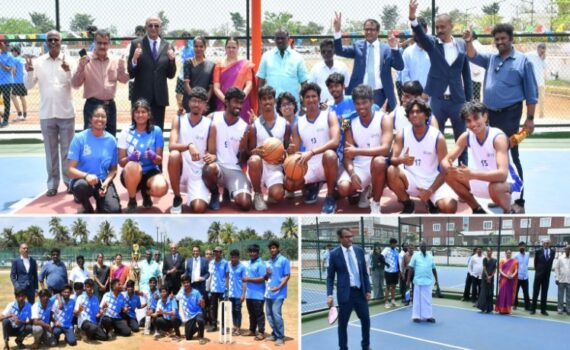
Motihari, Bihar | 02-09-2025 — The spirit of unity, empowerment, and inclusive development came alive as the grand Ek Bharat Shreshtha Bharat celebration concluded with resounding success at Bapu Auditorium and Gandhi Maidan, Motihari. The multi-dimensional event featured the Sansad Khel Mahotsav, Entrepreneur & Intellectual Summit, Kisan Sammelan, and a Felicitation Ceremony honoring achievers from diverse fields. More than 5,000 participants and attendees—including youth, farmers, entrepreneurs, scholars, sports personalities, and community leaders—gathered to make the event a memorable milestone in fostering national integration and grassroots development.

The celebrations were made possible with the generous sponsorship and support of leading institutions and Public Sector Undertakings (PSUs), including SBI, NTPC, Union Bank, Canara Bank, RECL, Power Finance Corporation, IRCTC, HAL, NHPC, HPCL, BPCL, Oil India, ONGC, Indian Oil, BEL, GAIL, Mazagon Dockyard, NABARD, Coal India, Bharat Dynamics, BEML, RailTel, KVIC, IREDA, Airports Authority of India, Bank of Baroda, Indian Bank, Central Bank of India, LIC, Rakesh Masala, GRSE, New India Assurance, Engineers India Limited (EIL), Bank of India, MIDHANI, NBCC, SIDBI, IRCON, HUDCO, Balmer & Lawrie, and Munitions India Limited. Their invaluable partnership exemplified the collective commitment to nation-building, social welfare, and youth empowerment.

Key Highlights of the Event

  • Sansad Khel Mahotsav: Young athletes from across the region showcased their sporting talents in athletics, kabaddi, volleyball, and football. The competition encouraged fitness, discipline, and teamwork while inspiring rural youth to pursue careers in sports.
  • Entrepreneur & Intellectual Summit: Eminent entrepreneurs, start-up leaders, and intellectuals shared insights on innovation, digital economy, and skill development. Young minds were motivated to embrace entrepreneurship as a pathway to self-reliance.
  • Farmer Meet (Kisan Sammelan): Agricultural experts, government officials, and progressive farmers deliberated on modern farming practices, organic agriculture, financial literacy, and access to markets. Farmers were encouraged to leverage government schemes and adopt sustainable techniques.
  • Felicitation Ceremony: Distinguished individuals from fields such as education, culture, social service, sports, and farming were honored for their contributions to society. The recognition aimed to inspire others to contribute positively to nation-building.

Benefits of the Event

The Ek Bharat Shreshtha Bharat celebration in Motihari went beyond being a cultural gathering; it emerged as a transformative platform with lasting benefits for society:

1. Youth Empowerment: The Sansad Khel Mahotsav created opportunities for young athletes to display their potential. It fostered a spirit of healthy competition and motivated participants to lead disciplined, active lifestyles. The event highlighted sports as a viable career option and a medium to promote unity across communities.

2. Promotion of Health & Fitness: By encouraging mass participation in games and physical activities, the event aligned with the Fit India Movement and inspired attendees to prioritize fitness and well-being.

3. Entrepreneurial Growth: The Entrepreneur and Intellectual Summit connected aspiring entrepreneurs with mentors, investors, and thought leaders. It emphasized start-ups, self-employment, and skill development as tools for achieving the vision of Atmanirbhar Bharat (Self-Reliant India).

4. Strengthening Agriculture & Rural Economy: The Farmer Meet empowered cultivators with knowledge about technology-driven agriculture, climate-resilient farming, and access to credit. It highlighted government schemes designed to improve farmers’ income and reduce risks, thus laying the foundation for rural prosperity.

5. Social Harmony & National Integration: Bringing together farmers, youth, entrepreneurs, scholars, and leaders on a common platform fostered a sense of collective responsibility. The event celebrated India’s cultural unity in diversity, reinforcing the message of “Ek Bharat Shreshtha Bharat.”

6. Gender Equality & Inclusive Participation: The active involvement of women—whether as farmers, athletes, or entrepreneurs—signified progress toward gender equality. Their recognition at the felicitation ceremony served as a beacon for greater inclusion in public life.

7. Community Recognition & Motivation: The felicitation of achievers not only acknowledged individual excellence but also inspired others to emulate their contributions. This created a ripple effect of motivation across society.

8. Economic Opportunities: The event created opportunities for local vendors, artisans, and service providers, boosting the regional economy. It also showcased local products and innovations, encouraging “vocal for local.”

9. Public-Private Synergy: The extensive support of PSUs and corporations demonstrated how partnerships between the public sector and civil society can amplify social impact. Their sponsorship ensured robust execution and wider participation.

A Step Toward Nation-Building

Speaking at the event, dignitaries emphasized that the Ek Bharat Shreshtha Bharat initiative is not just about cultural exchange, but about forging stronger bonds across regions, communities, and generations. By integrating sports, entrepreneurship, agriculture, and intellectual discourse, the celebration reflected the holistic vision of inclusive growth.

The overwhelming participation of more than 5,000 people reaffirmed the community’s eagerness to engage in nation-building activities. From nurturing talent to celebrating achievers, the event left behind a strong message of unity, resilience, and empowerment.

Conclusion

The Ek Bharat Shreshtha Bharat event in Motihari stands as a shining example of how collective efforts of citizens, government, and institutions can create a dynamic ecosystem for youth, farmers, entrepreneurs, and intellectuals. It brought together tradition and modernity, unity and diversity, vision and action—laying the groundwork for a stronger, more self-reliant India.

With the blessings of leadership, the support of sponsors, and the active participation of citizens, the event has set a new benchmark for inclusive and impactful community initiatives.

Medical coding and billing form the backbone of global healthcare revenue cycle management. Yet, for many aspiring coders, the cost of certifications and advanced fellowships remains a significant challenge. Addressing this gap, Medesun Prime, in association with PMBAUSA LLC (Professional Medical Billers Association USA), is offering Free AI Medical Coding and Specialty Fellowships under the groundbreaking initiative called Certification Diplomacy.

This effort is more than an education program—it’s a movement to empower coders, reduce financial barriers, and prepare a future-proof healthcare workforce.

What is Certification Diplomacy?

Certification Diplomacy is PMBAUSA LLC’s mission to make globally recognized healthcare certifications accessible to all, regardless of financial background. Instead of restricting knowledge to a privileged few, the program provides free and affordable certifications in partnership with Medesun Prime, one of the most innovative medical coding academies in the world.

Through this collaboration, students and professionals now have an opportunity to gain cutting-edge knowledge, earn credentials, and build careers without heavy costs.

  1. CAIMC® – Certified AI Medical Coder
  • Focuses on the application of Artificial Intelligence (AI) and Natural Language Processing (NLP) in medical coding.
  • Covers AI frameworks, de-identification, PHI handling, embeddings, LLM fine-tuning, and “human-in-the-loop” compliance.
  • Future-proofs coders for the AI-driven transformation of the coding industry.
  • CAIMC® is a registered trademark of PMBAUSA LLC.
  1. CPMB® – Certified Professional Medical Biller
  • Designed for medical billers focusing on claims submission, payment posting, AR calling, denials, and compliance.
  • Emphasizes U.S. insurance plans like Medicare, Medicaid, TRICARE, BCBS, and commercial payers.
  • Prepares billers for end-to-end Revenue Cycle Management (RCM) roles.
  1. FIMC® – Fellowship in Medical Coding

Specialized fellowships offering in-depth practice with HIPAA-redacted medical records, rationales, and coding exercises. These include:

  • FIMC-Surgery – Advanced coding of operative reports, modifiers, global packages, and specialty surgery.
  • FIMC-Inpatient (IP) – ICD-10-CM/PCS, DRG assignment, POA/HAC/PSI, and inpatient compliance.
  • FIMC-Anesthesia – Anesthesia coding, time units, physical status modifiers, and compliance rules.
  • FIMC-Evaluation & Management (EM) – 2023+ E/M guidelines, time-based coding, and MDM calculation.
  • FIMC-HCC – Risk adjustment coding under CMS HCC models (V24 and V28).
  • FIMC-ICD-11 – Training coders on the latest WHO ICD-11 classification system.

All fellowships are hands-on, requiring coders to complete real-time case assessments with a passing benchmark.

  1. CMCC® – Certified Medical Coding Consultant
  • For coders with 5+ years of experience.
  • Requires completion of 1000 real-world medical scenarios within 30 days.
  • Focus areas: ICD-10-CM, CPT, HCPCS, PCS, DRG, APC, risk adjustment, HIPAA compliance, NLP in coding, and consulting skills.
  • Prepares coders for leadership, auditing, and consulting roles.
  1. FHIM® – Fellowship in Health Information Management
  • A two-month self-paced online program.
  • Covers HIM operations, compliance, HIPAA, ICD-10, ICD-11, DRG, APCs, and medical records management.
  • Builds pathways for coders into HIM leadership positions.
  1. CMC-IHC – Certified Medical Coder (Indian Healthcare)
  • A credential tailored for the Indian healthcare system.
  • Includes ICD-10, ICD-11, SNOMED, LOINC, and ICHI coding.
  • Eligibility: Medical Record Technicians, doctors, and nurses.
  • Duration: 15 days.

Why MEDESUN Global Matters

MEDESUN Global is not just another coding academy—it is one of the most respected and innovative training institutions worldwide. With over 20 years of experience and thousands of certified coders placed globally, MEDESUN is known for:

  • Affordable education – Bringing down the cost of training without compromising quality.
  • Global recognition – Courses aligned with AAPC, AHIMA, and WHO standards.
  • AI-driven curriculum – Integrating advanced technologies like NLP, RAG, and ClinicalBERT into coding education.
  • Internship models – Programs like CodersGrade® internship, equivalent to six months of work experience.
  • Wide coverage – Training across specialties such as surgery, cardiology, gastroenterology, oncology, urology, anesthesia, and more.

The partnership between PMBAUSA and MEDESUN ensures that every course under Certification Diplomacy is globally relevant and industry-ready.

Medesun Prime is a trusted global brand in healthcare coding and billing education. Led by Dr. Santosh Kumar Guptha, a world-record holder with more than 45 U.S. and global credentials, Medesun has trained thousands of coders worldwide.

  • Affordable education model – Bringing costs down without reducing quality.
  • Globally aligned curriculum – Covering AAPC, AHIMA, CMS, and WHO standards.
  • AI-powered training – Integrating the latest technologies such as ClinicalBERT, RAG, and symbolic AI post-processing.
  • Internship model – Through CodersGrade® Internship, offering experience equivalent to six months of work.
  • Industry recognition – Consistently rated among the top coding academies in India and globally.

This initiative has wide-ranging benefits for the healthcare ecosystem:

  • For Coders: Gain globally recognized credentials without financial strain.
  • For Employers: Access to highly skilled, certified, AI-ready coders.
  • For Healthcare Systems: Reduced denials, better compliance, and improved claim accuracy.
  • For the Industry: A stronger global workforce prepared for the shift to AI-enabled healthcare.

Through Certification Diplomacy, PMBAUSA LLC and Medesun Prime are pioneering a new era in medical coding education. By offering free AI and specialty fellowships, they are removing financial barriers and giving every coder—whether in India, the U.S., or worldwide—the chance to build a future-proof career

https://www.medesunglobal.com
https://www.pmbausa.com

Y Combinator-backed US fintech expands services to India with minutes-fast transfers that bypass traditional banking delays

SAN FRANCISCO, CA | Sep 2, 2025- Y Combinator-backed startup fintech Grey has expanded its services to India, now offering almost instant rupee payouts to serve Indians earning from international sources—from freelancers and entrepreneurs to students and expats sending money home, receiving support from family and managing cross-border finances.

The product expansion positions Grey, a US-licensed fintech, that serves over 2 million users across 50+ countries, as a major player offering comprehensive global banking services specifically designed for India’s digitally connected workforce, providing instant access to USD, EUR, and GBP accounts alongside local rupee conversions.

India processes over $125 billion in annual remittances, more than any country globally, yet most recipients still wait 3-5 business days and pay 3-7% in hidden fees for international transfers.

“Traditional banks treat international payments like it’s still 1995,” said Idorenyin Obong, Grey’s CEO, who spent time in Bengaluru meeting users “I talked to a freelance designer who was losing ₹15,000 monthly just on conversion fees and delays. That’s serious money.

The timing reflects India’s growing global economic integration. The country has the world’s largest freelance market with over 15 million freelancers and approximately 3 million remote workers employed by foreign companies. Most still rely on traditional payment methods with multi-day delays, despite having clients primarily based in the US, UK, Australia, Europe, and South America.

Grey’s approach differs by providing users with actual US, European, and UK bank account details, allowing international clients to pay as if hiring locally, then instantly converting funds to rupees on the recipient’s end.

“We’re not just another remittance app,” Obong explained. “We’re giving Indians the same financial infrastructure that Americans and Europeans have which is instant access to global money.”

The launch positions Grey directly against established players in India, a market where cross-border payment companies have struggled with regulatory complexity and local banking partnerships.

Indian users can sign up immediately at grey.co. The service supports payouts from 170+ countries and includes virtual USD debit cards and USDC cryptocurrency deposits and payouts.

About Grey

Grey is at the forefront of providing secure and convenient global banking solutions to meet the needs of customers and businesses. Grey holds a Money Service Business license from FINTRAC in Canada, and FinCEN in the USA, and our primary focus is emerging markets. Our range of services enables individuals and businesses to easily own and manage multi-currency accounts. This includes currency exchange, sending and receiving payments to and from over 170 countries, as well as access to virtual cards.

Media contact

For all press-related inquiries, please contact Oyinda via oyinda@grey.co