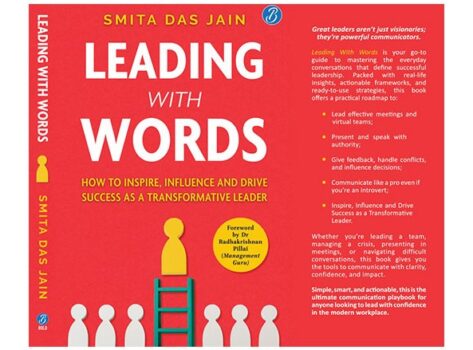
Gurugram (Haryana) [India], September 10: Award-winning Executive Coach, Personal Empowerment Life Coach and Author Smita Das Jain announces the release of her fifth book, Leading With Words: How to Inspire, Influence and Drive Success as a Transformative Leader, brought out by Srishti Publishers & Distributors.

Positioned at the intersection of leadership and communication, the book fills a crucial gap in the professional development space. While there are many titles on leadership and several on communication, Leading With Words is among the first to combine both. The book recognises that today’s leaders cannot succeed without the ability to articulate vision, inspire teams, and influence stakeholders with clarity.

The book equips readers with practical strategies on:

  • Communicating with confidence in meetings, presentations, and high-stakes conversations
  • Building influence through assertive yet non-violent communication
  • Crafting compelling messages across formats, from email to public speaking
  • Navigating change management, crisis situations, and cross-cultural interactions
  • Leveraging listening as a powerful leadership tool

The book carries a foreword by Dr. Radhakrishnan Pillai, bestselling author of the Corporate Chanakya series, and endorsements from Shantanu Chakravartty (CEO and Director, WHSmith India), Sundeep Singh (Managing Director, Accenture Strategy & Consulting), and Nishant Shekhar (MD & Partner at a leading global management consulting company), underscoring its relevance at the highest levels of corporate leadership. Readers can explore more about Leading With Words here.

Smita Das Jain brings a rare blend of corporate insight and coaching expertise. An alumna of SRCC and IIM Indore, she draws on over 18 years of corporate and entrepreneurial experience to enrich her coaching practice. An ICF-PCC accredited Executive Coach, she has delivered nearly 2,500 hours of one-on-one coaching, guiding more than 300 middle, senior, and CXO-level professionals across 12 countries to communicate with confidence, lead with impact, and grow or reinvent meaningful careers they love, without second-guessing themselves. Learn more about Smita’s Empower Your EDGE coaching services here.

In addition to her coaching, Smita is a three-time TEDx speaker and an award-winning author of four previous books, as well as co-author of the Tony Robbins-endorsed New York Times bestseller, Cracking the Rich Code: Vol 12. Her work has been featured on national television and in leading publications, and she is recognised as one of the leading executive coaches in Asia.

Speaking on the launch, Smita said:

“Leaders are often told to have vision, but vision without clear words rarely travels. This book is my attempt to ensure that no professional loses influence or opportunity because they could not find the right words at the right time.”

Readers can order their copy of Leading With Words here.

For media inquiries or to request an interview with Smita Das Jain, please reach out at smitadjain@lifecoachsmitadjain.com.

Jaipur, Rajasthan – Veriqos Technologies, a leading fintech innovator headquartered in Jaipur, today announced the launch of its expanded API ecosystem, now offering over 100 APIs designed to automate and streamline digital financial journeys. With a strong focus on AI-powered automation, Veriqos enables banks, NBFCs, and fintech companies to accelerate digital transformation while reducing operational costs and improving compliance.

The Veriqos API suite spans across critical areas of financial services, including:

  • Digital Onboarding Suite – seamless KYC, identity verification, and customer onboarding.
  • Business & Entity Verification – instant validation of businesses and corporate entities.
  • Financial Account Verification – real-time account and transaction verification.
  • Risk, Fraud, and AML – AI-driven fraud detection and anti–money laundering compliance.
  • Lending & Underwriting Automation – automated loan origination, scoring, and approval workflows.
  • Consent & Digital Signature – secure, legally compliant consent and e-signature solutions.
  • Contact & Communication Verification – mobile, email, and address verification.
  • Vehicle & Asset Verification – verification of ownership, valuation, and asset status.
  • Global Verification Suite – cross-border identity and compliance verification.

“APIs are the engine of tomorrow’s finance, driving smarter platforms and lasting success.” said Amish Tiwari, Founder & CEO of Veriqos Technologies. “With our 100+ APIs, we empower institutions to build smarter platforms, accelerate onboarding, combat fraud, and deliver customer journeys that are both secure and seamless.”

With its plug-and-play API model, Veriqos ensures easy integration, scalability, and speed to market for financial service providers. Early adopters have reported significant improvements in onboarding efficiency, fraud prevention, and customer experience, cementing Veriqos’s role as a trusted partner for digital financial innovation.

About Veriqos Technologies

Veriqos Technologies is a fintech solutions provider specializing in API-driven financial services and AI-powered automation. With more than 100 APIs across onboarding, verification, lending, risk, and compliance, Veriqos empowers organizations to transform their digital financial journeys with speed, intelligence, and reliability. Based in Jaipur, Rajasthan, Veriqos serves clients across India and global markets.

Website: www.veriqos.com

Linkedin:  https://www.linkedin.com/company/veriqos/

Youtube: www.youtube.com/@VeriqosTechnologies

Instagram: https://www.instagram.com/veriqos_technologies/

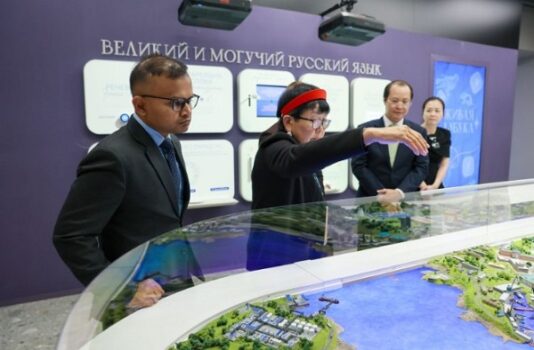
A festive program dedicated to the opening of the “Russia” National Centre branch in Primorye is taking place in Vladivostok. The opening ceremony was attended by Consuls General of the Republic of Belarus, Igor Sokol; the Republic of Uzbekistan, Yusup Kabuljonov; Vietnam, Nguyen Viet Kien; India, Siddharth Gaurav; and the Head of the Office (Branch) of the Embassy of the Kyrgyz Republic, Iskender Orusbaev.

“We are delighted to see representatives of the foreign consulates general located in the Primorye Territory here today. The countries you represent are key partners for Russia, particularly in the Far East. Your presence today underscores Vladivostok’s truly international status,” said Natalia Virtuozova, Director General of the “Russia” National Centre.

She emphasized that the Primorye branch will become a modern public space, a new attraction point in Vladivostok, and a key international venue. According to her, the goal of the National Centre “Russia” in Primorye is for residents to take pride in their region and country, and for foreign guests to discover the Far East in all its diversity and find concrete opportunities for dialogue and joint work here.

“We have already launched the international activities of the National Centre’s branch and successfully organized the first international event. Just two days ago, an expert session was held here as part of our international initiative, the Open Dialogue, dedicated to transforming connectivity institutions and exploring new solutions for international trade, payments, and logistics. Vladivostok, being a strategic hub and a ‘gateway’ to Asia, proved to be the perfect platform for discussing the topic of connectivity,” said Natalia Virtuozova.

The Consul General of Vietnam in Vladivostok, Nguyen Viet Kien, noted that he had already walked through the branch of the National Centre “Russia” and was impressed.

“I am incredibly impressed with the branch of the National Center ‘Russia’  in Vladivostok. Congratulations on the opening. I believe this place should definitely be on the list for every tourist and anyone visiting this city. I am sure this is one of the finest venues for organizing international events. Such a center is perfectly suited for cultural exchange and various exhibitions,” emphasized Nguyen Viet Kien.

The Consul General of India in Vladivostok, Siddharth Gaurav, also congratulated everyone on the opening of the National Centre “Russia” branch.

“I would like to congratulate the residents of Primorye and Vladivostok on the opening of the National Centre ‘Russia’, which was opened by the respected President Vladimir Putin,” said Siddharth Gaurav. “The way everything is presented in this center is truly admirable. We were accompanied by an excellent guide who gave us a tour of all the exhibitions dedicated to the Primorye Territory.”

The Consul General of India in Vladivostok noted that the center will become a true landmark of Primorye: “Undoubtedly, everyone who wants to learn the basics or even more about the region must visit this place to feel closer to Vladivostok and learn much more about it.”

Gen4 sets new SAR satellite, featuring up to 16 cm resolution & expanded 400 km high-resolution coverage area, resulting in the world’s highest-fidelity commercial SAR imagery

Helsinki, Finland – September 9: ICEYE, the global leader in Synthetic Aperture Radar (SAR) satellite operations, today announced the commercial availability of its fourth-generation “Gen4” satellites. The latest generation delivers the world’s highest-fidelity commercial SAR imagery of up to 16 cm resolution, extends the high-resolution field of regard to 400 km, and enables more images per orbital pass for faster coverage of priority areas of interest (AOIs).

With this significant increase in coverage and optimized design, Gen4 is built for large-scale deployment and operations in large constellations. Its higher imaging throughput increases the per-pass image count, making sub-15-minute revisit performance more accessible. For defense and intelligence teams, this means faster, more reliable situational awareness and greater confidence in mission-critical decisions.

Each Gen4 satellite can capture up to 500 images per day, with up to half concentrated within a 2,000-km-wide region per orbit. Imaging and downlink can occur simultaneously at up to 700 Mbps, enabling tasking, acquisition, and delivery within the same pass for near real-time monitoring.

A larger and more powerful antenna delivers a stronger signal and sharper detail. This advancement is a key feature of the new Gen4 satellite, which expands high-resolution imaging coverage by 250% – from 150 km to 400 km. This allows a single satellite to monitor a vast area of interest, such as an entire naval task force or a major land border crossing in a single pass while accelerating revisits over time-sensitive targets.

The result is improved image quality, providing sharper insights and higher confidence. This enhanced imagery further improves ICEYE’s Detect & Classify product, which combines its high-resolution SAR imagery with advanced artificial intelligence to automatically detect and classify vessels, aircraft, and vehicles with better than 90% accuracy.

For national customers and governments, Gen4 can be purchased as a fully sovereign capability that is not subject to ITAR control. ICEYE delivers the Gen4 satellite as part of a complete, secure system that can be launched, deployed, and operated within 12 months, including ground segment, comprehensive training and continuous software updates.

The first wave of Gen4 satellites were launched as part of the SpaceX TR13 mission in March this year, demonstrating ICEYE’s position as a critical partner for governments, and defense and intelligence customers, worldwide.

ICEYE currently operates the world’s largest constellation of SAR satellites and has succeeded in packing powerful sensors into cost-efficient platforms with rapid revisit times. Because its satellites are software-driven, ICEYE can continuously evolve their capabilities from the ground without building new hardware.

Rafal Modrzewski, co-founder and CEO of ICEYE, said: “After years of dedicated research and innovation, we are proud to announce that our next-generation satellite, Gen4, is now commercially available. This marks a significant step forward in delivering more images, sharper, faster, and more flexible to our customers worldwide.”

“Gen4 is not only a technological leap; it’s a clear example of how ICEYE continues to push the boundaries of the SAR satellite industry. It’s a game-changer for how governments, as well as defense and intelligence users, can see, understand, and respond to events around the globe,” he concluded.

With India increasingly focusing on strengthening its space-based intelligence, surveillance, and disaster response capabilities, ICEYE sees the Gen4 platform as a powerful enabler for addressing national priorities.

Pavitra Goel, Vice President – India Missions, ICEYE, said: “India’s diverse security, disaster management, and infrastructure monitoring requirements demand advanced earth observation capabilities. With Gen4, ICEYE is uniquely positioned to support India’s vision for enhanced space-based situational awareness, enabling faster, more informed decision-making in areas critical to the nation’s strategic and civilian needs.”

About ICEYE

ICEYE delivers unparalleled persistent monitoring capabilities to detect and respond to changes in any location on Earth, faster and more accurately than ever before.

Owning the world’s largest synthetic aperture radar (SAR) satellite constellation, ICEYE provides objective, near real-time insights, ensuring that customers have unmatched access to actionable data, day or night, even in challenging environmental conditions. As a trusted partner to governments and commercial industries, ICEYE delivers intelligence in sectors such as defense and intelligence, insurance, natural catastrophe response and recovery, security, maritime monitoring, and finance, enabling decision-making that contributes to community resilience and sustainable development.

ICEYE operates internationally with offices in Finland, Poland, Spain, the UK, Australia, Japan, UAE, Greece, and the US. We have more than 900 employees, inspired by the shared vision of improving life on Earth by becoming the global source of truth in Earth Observation.

Visit www.iceye.com and follow ICEYE on LinkedIn and X for the latest updates and insights.

Connectivity Without Intermediaries: What Unites BRICS, Asia, and the Global South

The World Majority Builds a New Economy: Key Ideas from the Open Dialogue

In Vladivostok, a discussion on new financial and investment solutions for countries of the World Majority was held as part of an Open Dialogue at the branch of the National Centre “Russia”. The session was moderated by Maxim Oreshkin, Deputy Head of the Administration of the President of the Russian Federation.

During the third discussion block on “New Financial and Investment Mechanisms for the World Majority,” participants emphasized that in a changing global economy, sustainability cannot be ensured without digital integration and the development of compatible payment systems.

Rupa Chanda, Director of the Trade, Investment, and Innovation Division at UN ESCAP, stressed that the digitization of financial settlements cannot be considered in isolation from other processes.
“Financial solutions must be embedded in a broader ecosystem — trade, investment, logistics. Initiatives for the digitization of trade and financial flows, as well as the implementation of ‘smart’ logistics, already exist and need to be integrated into a single whole,” the expert stated.
This approach will allow Global South countries not only to increase the efficiency of settlements but also to strengthen their positions in international trade.

Furthermore, she noted that digitalization and new technologies, including blockchain, can play a significant role in creating interoperable systems and alternative financial mechanisms. At the same time, she emphasized, the digitization of settlements cannot be viewed in isolation.
According to her, this is especially important because the majority of cross-border payments are directly linked to trade and investment flows. “If we manage to embed financial settlement mechanisms into the overall digital agenda, the effect will be significantly greater,” Rupa Chanda emphasized.

Speaking at the session, Dr. Teguh Yudo Wicaksono noted that the Asia-Pacific region faces a serious challenge. According to him, the region’s economy is largely dependent on trade and markets, and in recent years, countries have already gone through harsh lessons in surviving crises.

“We have learned difficult lessons related to the challenges of dependence on a single currency as the main means of payment,” he emphasized.
The consequences of this approach have been extremely tangible, which is why new strategies are being proposed today, some of which are already being discussed in Arab countries as well.

During his speech, Dr. Teguh Yudo Wicaksono from Indonesia reported that his country is concluding agreements with key trade partners — Malaysia, Vietnam, and China — to transition to settlements in national currencies.
“We are moving away from dollar dependence. It would be useful if digital payment methods were more widely adopted in Russia as well,” the speaker noted.
He added that about 38 small producers are currently united, which allows them to bypass undesirable global processes and build their own system.
“This strengthens the resilience of our economy,” the expert stated.

According to him, regional cooperation is especially important for Oceania and Asia-Pacific countries, playing a key role in ensuring cross-border transactions. Existing estimates show that already this year, the region could receive over $3 billion in revenue, representing growth of about 25%.

“The issues of cross-border payments show: Asia can serve as a model for practical solutions that help counter Western pressure,” Wicaksono emphasized.

In conclusion, he noted that economic independence is necessary, but it should be a complement to the overall global system:
“Only this way can efficiency, liquidity, and stability be ensured.”

Chennai (Tamil Nadu) [India], September 9: DigiSME, a leading provider of next-gen HR software, has been honoured with the “Employee Experience Solutions Provider” award at the ETHRWorld Employee Experience Awards 2025.

The third edition of the ETHRWorld EX Awards took place on July 2025, at the Sheraton Grand, Bengaluru. The event celebrated forward-thinking organizations and service providers that are redefining how modern workplaces care for and empower their people.

DigiSME emerged as a standout among a highly competitive field. The jury praised the company for its intuitive product design, real-world client outcomes, and ability to scale without compromising on quality or user experience.

The company considers this prestigious award as more than a badge of success. Every team member is celebrating this milestone as it reflects the organisation’s mission to simplify workplace management and elevate employee experience through user-friendly design, automation, and customer-focused approach.

“This recognition is a proud milestone for us. We don’t see employee experience as a trend. It’s the core of everything we build. This award is a tribute to our team’s dedication and to the trust our customers place in us,” said Dinesh Kamal Somanchi, Chief Technology Officer at DigiSME.

DigiSME’s all-in-one HRMS is built for businesses of all sizes. The HR platform streamlines payroll, onboarding, attendance, leave, and appraisal processes for employers. Employees can mark attendance with location-based tracking, access payslips and check leave balances, and all necessary associated with mobile-first self-service app.

What set DigiSME apart is their belief that real transformation begins with effective implementation and not just software adoption. HR teams and employees may not have the time or resources to manage the digital transformation on their own. To bridge that gap, every customer will have a dedicated specialist who assists in setting up the platform and configuring the workflow.

DigiSME also ensures direct and personal support without automated menus or delays. When there is an issue, the customers can reach out to them, and this continues throughout their journey with DigiSME.

The ETHRWorld jury evaluated entries based on innovation, business impact, scalability, and measurable outcomes. DigiSME’s efficiency in reducing the HR workloads and enhancing employee engagement played a key role. The award places DigiSME among India’s top experience-focused HR tech innovators.

Clients across industries have praised DigiSME for its simplicity and support. This win adds another meaningful chapter to DigiSME’s journey toward helping SMEs across India build better, happier, and more productive workplaces.

“We’re just getting started. With AI-powered features, integrations, and a growing community of users, we’re evolving to meet the needs of tomorrow’s workforce,” added Dinesh.

About DigiSME

DigiSME is a cloud-based HRMS software platform designed for businesses of all sizes in India, Singapore, New Zealand, UAE, Australia and more. It helps organisations automate HR processes, stay compliant, and create exceptional employee experiences from hire to retire.

An expert session within the Open Dialogue project took place on September 5 at the National Centre “Russia” branch in Primorsky Krai. Authoritative international experts participated in the discussion on the transformation of trade and connectivity in the new reality. The event continued themes from the first Open Dialogue “Future of the World. New Platform for Global Growth,” held in April 2025 in Moscow.

Associate Professor Gulshan Sachdeva, at the School of International Studies at Jawaharlal Nehru University, stated during the Open Dialogue that today’s Global Majority countries are no longer the “Third World,” but rather new powerful centers of political, economic, and intellectual development.

“If we’re talking about the global majority and the Global South, the situation today is completely different. We have grown strategically, economically, technologically, and even intellectually. These countries now dominate and are likely to continue dominating in trade, investments, technologies, climate issues, and other areas. And even if you look just at BRICS—already now the GDP growth rate is 4%, and by 2030 this share will exceed 50%,” stated Gulshan Sachdeva.

Technological innovations (digital payments, AI) demonstrate the potential of Global Majority countries. But the key challenge is organizing joint architecture and connectivity infrastructure without Western dominance, emphasized the Associate Professor at the School of International Studies at Jawaharlal Nehru University.

He also noted that using institutions, trade mechanisms, and currencies as “weapons” erodes the stability of the world order. Gulshan Sachdeva is convinced that alternative solutions are needed within BRICS and beyond.

Western partners still maintain a sense of impunity and the role of sole decisive players, believes Victoria Panova, Head of the BRICS-Russia Expert Council, Vice-Rector of HSE University, and Russia’s Sherpa in the Women’s Twenty. According to her, the financial levers of Western institutions—the dollar payment system, London insurance structures, control over container shipping—effectively give them an advantage and the illusion of the right to conduct dialogue as masters.

“In this context, the role of BRICS is truly invaluable. Despite attempts by Western colleagues to undermine the association, BRICS has proven its relevance and ability to offer new initiatives not only in the economic and financial spheres but across all three pillars of cooperation. Interdependence between countries remains, including with the West, the EU, and the USA, but a new, more multipolar economy is already forming. If you look at the statistics: since the first summit, trade turnover within BRICS countries has grown 3.5 times—this is objective evidence that participants are actively cooperating and can contribute to mutual growth, reducing dependence on Western powers,” she emphasized.

BRICS countries are establishing new institutions and mechanisms that enable participants to enhance their economic independence. One such project is the Contingent Reserve Arrangement. According to Victoria Panova, it still requires refinement but already demonstrates the association’s aspiration to diversify financial instruments and reduce dependence on Western structures.

“The New Development Bank of BRICS has already launched practical initiatives: bonds have been issued in yuan and rand, with rupee issuance in preparation. Today, about 30% of the bank’s operations are conducted in national currencies. An investment package of about 35 billion dollars is aimed at reducing the infrastructure gap in Global South countries and supporting their long-term development,” she emphasized.

BRICS is gradually ensuring the leveling of international architecture, refraining from interfering in the logic of sanctions or counter-sanctions, but rather through practical initiatives that help countries implement their development plans and protect the interests of their citizens, added Victoria Panova.

Open Dialogue participants also discussed attracting investments in the International North-South Transport Corridor, BRICS+ routes, continental railway projects, as well as international logistics challenges and measures to strengthen ties between the EAEU, Africa, and ASEAN.

Alexey Bezborodov, Managing Partner of Infra Projects LLC, spoke on the topic “New Solutions for Enhancing Logistics Connectivity of BRICS Countries.” He noted that the world has entered the era of containerization and that the container will become the basic unit of global trade in non-energy sectors. The expert also stated that Russia is capable of playing a key role in transit within BRICS, particularly through infrastructure development along the Trans-Siberian Railway and the North-South corridor, which becomes strategically important for China and India.

“Today, fragmentation, containerization, local economic spurts, and e-commerce allow us to say that there is a shift in perceptions of geography, cargo movement speeds, methods of final delivery, and cooperation options in production. Essentially, a quiet revolution is occurring in infrastructure and logistics,” stated Alexey Bezborodov.

At the same time, he emphasized that today’s infrastructure development “consumes enormous resources” from all states, and new or modernized facilities are not always durable. Often, they exhaust their potential within 5 to 10 years.

“Therefore, we need to think about new principles of movement—based on small atom, new pipe transportation of goods, new physics and energy,” noted Alexey Bezborodov.

The expert emphasized that several trade and logistics routes are successfully developing in Russia. These include the Northern Sea Route and the Transarctic Transport Corridor. There is also an essential project for joint investments—the North Siberian Railway, which, with the creation of additional links, can connect the October, Northern, Sverdlovsk, and West Siberian railways.

“First and foremost, we must continue developing our standard classical transit from China through Kazakhstan, Russia, Belarus to Europe. It exists now and brings income to all participants,” he noted.

Connectivity Without Intermediaries: What Unites BRICS, Asia, and the Global South

In Vladivostok, a discussion on new financial and investment solutions for countries of the World Majority was held as part of an Open Dialogue at the branch of the National Centre “Russia”. The session was moderated by Maxim Oreshkin, Deputy Head of the Administration of the President of the Russian Federation.

During the third discussion block on “New Financial and Investment Mechanisms for the World Majority,” participants emphasized that in a changing global economy, sustainability cannot be ensured without digital integration and the development of compatible payment systems.

Speaking at the session, Ilya Ivaninskiy, Director of the Center for Business Education and Analytics at the Central University, emphasized that without investment, real market connectivity is impossible.

“Connectivity doesn’t work well without money,” he noted, reminding that developing countries now form the center of the global economy: they account for over 60% of global GDP and more than 90% of the planet’s population. According to him, future economic growth is concentrated precisely here.

At the same time, Ivaninskiy noted, the international monetary and financial system has not yet adapted to this reality:

“Neither payments, nor representation in organizations, nor reserves, nor investments — no component corresponds to the new conditions.”

The global investment deficit is estimated to exceed $4 trillion, and the problem is felt most acutely in Global South countries.

The speaker explained in detail the reasons behind these difficulties. In developing countries, investments are largely built on borrowed funds:

“Our debt-to-equity ratio is 2 to 1, while in developed countries it’s 1 to 1.” Moreover, a significant portion of the debts are short-term, with about 40% due for repayment as early as 2027. The cost of capital is also unfairly inflated. “If our risk is higher by 1.5%, then the cost of capital is higher by 6.6%. This is four times higher than the actual risk level,” he emphasized.

Another problem cited by the expert is low market connectivity: most foreign investments coming into developing countries are from developed ones, and vice versa — the main investments from the Global South flow into developed markets.

“When we see a low degree of connectivity in the 21st century, a logical solution is a new investment platform,” stated Ivaninskiy.

In his opinion, such a platform could connect BRICS countries and the global majority. It should include a showcase of long-term infrastructure projects, clear criteria for assessing quality for investors, and effective risk reduction tools.

“Governments can help by buying junior tranches or providing guarantees,” he noted.

Ivaninskiy proposed a two-tier architecture for the platform: at the national level — selection of projects and investors; at the international level — mutual investments and offsets.

He also drew attention to technological capabilities:

“Blockchain is already mentioned as a tool for making payments and settlements. Modern digital tools make such operations cheap and transparent.”

According to him, a digital investment asset — risk-free and protected from inflation — could be at the center of the platform.

The expert also provided economic calculations: if countries invest at least $10 billion annually, it could generate up to $100 billion in additional GDP per year.

“For economies with a combined GDP of over $60 trillion, such investments are insignificant, while the effect could amount to a quarter of a percent of global GDP,” he noted.

“It’s great that we are discussing such initiatives at these venues. I would like to believe that this will allow them to be implemented faster,” Ivaninskiy concluded.

New York, NY – September 05, 2025, 09:57 AM EDT – Jason Zangara, MPH, MA, a public health and safety professional and U.S. citizen based in New Jersey, has intensified efforts to address systemic gender bias, pay inequity, and colorism in Bollywood and regional Indian film industries.

The Public Interest Litigation (PIL), submitted on April 15, 2025, invokes Article 32 of the Indian Constitution to challenge discriminatory practices that affect 1.4 billion citizens, including 700 million women.

Key findings of a study he completed on Indian cinema include:

  • Gender Pay Disparity: 96.8% of 250 films (2010–2025) featured male leads, with actresses earning up to 85–90% less despite equal or greater screen presence.
  • Colorism in Casting: 99.6% of lead roles went to fair-skinned actors, marginalizing darker-skinned talent.
  • Male Favoritism: Preferential casting and career opportunities for men reinforce patriarchal norms.

“I love watching Indian cinema but these women have so much more potential. They shouldn’t always be some guy’s love interest or in a kitchen. They should be taking the lead in these films—and be compensated for it,” Zangara said.

To advance his cause, Zangara has also appealed to Shri Brij Lal, Chairman of the Parliamentary Standing Committee on Personnel, Public Grievances, Law and Justice, urging systemic reforms that promote equality and fairness in the film industry.

“This case is not only about fairness in entertainment but about the fundamental dignity and opportunities available to millions of women and artists in India,” Zangara stated.

The initiative has already garnered international attention in U.S. media, including The Indian Panorama, New India Abroad, Thamasoma, and PTC News, highlighting both the issue of industry discrimination and the importance of systemic reforms.

For support or further details, Contact:

Jason Zangara, MPH, MA
+1 (908) 672-0626
firefighterjazzyj@yahoo.com

India, 04-09-2025 – In a world currently caught in tariff wars, protectionist policies have assumed high significance. Among the approaches adopted by developed nations and increasingly being followed by developing countries, non-tariff measures, especially technical regulations and standards, have not only become critical but are also causing significant trade friction. Even as they are primarily intended to address risks to human health, safety, or the environment, the hard-to-meet standards and even more complex compliance procedures pose challenges that require deep knowledge of technical standards and regulations for products and services, as well as the modalities of obtaining the required approvals. Technical regulations encompass virtually every sector of merchandize trade but are more prominently applied in sectors such as food, pharmaceuticals, and chemicals due to their direct impact on human safety.

What had been an overseas phenomenon till a decade ago is now emerging as a major Indian response with the promulgation of a large number of regulatory notifications, many through the QCO route, requiring conformance and mandatory certification or approvals from Indian regulators.

A major challenge is the lack of professional expertise in dealing with the complex world of technical regulations, evidenced through repeated incidents of consignment rejections of exported food products in overseas markets. As per the RASSF Window of the European Union between January and July this year, there were 4479 incidents of border rejections in food and food contact materials, out of which 565 were from India.

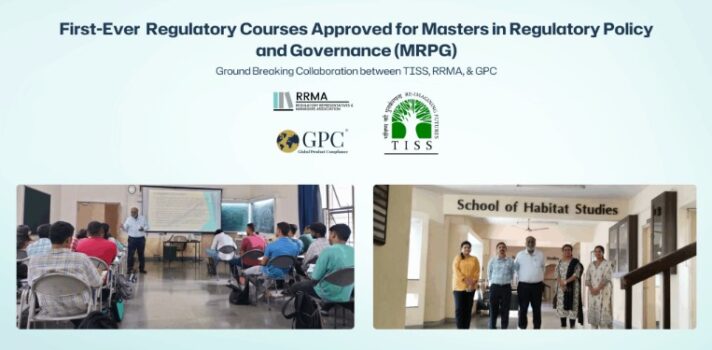
With a view to fill this gap, the Tata Institute of Social Sciences (TISS) has entered into a collaboration with Regulatory Representatives and Managers Association (RRMA) a body of regulatory professionals in India and Global Product Compliance (GPC) a global facilitator of regulatory compliances in the Chemicals sector to launch three professional courses that will prepare students and industry professionals with deep knowledge and understanding of the chemicals regulatory ecosystem and compliances a the national and international level. This pioneering initiative marks the first time that chemical regulation and technical standards have been formally integrated into a university curriculum in India.

The courses are in tune with the Indian National Strategy for Standardization (INSS) released by the Department of Commerce in June 2018, in which ‘Awareness, Counselling, Training and Education’ was identified as one of the pillars of the quality ecosystem and development of quality-related modules at all levels was highlighted as one of the goals.

The courses have been designed to empower students and make them employment ready. The courses include:

  • Standards and Regulations in Goods and Services – 2 Credits (30 Hours) – Regular/Mandatory Course
  • Introduction to Chemical Regulations – 1 Credit (15 Hours) – Regular/Mandatory Course
  • Advanced Course on Chemical Regulations – 2 Credits (30 Hours) – Elective Course.

This development aligns with RRMA’s core mission of regulatory capacity building by equipping students and professionals with essential skills and knowledge to navigate India’s and the global regulatory landscape. The collaboration represents a milestone not just for RRMA and TISS, but for India’s regulatory education sector.

Mr. Geert Dancet, Chair of RRMA and former Executive Director of the European Chemicals Agency (ECHA), emphasized the international importance of the initiative: “This initiative is a visionary step for India’s regulatory education. By building local expertise with a global outlook, the collaboration between RRMA, GPC will empower future regulatory professionals to drive compliance and innovation in India and beyond.”

This is more than an academic milestone—it is a national step forward in preparing India’s regulatory workforce for the future,” said Mr. Anil Jauhri, Co-Chair of RRMA and one of the core contributors to the course development.

With growing complexity in global regulations—ranging from EU REACH and GHS updates to India’s draft Chemical Management and Safety Rules—industries need trained professionals who can understand, interpret, and implement regulatory frameworks effectively. These new university-level courses offer structured learning in chemical safety, conformity assessment, environmental risk, global conventions (such as the Stockholm and Basel Conventions), and practical compliance strategies.

RRMA has been at the forefront of regulatory education in India, developing certification programs in partnership with renowned institutions such as IIT Hyderabad and IIM Mumbai. This new venture with TISS reinforces RRMA’s commitment to nurturing a strong pool of regulatory professionals across sectors such as chemicals, cosmetics, food contact materials, agrochemicals, and sustainability.

Our collaboration with TISS exemplifies the potential of academia-industry partnerships in driving national development. It is a proud moment for all of us at RRMA,” added Mr. Anupam Kaul, Chair Executive Committee of RRMA.

“At GPC, we are dedicated to helping industries navigate the changing global regulatory landscape while encouraging sustainable and responsible practices. This initiative aims to develop a strong pool of skilled regulatory professionals who will drive the future of compliance and sustainability.” – Mr. Shisher Kumra, Executive Director, GPC.

“We are glad to collaborate with RRMA and GPC in developing and delivering courses on Standards and Regulations of Goods and Services and Chemical Regulation. These courses provide an edge to our master’s students in Regulatory Policy and Governance, opening new career opportunities in critical sectors. This would not have been possible without the active support of RRMA and GPC officials”. – Dr. Sachin Warghade, Chairperson, Centre for Regulatory Policy and Governance, TISS, Mumbai.

The first academic batch commenced from 1st August 2025, and the initiative is already gaining attention among regulatory professionals, students, and industry leaders. RRMA plans to build on this foundation by introducing further specialized programs and degrees to enhance compliance excellence.

For interviews or additional information, please contact:

Regulatory Representatives and Managers Association (RRMA)

info@rrma-global.org | www.rrma-global.org

+91 93229 53604

Follow RRMA: LinkedIn