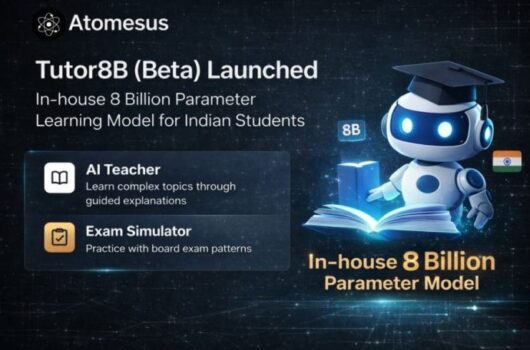
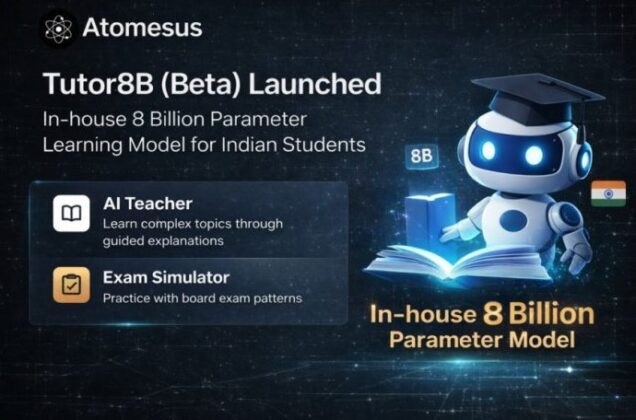
Noida (Uttar Pradesh) [India], February 27: In a move that signals serious ambition in India’s growing AI education race, Atomesus has unveiled Tutor8B (Beta), a purpose-built learning intelligence system designed not just to generate answers, but to teach.

The announcement, shared publicly by the company, positions Tutor8B as a foundational step toward building a deeply personalized AI education ecosystem tailored for Indian learners. The messaging is direct: this is about helping students move forward, not just complete homework faster.

But the real story sits under the hood.

What Tutor8B Actually Means

Tutor8B is not a generic wrapper around existing tools. According to the company, it is an in-house model trained with 8 billion parameters, built specifically to handle structured learning, explanation depth, and adaptive reasoning for students.

In simple terms, the “8B” in Tutor8B stands for 8 Billion Parameters — the internal mathematical weights that allow a model to understand patterns, language, context, and reasoning. The larger and more optimized these parameters are, the better the model can interpret questions, explain concepts, and adjust responses based on user input.

Atomesus emphasizes that Tutor8B is engineered for:

  • Concept clarity over shortcut answers
  • Step-by-step explanation flows
  • Curriculum-aligned responses
  • Student-level adaptation

This is an important distinction. Many AI systems optimize for speed and fluency. Tutor8B appears to be optimized for pedagogy.

That difference matters.

Beyond Answers: The Atomesus Teacher Layer

Tutor8B powers what the company calls the Atomesus Teacher experience — a guided AI explanation system built to simplify complex subjects.

From the preview visuals, the design philosophy is clear: minimal interface, distraction-free layout, single-focus call-to-action — Start now.

The Atomesus Teacher promises:

  • Structured breakdown of difficult topics
  • AI-guided explanations
  • Stepwise reasoning rather than instant solutions

For students struggling with math derivations, physics numericals, or theory-heavy chapters, the approach aims to simulate a patient tutor — not a search engine.

Exam Simulator: Built for the Indian System

In addition to the teaching interface, Atomesus is rolling out an Exam Simulator designed around real board exam patterns.

The simulator highlights support for:

  • CBSE
  • ICSE
  • State Boards

Instead of generic quizzes, the platform focuses on:

  • Real exam-style questions
  • AI-powered evaluation
  • Performance analytics
  • Pattern-based practice

This suggests a strategic focus on India’s board examination ecosystem — a high-pressure environment affecting millions of students every year.

And that’s a smart move. India doesn’t need another generic AI chatbot. It needs exam-ready systems that understand its syllabus structure.

Why an 8 Billion Parameter Model Matters

An 8B parameter model sits in a powerful middle ground:

  • Large enough for strong reasoning and contextual understanding
  • Efficient enough for scalable deployment
  • Optimizable for domain-specific training

By building Tutor8B in-house, Atomesus is signaling long-term control over:

  • Architecture decisions
  • Data alignment
  • Optimization for Indian curriculum
  • Security and deployment strategy

In the education sector — where privacy, student safety, and accuracy are non-negotiable — this level of ownership is significant.

Designed for Learning, Not Dependency

One subtle but important positioning detail from the announcement is the tone: Tutor8B is described as helping students move forward, not replacing effort.

That distinction reflects a broader debate around AI in education. Should AI do the work for students? Or should it make students better thinkers?

Atomesus appears to be betting on the second path.

Beta Phase: What This Means

The release is currently labeled Beta, which suggests:

  • Ongoing optimization
  • Feedback-driven improvement
  • Rapid iteration cycles

For early users, this likely means access to cutting-edge AI teaching tools — while the system continues to evolve in real-world classroom conditions.

Beta phases in AI are important. They’re where models get sharper. Where edge cases are fixed. Where learning behavior improves through exposure.

Beyond a Product Launch

India has over 250 million school students. Board exams determine academic futures. Coaching centers dominate. Pressure is relentless.

If Tutor8B performs as positioned — structured, adaptive, curriculum-aware — it could become more than just another AI feature.

It could become infrastructure.

The education AI race isn’t about who can generate text fastest. It’s about who can teach best.

With Tutor8B, Atomesus has stepped into that race — not quietly, but confidently.

The real test begins now.

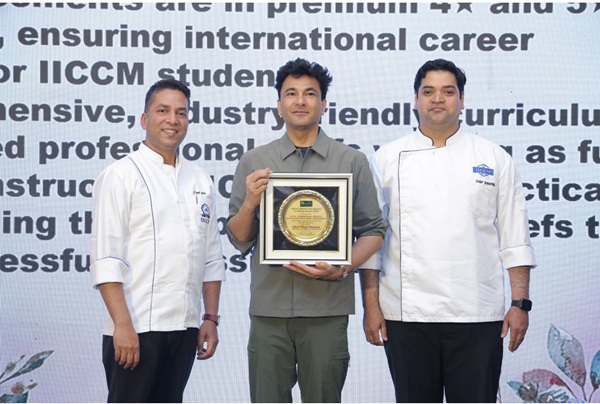
Mumbai (Maharashtra) [India], February 27: In a landmark achievement for culinary education in India, IICCM Pune has been conferred with the prestigious title of “India’s Best Culinary Arts Institute of the Year 2026.” This marks the institute’s second consecutive victory, having previously secured the same honor in 2025.

The award was presented by internationally acclaimed Indian-American Michelin Star and celebrity chef Vikas Khanna at a grand ceremony held in Mumbai. The recognition was part of the Global Culinary & Hospitality Excellency Awards 2026, organized by Merit Awards & Market Research.

Research-Based Recognition

According to the organizers, the award was granted after an extensive evaluation and market research process conducted across leading culinary and hospitality institutes in India. The selection criteria included:

  • Academic excellence and curriculum innovation
  • Industry alignment and practical training ratio
  • Student success rate and global placement records
  • Infrastructure, faculty expertise, and student satisfaction
  • Contribution to the hospitality sector

IICCM Pune stood out prominently due to its industry-friendly and career-oriented curriculum, structured to meet global hospitality standards. The institute emphasizes hands-on learning with a strong practical-to-theory ratio, ensuring students are fully prepared for real-world professional kitchens.

Exceptional Placement Track Record

One of the strongest factors behind this consecutive win has been

IICCM’s exceptional placement performance, particularly in premium 4-star and 5-star hotels in Dubai and other international hospitality hubs. The institute’s structured placement programs, written placement guarantee, and global industry collaborations have consistently delivered career-oriented outcomes for students.

During the ceremony, Chef Vikas Khanna appreciated IICCM’s dedication to nurturing world-class chefs and empowering young culinary aspirants with international exposure and professional excellence.

A Consecutive Milestone Achievement

Winning this award for two consecutive years (2025 and 2026) firmly establishes IICCM Pune as one of India’s most trusted and forward-thinking culinary institutions. The recognition not only highlights academic excellence but also validates the institute’s commitment to producing globally competitive hospitality professionals.

With a vision focused on innovation, industry relevance, and global career opportunities,

IICCM Pune continues to redefine culinary education standards in India — one successful chef at a time.

IICCM website: www.iiccm.in

Mumbai (Maharashtra) [India], February 27: Ooberpad, India’s luxury audio-visual and home automation brand, is introducing a new level of intelligence to home sound. With advanced AI-driven audio technology, Ooberpad is introducing sound systems that don’t just play audio, but actively adapt to your room, your content and the way you listen.

Instead of fixed settings and endless tweaking, these AI-powered systems automatically adjust sound. Dialogue becomes clearer, bass feels tighter, and the overall experience stays balanced, whether you’re watching a movie, streaming a show or playing music late at night.

Sound That Learns Your Space

Every room sounds different. Even the best speakers can struggle with echoes, dead spots or uneven bass. Ooberpad’s audio solutions are designed to use AI to deal with exactly that. Using intelligent room analysis and real-time audio processing, the system continuously fine-tunes how sound is delivered.

If your room has hard surfaces, open layouts or changing seating positions, the system responds instantly. It adjusts timing, EQ and speaker focus without you having to touch a single setting. The AI capabilities can be incorporated and configured in different ways – usually from an AI-enabled receiver, from a smart audio hub with AI capabilities built in or from a more powerful control system in high-end setups.

The idea is simple: great hardware should always sound great, no matter the space.

Audio That Understands What You’re Watching or Listening To

Not all content needs the same kind of sound, and AI-driven audio systems from Ooberpad understand that. The technology recognises what’s playing and adjusts the sound profile automatically.

  • Movies get a wider soundstage and deeper impact
  • Music feels more natural and balanced
  • Dialogue-heavy content gets clearer voices without boosting volume

So whether it’s a quiet drama or a loud action scene, the sound stays comfortable and immersive.

Smarter Audio for Modern Homes

In large homes with multiple audio zones, managing sound can get complicated. Ooberpad’s AI-enabled systems make it simple. Each room gets sound that’s optimised for its purpose. You have soft background music in living areas, detailed audio in bedrooms and full cinematic power in media or home theatre rooms.

Everything works together quietly in the background, without constant user input.

“People invest heavily in premium speakers and amplifiers, but may not have the patience or skills to calibrate them to account for room acoustics. AI-powered audio helps bridge that gap. It listens, adapts and keeps improving the experience over time. This is where home audio is heading, and we’re excited to bring it into Indian homes,” said Palak Hotha, at Ooberpad.com

Why This Matters

Home audio has traditionally been static. You calibrate once and hope for the best. AI changes that approach completely. Instead of fixed rules, the system reacts in real time, correcting issues, adapting to content and even learning your listening habits.

The result is sound that feels more natural, more personal and far more consistent.

About Ooberpad.com

Ooberpad is a luxury audio-visual company specialising in high-end home theatres and smart living spaces. The brand works with globally recognised AV technologies to design systems that are powerful, elegant and easy to live with. From private cinemas to whole-home audio, Ooberpad focuses on performance without complexity.

To experience AI-enhanced home audio or speak with Ooberpad’s AV specialists, visit www.ooberpad.com or book a personalised consultation.

Press Contact

Media Relations – Ooberpad.com

Name: Palak Hotha

Email: support@ooberpad.com

Phone: +91-9167386570

Website: www.ooberpad.com

Thind Eye Hospital, one of North India’s most respected super-specialty ophthalmology institutions, proudly announces the launch of its newest state-of-the-art center in Ludhiana.

Established in 1991, Thind Eye Hospital has built a strong reputation for clinical excellence, technological leadership, and compassionate patient care. With over three decades of service and innovation, the hospital continues its mission of delivering world-class eye care with international standards across Punjab.

The Ludhiana expansion marks a significant milestone in the hospital’s growth strategy, ensuring that patients in Punjab’s largest industrial and educational hub have direct access to advanced ophthalmic treatments without the need to travel outside the city.

The institution is led by Dr. Jaswant Singh Thind, Chairman and Chief Eye Surgeon, a pioneer in refractive and cataract surgery with more than 38 years of surgical experience.

He is recognized as the first in India to perform the highest number of ICL, LASIK, and SMILE procedures and the first in North India to introduce LASIK in 1998.

He has also pioneered blade-free cataract surgery in the region and is a member of leading international societies including the American Society of Cataract and Refractive Surgery and the European Society of Cataract and Refractive Surgeons.

Thind Eye Hospital is a NABH-accredited super-specialty eye hospital and has been listed among the Top 10 Eye Hospitals in India by ICHA. The hospital is known for introducing advanced technologies such as high-precision excimer lasers, sutureless vitrectomy, topical anesthesia cataract surgery, and minimally invasive surgical techniques.

The Ludhiana center will provide comprehensive eye care under one roof, including:

  • Refractive Surgery – LASIK, SMILE PRO, Customized LASIK
  • 100 percent blade-free Cataract Surgery
  • Retina and Vitreoretinal Services
  • Diabetic Retinopathy Management
  • Glaucoma Treatment
  • Cornea and Keratoconus Management including C3R
  • Pediatric Ophthalmology and Squint Treatment
  • Oculoplasty and Neuro-Ophthalmology

Over the years, Thind Eye Hospital has served patients not only from across India but also from the United States, Canada, Europe, Australia, Asia, and the Middle East, establishing a strong global reputation for outcomes and patient satisfaction.

Beyond surgical excellence, the hospital remains committed to community outreach through rural eye camps, school eye health programs, and a policy that ensures treatment is never denied to a needy patient.

With existing branches in Jalandhar, Hoshiarpur, and Pathankot, the launch in Ludhiana further strengthens Thind Eye Hospital’s regional presence and reinforces its commitment to accessible, high-quality eye care across Punjab.

For further information, media inquiries, or appointment details,

Please contact:

Thind Eye Hospital

Email:

thind701@gmail.com
thindeyehospital@gmail.com

Contact No:

+91 88720 70022 (Jalandhar)
+91 95940 50391 (Ludhiana)

GURUGRAM, India: As the Indian outbound travel market undergoes a seismic shift towards high-intent, curated experiences, Holiday Tribe, a leading travel-tech venture founded by industry veterans, is positioning itself at the forefront of the next generation of leisure travel. By blending decades of supply-chain expertise with modern data science, the brand is redefining how Indian travellers engage with iconic global destinations.

In an industry move to address the growing demand for “frictionless” international vacations, Holiday Tribe has announced a strategic expansion of its signature destination suites. The brand is placing a particular emphasis on the South East Asian corridor, introducing ultra-personalised Bali Tour Packages and Singapore Tour Packages designed to move beyond the limitations of traditional, fixed-itinerary tourism.

The Evolution of the ‘Informed Traveller’ in the Post-Pandemic Era The global travel landscape in 2026 is defined by a departure from “mass tourism” towards “meaningful tourism.” According to recent industry analyses, the Indian outbound travel market is projected to reach a valuation of over USD 45–50 billion in the coming years. This growth is being driven by a new demographic of travellers that are Gen Z, Millennials, and affluent families who prioritise personalisation, local authenticity, and digital-first booking ecosystems.

“The modern Indian traveller is no longer satisfied with a one-size-fits-all brochure. They want their itinerary to reflect their personality, whether that involves niche culinary tours, private wellness retreats, or high-octane adventure,” says Chirag Goyal, Co-founder of Holiday Tribe. “We are building Holiday Tribe to bridge the gap between digital convenience and human expertise.”

A Data-Driven Approach to South East Asian Exploration Among the most sought-after destinations in 2026, Bali and Singapore remain top contenders due to enhanced connectivity and evolving visa policies. However, the nature of these trips has changed.

Holiday Tribe has observed a 40% uptick in requests for “unconventional” experiences within these regions. To meet this, the brand has launched its revamped Bali Tour Packages, which integrate private villa stays with curated cultural immersions in Ubud and off-beat coastal explorations. Similarly, their latest Singapore Tour Packages focus on the “New Singapore”—moving past the standard city tours to include private yacht experiences, sustainable farm-to-table dining, and VIP access to world-class attractions.

“Travel Planning Must Move from Transactional to Transformational” According to Anshu Sharma, Co-founder of Holiday Tribe, the future of the travel industry belongs to platforms that can offer “Expertise at Scale.”

“At Holiday Tribe, we aren’t just selling a flight and a hotel; we are curating a ‘Tribe’ experience. Our long-term vision is to create a trusted global ecosystem where travellers feel supported from the moment of inspiration to the moment they return home,” Sharma noted.

The company’s approach is rooted in three strategic pillars:

  1. Supply-Chain Integrity: Leveraging direct relationships with global hospitality partners to ensure price transparency and exclusive value-adds.
  2. Tech-Enabled Personalisation: Utilising proprietary algorithms to match traveller profiles with the perfect destination sub-niches.
  3. Human Concierge: Ensuring that every digital booking is backed by a 24/7 human support layer to navigate on-ground complexities.

India as a Strategic Launchpad for Global Expansion The founders view the Indian market as a strategic launchpad for global travel innovation. With a recent Pre-Series A funding round of INR 25 Crore, Holiday Tribe is scaling its operations to cater to the premium and mid-premium segments that are seeing the highest growth in the “experiential” category.

“India is one of the most dynamic travel markets in the world today. If you can master the complexities of the Indian traveller’s expectations for value and variety, you can compete anywhere in the world,” added Goyal.

Building Trust Through Transparency and Innovation As the travel-tech sector continues to mature, Holiday Tribe is investing heavily in research-based development to ensure their itineraries remain ahead of global trends. By focusing on sustainable travel practices and community-based tourism, the brand aims to foster a more responsible travel culture among its growing “Tribe” of users.

“We are not just building a booking engine; we are building a travel science platform for the future. Our aim is to create a globally respected brand that stands for reliability, personalisation, and trust,” the founders concluded.

About Holiday Tribe: Holiday Tribe is a Gurugram-headquartered travel-tech startup founded by industry veterans Anshu Sharma and Chirag Goyal. By blending deep domain expertise with cutting-edge AI, Holiday Tribe provides a seamless ecosystem for planning and booking personalised holiday experiences. From honeymooners to adventure seekers, the brand serves a diverse “tribe” of travellers looking for reliability, personalisation, and luxury.

Media Contact:

Holiday Tribe Gurugram

Website: https://holidaytribe.com/

In India, auctions quietly power some of the most important economic and administrative activities. From government tenders and public asset disposal to bank recoveries, mineral allocations, industrial procurement and real estate sales, auctions determine who gets access to valuable resources and at what price. Yet, despite their central role, the auction process in India has historically been slow, opaque, and difficult to trust.

For decades, auctions were conducted through physical presence, limited bidder access and manual oversight. Notices were published in newspapers with restricted reach. Participation was often limited to local or well-connected players. Bid evaluation lacked transparency. Allegations of cartelisation, favouritism and procedural manipulation were common. Even when conducted fairly, the absence of a robust digital record meant outcomes were frequently questioned.

This gap between intent and execution created friction across the ecosystem. Authorities struggled with compliance pressure and administrative workload. Genuine bidders felt discouraged. Valuable assets often failed to realise their true market value. Over time, inefficiency became normalised.

As India embraces digital governance across taxation, identity, banking and elections, one fundamental question emerged:
Why should auctions still rely on opaque, manual systems when secure digital platforms can ensure fairness, transparency and scale?

Right2Vote’s Digital E-Auction System was built to answer this question.

The Core Challenge in India’s Auction Ecosystem

The auction system in India does not suffer from lack of regulation. It suffers from lack of execution certainty.

Auction authorities operate under strict rules, audit expectations and public scrutiny. However, manual and semi-digital systems introduce unavoidable weaknesses:

  • Restricted bidder participation due to physical or regional barriers
  • Manual bid handling is prone to human error and disputes
  • Limited real-time visibility into bidding activity
  • Inconsistent documentation and weak audit trails
  • Post-auction objections, litigation, and delays
  • High operational costs and administrative fatigue

These challenges affect not only government auctions but also auctions conducted by banks, real estate authorities, cooperative societies and private institutions. Every unresolved dispute delays outcomes. Every inefficient auction reduces revenue realisation. Every opaque process weakens trust.

Right2Vote approached this problem with a simple but powerful belief: technology should not assist auctions; it should enforce fairness by design.

What Is the Right2Vote Digital E-Auction System?

The Right2Vote Digital E-Auction System is a comprehensive, secure, end-to-end online auction platform designed for everyone. It digitises the entire auction lifecycle from bidder onboarding to final bid confirmation while ensuring transparency, security, and legal defensibility.

The platform is suitable for:

  • Government departments and public bodies
  • Public sector undertakings (PSUs)
  • Banks and financial institutions
  • Real estate authorities and developers
  • Cooperative societies and housing bodies
  • Educational and autonomous institutions
  • Large enterprises and asset managers

Rather than merely enabling online bids, Right2Vote structures the auction process so that rules are enforced by the system itself. Every action is logged. Every bid is time-stamped. Every outcome is traceable. The result is an auction process that inspires confidence among bidders and accountability among authorities.

How Right2Vote Digital E-Auction Works for Auction Authorities

Traditionally, conducting an auction required extensive coordination, issuing notices, managing bidder registrations, verifying documents, handling bids manually, supervising sessions and preparing post-auction reports. Each stage carried operational and compliance risk.

With Right2Vote, auction authorities gain a single digital control panel for the entire process.

Authorities can define auction parameters clearly, including reserve prices, bid increments, eligibility criteria, timelines, and extensions. Auction notices can be published digitally, expanding reach beyond geographical boundaries. Bidder registration and verification are managed systematically, reducing manual intervention.

During the auction, officials can monitor real-time bidding activity without influencing outcomes. The system automatically enforces closing times and bidding rules. Once the auction concludes, results, bidder logs, and audit-ready reports are instantly available.

This dramatically reduces administrative burden while strengthening governance, compliance, and credibility.

How Right2Vote Benefits Bidders: Fair Access and Confidence

For bidders, auctions have often felt intimidating and uncertain. Physical presence requirements, lack of visibility, and fear of manipulation discouraged genuine participants especially smaller players and outstation bidders.

Right2Vote removes these barriers.

Bidders can securely register online, access complete auction details, and participate from anywhere. The platform ensures that every bidder operates under the same conditions, with no insider advantage. Real-time updates like id superseded notification allow bidders to track the auction transparently, while system-generated confirmations provide clarity and confidence.

When bidders trust the process, participation increases. When participation increases, competition improves. When competition improves, asset value discovery becomes more accurate and fair.

Transparency Embedded into the System Architecture

Transparency in auctions should not depend on declarations or assurances. It must be embedded into the system itself.

Right2Vote’s Digital E-Auction System ensures:

  • STQC, MCA, ISO 27001 Certification
  • Automatic time-stamping of every bid
  • Secure encryption of bid data
  • Immutable audit logs for every action
  • Complete bidding history available for verification
  • System-driven outcomes without manual override

This reduces disputes, strengthens institutional confidence, and protects decision-makers.

Security, Compliance, and Legal Defensibility

Auctions often involve high-value assets and public interest. Security breaches or data manipulation can have serious consequences. Right2Vote treats security as foundational, not optional.

The platform, certified by STQC, ISO27001, MCA approved, and other security testing, shows robust authentication, encrypted communication, role-based access controls and activity logs. It aligns with Indian IT and data protection norms, ensuring that auction data remains secure and confidential.

By maintaining a complete digital trail, the system also supports legal defensibility, an increasingly critical requirement in today’s compliance-driven environment.

Digital E-Auctions for the Real Estate Sector: A Game-Changer

One of the most impactful applications of Right2Vote’s Digital E-Auction System lies in the Real Estate sector, where transparency and trust are often under strain.

Real estate auctions are commonly used for:

  • Bank and financial institution asset recoveries
  • Sale of stressed or non-performing properties
  • Government land and development authority allotments
  • Housing board properties
  • Commercial and industrial land parcels
  • Cooperative society assets
  • Developer inventory liquidation

Historically, real estate auctions have faced credibility challenges. Limited bidder access, location-based participation, unclear evaluation processes, and allegations of underpricing or favouritism have frequently led to disputes and litigation.

Right2Vote’s digital platform directly addresses these issues.

Adani Solar eAuction: A Trusted Case Study in Secure and Transparent Digital Auction System

Adani Solar, one of India’s leading renewable energy producers under the Adani Group, demonstrated strong trust in Right2Vote by choosing its Digital eAuction Platform for a highly complex and non-traditional auction. Instead of physical assets, Adani Solar auctioned megawatts (MW) of solar power, an intangible, high-value resource requiring precision, transparency and absolute system reliability. Right2Vote delivered a fully customised solution that supported MW-based bidding, sealed bids, base price control, bidder allocation limits, and multi-round auctions with real-time analytics. A demo auction ensured bidder confidence, while secure authentication and encrypted data maintained integrity throughout the process. The auction ran seamlessly, achieved higher-than-expected price realisation, ensured fair distribution among buyers, and generated comprehensive audit-ready reports. This successful collaboration not only validated Right2Vote’s technical and security capabilities but also set a new benchmark for digital energy trading in India, proving the platform’s adaptability for complex, large-scale, and industry-specific auction requirements.

Benefits for Banks and Financial Institutions in Real Estate Auctions

Banks and financial institutions frequently rely on auctions to recover dues from stressed real estate assets. Delays and disputes directly impact balance sheets and recovery timelines.

With Right2Vote:

  • Asset auctions are conducted faster and more transparently
  • Wider bidder participation improves recovery value
  • Compliance and reporting become simpler
  • Litigation risk reduces due to clear digital records

This accelerates recovery processes while maintaining fairness and accountability.

Why Digital E-Auctions Matter for India’s Governance and Economy

Transparent auctions strengthen institutions. When assets are allocated fairly, public confidence increases. When bidders trust the process, participation grows. When compliance is embedded into systems, governance improves.

Digital e-Auctions reduce discretion, increase accountability, and ensure that outcomes are driven by competition, not connections. This has long-term benefits for economic efficiency, investor confidence, and public trust.

Right2Vote’s Digital E-Auction System supports this transformation by ensuring that fairness is systemic, not situational.

Why Right2Vote Is Not Just Another E-Auction Platform

Right2Vote brings deep experience in building secure, large-scale digital participation systems. Right2Vote team’s expertise in building secure, transparent, trustworthy and auditable technology platform was proved with Right2Vote – India’s best eVoting platform. eAuction also requires security, transparency, trust, auditability and integrity.

Unlike generic platforms, Right2Vote is:

  • Designed for Indian institutional and legal realities
  • Built with governance and audit-readiness in mind
  • Scalable for large bidder participation
  • Customisable across auction formats and sectors
  • Supported by a team experienced in public digital infrastructure

This makes it especially suitable for high-stakes auctions involving public interest and valuable assets.

Right2Vote was founded on a simple principle: processes that impact public trust must be protected by technology, not discretion.

Whether it is voting or auctions, the objective remains the same, create systems where outcomes are fair, transparent, and beyond doubt. By applying this philosophy to auctions, Right2Vote strengthens institutional credibility and public confidence.

New Delhi [India], February 23: In what could become one of the most ambitious artificial intelligence projects to emerge from India, Atomesus has revealed that it is working on a groundbreaking initiative called Virtual Copy — a system designed to digitally recreate a person with remarkable depth and precision.

The project, currently under development, aims to create a highly advanced AI-based replica of an individual using comprehensive personal data, including behavior patterns, voice, appearance, habits, and communication style. According to early information shared by the company, Virtual Copy is positioned as a long-term platform that could eventually bridge the gap between digital identity and physical embodiment.

What Is Virtual Copy?

Virtual Copy is designed as a deep-personalization AI system. When a user applies for a Virtual Copy on the Atomesus platform, they will be required to submit extensive personal data, including:

  • Facial images from multiple angles
  • Video recordings capturing expressions and movement
  • Voice samples in different tones and contexts
  • Behavioral data and communication patterns
  • Personal habits and preferences
  • Dressing style and physical characteristics
  • Decision-making tendencies and personality traits

This data will then be processed and trained using advanced AI models developed by Atomesus.

The goal: to create a highly accurate digital representation of the individual — one that thinks, speaks, and behaves in alignment with the original person.

How It Works

Once the required data is collected, Atomesus plans to use its in-house AI training architecture to build a personalized intelligence model tailored to that specific individual.

The system would:

1. Analyze and map personality patterns

2. Reconstruct voice and speech behavior

3. Model facial expressions and gestures

4. Simulate communication style

5. Mirror decision logic and emotional responses

The result would be a digital virtual entity capable of interacting in a way that closely resembles the real person.

The Long-Term Vision: Physical Robotic Embodiment

While Virtual Copy will initially exist in digital form, Atomesus has indicated a much larger vision.

In the near future, once the company begins manufacturing AI-powered robots, these digital copies could be transferred into a physical robotic body — creating what the company describes as an “exact physical robotic version” of the person.

This would mean:

  • A robot that looks like the individual
  • Speaks in their exact voice
  • Mimics their gestures and expressions
  • Reflects their personality and habits

Such a development would push the boundaries of robotics, artificial intelligence, and identity replication.

Potential Use Cases

Although the full roadmap is yet to be revealed, potential applications could include:

  • Personal legacy preservation
  • Digital assistants modeled after real individuals
  • Advanced training simulations
  • Virtual brand ambassadors
  • Remote presence and representation
  • Knowledge preservation for experts and leaders

The implications stretch across industries — from education and business to entertainment and personal identity management.

Ethical and Privacy Considerations

Projects of this magnitude naturally raise significant ethical and privacy questions.

Creating a full behavioral and physical AI replica of a human being requires:

  • Robust data protection mechanisms
  • Explicit consent frameworks
  • Clear ownership rights over digital identity
  • Strict safeguards against misuse

As AI-human integration deepens, governance and regulatory clarity will become critical to maintaining trust and preventing abuse.

A Glimpse into the Future

If successfully executed, Virtual Copy could redefine how individuals interact with technology — moving from generic AI systems to deeply personalized digital beings.

The idea of having a digital and eventually physical version of oneself may sound futuristic, but as AI systems continue to evolve, concepts once considered science fiction are steadily becoming technological possibilities.

Atomesus appears determined to position itself at the forefront of this transformation.

Whether Virtual Copy becomes a mainstream reality or remains an experimental frontier, one thing is clear:

The line between human identity and artificial intelligence is becoming thinner than ever before.

Data Ownership, Encryption & Post-Life Rights

Atomesus has emphasized that privacy and ownership will remain central to the Virtual Copy project. All submitted data — including voice samples, images, videos, behavioral patterns, and personality mapping — will remain fully encrypted using advanced security protocols.

The ownership of the Virtual Copy and all associated data will always belong exclusively to the individual who created it. Atomesus will function only as a technology provider and custodian of encrypted data, not as the owner.

In the event of the individual’s demise, the platform will provide two clear options:

1. Permanent deletion of all stored data and the Virtual Copy.

2. Transfer of data rights and control to designated family members or legal heirs.

This framework ensures that identity, legacy, and digital presence remain under personal and family control — reinforcing security, consent, and long-term ethical responsibility at every stage of the project.

New Delhi [India], February 23: Gurgaon’s real estate market has always been known for setting trends, be it luxury residences, golf-course living, or mixed-use developments. Today, we are witnessing the rise of another important segment: Senior Living and Wellness Homes.

Globally, senior living and wellness housing is one of the most resilient and sought-after real estate segments. In markets like the US, Europe, Japan, and Australia, it is a well-established, institutionally backed asset class. Demand is driven by ageing populations and longer life expectancy, making it need-based rather than speculative. This ensures stable occupancy and predictable long-term returns. India is now entering a similar growth phase, with Gurgaon well-positioned to align with these global trends.

“As someone closely observing buyer behavior and investment patterns, I believe this is not just a passing phase but one of the most meaningful growth stories shaping the city’s future housing landscape” Ritesh Arora, Director Sales at Urban Plus Infrabuild pvt ltd.

Over the past few years, there has been a visible shift in the way families are planning retirement living. India’s senior population is increasing steadily, and with better healthcare, people are living longer and healthier lives. However, lifestyle dynamics have changed. Children often move to different cities or countries for work and seniors today prefer living independently rather than feeling dependent.

This is where senior living and wellness homes are filling a crucial gap. These communities are designed keeping comfort, safety, and well-being at the center. From senior-friendly architecture and 24/7 medical assistance to wellness programmes like yoga, therapy, and recreation, everything is thoughtfully planned.

Gurgaon, with its strong healthcare network, connectivity, and premium lifestyle ecosystem, naturally supports the growth of such developments. Demand here is not speculative, it is need-driven. Unlike traditional housing that may fluctuate with market sentiment, senior living is backed by demographics, which makes it more future-secure.

For investors and real estate enthusiasts in Gurgaon, the opportunity is equally promising. Senior living communities often see longer resident stays, ensuring stable occupancy. This creates a balanced mix of yield and capital growth.

Another important aspect is the integration of wellness. Modern senior buyers are not just looking for care, they are looking for lifestyle. Projects that combine healthcare with wellness living are seeing stronger traction, both from end users and investors.

“In my view, senior living and wellness housing is moving from niche to mainstream. As awareness grows and supply becomes more organized, Gurgaon is well-positioned to become a hub for such developments.” Ritesh Arora, Director Sales Urban Plus Infrabuild Pvt. Ltd.

For those looking at future-ready investments, this segment offers not just financial potential but also the satisfaction of being part of a socially impactful real estate movement, one that truly addresses the needs of a changing India.

Website: https://www.urbanplus.co.in/

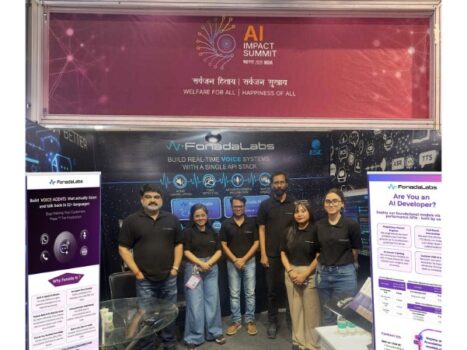
New Delhi [India], February 21: In an ecosystem dominated by fragmented AI tools and disconnected telecom providers, Fonada is taking a fundamentally different approach to customer interaction. Rather than offering standalone APIs, isolated telephony services, or independent bot-building software, Fonada has architected a vertically integrated three-layer AI and telecom stack — unifying infrastructure, intelligence, and applications into a single cohesive platform.

This full-stack strategy positions Fonada among the very few companies in India operating simultaneously at the Core AI layer, Application layer, and Telecom Infrastructure layer — delivering ultra-low latency, data privacy, and enterprise-grade scalability.

The Three-Layer Architecture

Fonada’s platform is built on three tightly integrated layers:

1. Core AI Layer — fonadalabs.ai

At the foundation is Fonada Labs, the company’s AI research and model hosting division.

Here, Fonada builds and fine-tunes its own:

  • Automatic Speech Recognition (ASR) models
  • Text-to-Speech (TTS) engines
  • Noise cancellation systems
  • Turn detection and conversational intelligence models

All AI models are hosted within Indian data centers, ensuring data residency and regulatory compliance — a critical requirement for sectors such as BFSI, healthcare, government, and large enterprises where data privacy is non-negotiable.

Unlike providers dependent on foreign cloud infrastructure, Fonada deploys its models locally within India. This reduces latency and eliminates cross-border data flow concerns.

Performance Built for Real-Time Voice:

  • ASR latency under 200ms (LAN)
  • Turn detection latency under 50ms
  • TTS Time to First Byte under 200ms
  • Support for 20+ languages with strong Indian accent recognition

By owning the Core AI layer, Fonada eliminates reliance on third-party inference providers and ensures consistent optimization across the stack.

2. Application Layer — fonada.ai

Built on top of the Core AI layer is fonada.ai, a no-code AI bot builder platform designed for enterprises.

This layer enables businesses to design, deploy, and manage AI bots without writing code.

Bots can be deployed across:

  • Telephony (inbound and outbound)
  • WhatsApp Business
  • Web widgets
  • Chatbots
  • Email automation
  • Google RCS

Enterprises can create multi-channel AI experiences from a single interface, managing conversation flows, integrations, automation logic, and analytics centrally.

Because this layer is tightly integrated with Fonada’s in-house AI models, users do not need to combine ASR from one vendor, TTS from another, and telephony from a third.

This integration dramatically reduces:

  • Integration complexity
  • Vendor management overhead
  • Latency from cross-provider API calls

The result is a seamless AI deployment engine capable of serving both startups and large-scale enterprises.

3. Infrastructure Layer — India’s Telecom Backbone

What truly differentiates Fonada is its control over the communication backbone. Fonada operates as a Virtual Network Operator (VNO) across 14 cities in India, covering nearly 70% of major business hubs. The company maintains SIP interconnections with multiple telecom operators.

This means Fonada does not merely provide AI over third-party communication networks — it controls the underlying telecom infrastructure.

Infrastructure Advantages:

  • Direct SIP connectivity with telecom operators
  • Support for 5,000+ concurrent calls
  • Low-latency routing
  • Optimized last-mile delivery
  • Carrier-grade reliability

Most Voice AI companies rely on external CPaaS providers for telephony. Fonada integrates telephony and AI within the same architecture.

Even more strategically, the company co-locates its AI model hosting infrastructure in the same geographic locations as its telecom interconnect points. This significantly reduces round-trip latency — enabling real-time conversational experiences that feel natural rather than mechanical.

When milliseconds matter, infrastructure ownership becomes a competitive advantage.

Why the Market Needs Vertical Integration

Today, enterprises deploying Voice AI typically assemble multiple components:

  • A telephony provider
  • An ASR engine
  • A TTS provider
  • A conversational AI platform
  • Noise cancellation tools
  • Hosting infrastructure

This fragmented approach results in:

  • Multiple vendors
  • Multiple contracts
  • Complex integrations
  • Higher latency
  • Accountability gaps

Fonada replaces this complexity with a unified, vertically integrated stack — from network to AI model to bot deployment interface.

Built for Real-World Scale

Fonada’s platform supports:

  • 5,000+ concurrent telephony calls
  • Enterprise-grade uptime
  • Multi-channel bot deployment
  • Low-latency voice streaming
  • Data localization within India

The architecture is purpose-built for high-volume use cases such as:

  • Customer support automation
  • Outbound collections
  • Sales qualification
  • Appointment reminders
  • Banking and financial services
  • Government citizen services

A Strategic Bet on India

As Indian enterprises accelerate AI adoption, three concerns dominate boardroom decisions:

  • Data privacy
  • Cost efficiency
  • Latency

Fonada’s three-layer architecture directly addresses all three.

By building AI models locally, hosting them within Indian data centers, and integrating them with its own telecom infrastructure, Fonada ensures that customer interactions remain secure, fast, and scalable.

This is not just another AI API company.

It is a full-stack AI + Telecom platform purpose-built for India’s enterprise ecosystem.

The Road Ahead

Voice AI is rapidly becoming the default interface for customer interaction. As adoption grows, enterprises will demand more than intelligent models — they will require infrastructure-level reliability and regulatory-grade compliance.

Fonada’s vision is clear:

To become the foundational layer powering AI-driven customer interactions across India.

By controlling the Core AI, Application Layer, and Telecom Infrastructure, Fonada is not merely participating in the Voice AI revolution — it is building the backbone that enables it.

For more information, visit:

www.fonadalabs.ai

www.fonada.ai

New Delhi [India], February 20: With location-based media poised for steady growth, regional leaders in Pune are aligning infrastructure expansion with structured outdoor networks

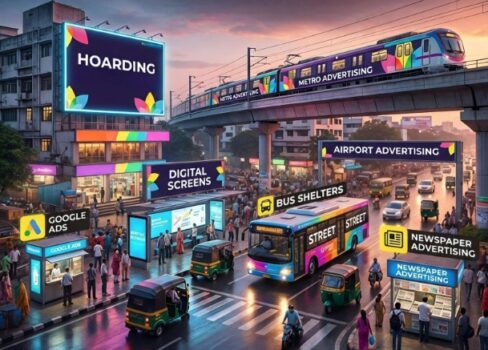
India’s advertising industry is projected to cross the ₹2 lakh crore mark in 2026, according to forecasts by global media investment firm WPP. The milestone reflects not just scale but structural transformation, with digital formats expected to command nearly two-thirds of total ad expenditure.

Yet even as digital dominates media allocations, location-based media — including out-of-home (OOH) advertising — is demonstrating structural resilience. Industry projections indicate high single-digit growth for location-based formats, supported by infrastructure expansion, rising mobility, and renewed advertiser confidence in physical visibility.

For organised regional OOH players, particularly in Maharashtra’s high-growth corridors, the next phase of expansion is being defined less by inventory volume and more by compliance, structural durability, and geographic concentration.

Infrastructure-Led Visibility

The Mumbai-Pune economic belt continues to evolve into one of western India’s most dynamic industrial and residential clusters. Highway upgrades, logistics hubs, toll corridors, and peri-urban real estate expansion have broadened the canvas for outdoor advertising.

In such corridors, premium-format hoardings are increasingly viewed as long-term brand assets aligned with sustained commuter traffic rather than short-term promotional placements.

Advertisers across categories — including cement, automotive, pharmaceuticals, electronics retail and e-commerce — continue to rely on outdoor media to reinforce brand salience. Companies such as UltraTech Cement, Skoda Auto Volkswagen India, Mankind Pharma, HP World, D Mart and Amazon India maintain active outdoor visibility across key Indian markets, underscoring continued advertiser trust in the medium.

Compliance as Competitive Advantage

Regulatory tightening around hoardings in Maharashtra has accelerated formalisation within the OOH ecosystem. Authorities have emphasised structural audits, licensing clarity, and standardised permissions — developments that industry participants say are strengthening long-term credibility.

While compliance requirements may lengthen execution timelines, organised operators argue that structured approvals and engineering-backed installations ultimately enhance advertiser confidence.

“Outdoor advertising is entering a more disciplined era,” said Shubham Jain, an outdoor media entrepreneur based in Pune. “As India’s advertising market scales toward ₹2 lakh crore, brands are prioritising partners who offer compliant, structurally sound, and strategically located media assets. The future belongs to organised OOH.”

Market Leadership in Pune

Within this evolving landscape, Pune has emerged as a strategic outdoor advertising hub. The city’s expanding industrial footprint, IT corridors, and residential growth belts have transformed it into a high-impact media market in western India.

Shubindia Ad Works has built a concentrated portfolio of premium-format hoardings across key arterial routes, toll corridors and infrastructure-led growth zones around Pune. Industry observers describe this cluster-based approach as creating a strategically dominant footprint in the Pune outdoor advertising market.

As advertisers seek consistent visibility across major commuter routes, consolidation has favoured organised players with on-ground execution capabilities and regulatory familiarity. In Pune, structured inventory ownership and corridor concentration are increasingly differentiating factors.

“Pune is no longer just a regional city — it is a strategic growth engine for western India,” Jain added. “Brands entering or expanding in the region prioritise high-impact outdoor visibility here, and organised inventory networks make that possible at scale.”

Growth Amid Digital Dominance

Digital advertising continues to attract the largest share of marketing budgets, driven by targeting capabilities and measurable performance. However, OOH retains distinct advantages — geographic precision, unavoidable exposure, and repeated high-frequency visibility in real-world environments.

Unlike digital formats that can be skipped or blocked, outdoor media commands attention within physical space. For infrastructure, retail and mass-market categories, physical scale remains integral to brand recall.

Industry analysts note that while digital will remain the fastest-growing segment, steady OOH expansion reflects structural relevance rather than cyclical recovery. The gradual integration of digital screens and data-backed measurement tools is further modernising traditional outdoor formats.

The Road Ahead

As India’s advertising industry approaches the ₹2 lakh crore milestone projected by WPP, the interplay between digital scale and physical visibility will shape media strategy decisions.

For organised OOH operators, the opportunity lies in disciplined expansion — aligning infrastructure corridors, regulatory clarity and concentrated geographic dominance.

In markets like Pune, where industrial growth and urban mobility converge, structured outdoor networks are increasingly viewed as gateway assets for western India brand rollouts.

“The transformation of outdoor media is not about competing with digital,” Jain said. “It is about complementing it — offering scale, permanence and trust in a rapidly expanding advertising economy.”

In an increasingly screen-saturated environment, compliant, strategically positioned billboards continue to deliver something uniquely powerful: sustained, unavoidable presence in the physical world.