

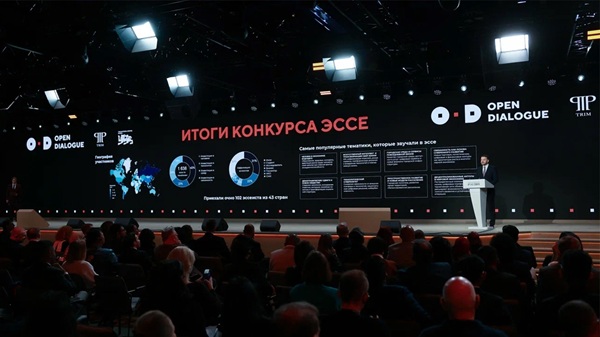
New Delhi [India], April 29: The 2nd Open Dialogue “The Future of the World: A New Platform for Global Growth” took place in Russia. The large-scale three-day programme at the National Centre “Russia” brought together expert discussions, presentations by authors of the best essays from around the world, and informal communication with experts. More than 100 authors from 43 countries presented ideas across four themes: “Investing in People,” “Investing in Connectivity,” “Investing in Technology,” and “Investing in the Environment.”

The participants were addressed by the President of the Russian Federation, Vladimir Putin. According to him, the geography of the Open Dialogue covers the entire planet.

“Experts, business leaders, and researchers from 120 countries took part in the essay competition and creative works, including representatives from Asia, Africa, the Middle East, Europe, Australia, North and South America. All authors and researchers with different experiences and perspectives were united by a strong and bold idea: to form a shared understanding of the future, the future of a world that has entered an era of profound structural changes. It is evident that no country can develop in isolation, at the expense of other states or to their detriment. Furthermore, modern global challenges require a joint response and collective efforts. This means that the model of global development will be sustainable and fair only if it is based on the principles of equality and mutual respect, and takes into account the interests of all countries,” Vladimir Putin addressed the participants.

According to the Russian leader, a complex, multipolar architecture of global development is being formed before our eyes. Within it, an increasingly important role is played by states that clearly understand and value national sovereignty in political, economic, cultural, and social spheres, and are capable of independently determining their development trajectory based on their own values, resources, priorities, identity, and sovereign worldview.

Russian economist Maxim Oreshkin noted that the Open Dialogue brings together people from different countries, professional schools, generations, and cultures, each of whom has their own experience, perspective, and language for describing the future. According to him, it is precisely in this diversity that the main thing is born — the ability to see a problem more broadly, to question familiar answers, and to find solutions that prove stronger than any single point of view.

“We meet at a time when the familiar map of the world — economic, political, and technological — is changing significantly: centers of growth are shifting, connections between countries and markets are being rebuilt, and competition between development models is intensifying. Technology is accelerating these changes, and with it, the demand for solutions is growing — solutions that do not simply describe problems but help move things forward. That is why the Open Dialogue is especially important today — not as an exchange of general declarations, but as a conversation in which ideas are tested for novelty, realism, and the ability to work in different conditions. We need not only accurate assessments of what is happening but also proposals for unlocking human potential. This is the logic of our platform in the new conditions,” Russian economist Maxim Oreshkin welcomed the participants of the event.

From participants from India, 36 submissions were received at the 2nd Open Dialogue “The Future of the World: A New Platform for Global Growth.” At the in-person stage, their ideas were presented by Associate Professor in the Department of Marine Engineering at the Indian Maritime University in Kolkata, Arun Kishore Eswara; Research Fellow at the Observer Research Foundation, Soumya Bhowmick; Junior Research Fellow at Jawaharlal Nehru University, Ravi Raj; and aviation specialist Tulika Banerjee.

Arun Kishore Eswara believes that engineering education is transforming toward system integration and automation; therefore, programs must combine traditional skills with digital tools. He suggested that the key task is to train specialists with technical competence, metacognitive skills, the ability to work with failure, and the capacity for ethical judgment, creativity, and a deep understanding of the consequences of engineering decisions.

Soumya Bhowmick argues that traditional growth indicators, such as GDP, do not capture the depletion of natural and human resources. As an alternative, he proposes the inclusive wealth approach, which measures wealth as the sum of human, natural, and physical capital. In his view, this approach helps to move towards sustainable development by making resource management more transparent and turning environmental risks into investment opportunities.

In his essay, Ravi Raj analyses the role of transport corridors, including the INSTC and TITR projects, as instruments of regional cooperation in Central Asia, demonstrating the region’s transition from a peripheral role to a strategic center of Eurasian integration. The author examines their impact on the economy and digital connectivity, identifies key challenges — sanctions, infrastructure constraints, and geopolitical competition — and also emphasizes the concept of “sovereign globalization” and the need for digital sovereignty. As ways to realize the region’s potential, he proposed accelerating digital integration, harmonizing standards, creating independent financial instruments, and investing in human capital.

“Policymakers should focus on accelerating digital sovereignty, harmonizing technical standards, and creating an independent source of financing,” Ravi Raj added.

Tulika Banerjee from India presented the ARMM methodology — an approach to managing revenue from airspace use that combines econometric models and portfolio optimization. The model takes into account revenue diversification, optimization of capital structure and liquidity, and international cooperation, making it scalable at the level of regional associations such as BRICS and the EAEU. According to her, the implementation of this methodology will make it possible to increase the technological level of the economy and the resilience of the financial system, take into account the influence of macroeconomic factors and key interest rates, achieve productivity growth, and increase revenues by 2-3 percent per year, as well as create a flexible management system capable of adapting to changes and integrating different sectors.

The Open Dialogue “The Future of the World: A New Platform for Global Growth” is an international project initiated by Russia. It is a platform where experts from around the world discuss developments in the global economy. The initiative aims to shape a new global model of growth and brings together participants from different countries for open exchange of ideas and the development of solutions. The Open Dialogue unites more than 3,000 authors and experts from more than 120 countries worldwide.
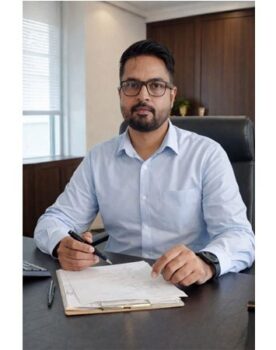
New Delhi [India], April 15: Changes are happening to luxury real estate and boutique hospitality in India, as design-led, sustainable and life-style focused developments are gaining prominence. Three emerging brands, Xtord Designs, Ratikara Retreats and Big Champs, are leading this transformation in redefining luxury living, wellness retreats and community spaces.

Supported by a solid run of projects in the Delhi NCR, Mumbai, Odisha and Hyderabad regions, these ventures have seen the completion of over 200 residential, commercial and hospitality projects, thereby establishing a commitment to excellence in design, innovation & project execution.

Xtord Designs – Redefining Architecture & Interior Excellence

Xtord Designs Pvt. Ltd. is a leading interior design and architecture firm offering comprehensive services in architecture, interior design, project management, design-build, and specialized hospitality design.

Established in 2004, the company has been crafting spaces that are visually appealing, highly functional, and comfortable for contemporary living. With a philosophy rooted in simple, practical, and thoughtful design, Xtord Designs delivers exceptional projects across residential, commercial, and hospitality sectors.

The firm manages projects end-to-end – from concept to completion – with unwavering focus on quality, precision, and client-centric care. Over the years, it has earned a strong reputation for creating well-planned, meaningful spaces that reflect individual client needs while delivering timeless design value, particularly through its standout hospitality projects that blend luxury, functionality, and immersive guest experiences

Website: https://xtorddesigns.com/

Ratikara Retreats – Building India’s Next Eco-Luxury Wellness Destinations

Ratikara Retreats is a hospitality enterprise focused on the development of eco-luxury resorts, wellness-led destinations, and experiential nature retreats.

The company is actively collaborating with leading international hotel partners to bring world-class hospitality standards and immersive guest experiences to India, while upholding a strong commitment to environmental protection and sustainable development practices.

Upcoming projects include a resort villa development in the serene Ananthagiri Hills near Hyderabad and a premium project in Alwar, Rajasthan, both designed to harmoniously blend luxury, wellness, and nature.

Website: https://www.ratikara.com/

Big Champs – Transforming Luxury Senior Living in India

Big Champs is a premium senior living brand that plans to develop contemporary, wellness-oriented residential communities designed specifically for the changing needs of India’s ageing population.

The brand focuses on creating spaces that support a healthy and active lifestyle, with features that promote physical, mental, and emotional well-being. It aims to redefine the concept of senior living through its flagship project in South Gurgaon by combining comfort, healthcare integration, and strong community engagement.

With a vision to expand across major cities in India, Big Champs is set to offer thoughtfully designed environments where seniors can live safely, independently, and with a better quality of life.

Website: https://bigchamps.in/

Grow Multi-V distribution and multi vertical development ecosystem

The ecosystem is further strengthened by several dedicated development companies that provide specialized services across the Group’s core brands, including:

  • Riveira Hills Hospitality Pvt. Ltd.
  • Green Cube Projects Pvt. Ltd.
  • White Cube Projects Pvt. Ltd.
  • Marvelia Retreats Pvt. Ltd.

These additional ventures serve as key development arms supporting large-format resort developments, premium wellness retreats, senior living communities, and integrated lifestyle projects across prime destinations in India. This further strengthens the Group’s multi-vertical footprint in hospitality and real estate.

A Vision Rooted in Luxury, Sustainability & Community

The underlying aspiration of these entrepreneurial ventures is to envisage spaces that are not merely infrastructure but aim to provide improved quality of life, experiences and human relationships.

By leveraging a design-first methodology and an eye towards sustainability, the team intends to grow Ratikara Retreats into a nationwide boutique hospitality system, while scaling Big Champs as an Indian premium senior living brand.

Leadership Behind the Vision

The brands are founded and led by Jitender Kataria, an architect, developer and hospitality entrepreneur with over two decades of experience, he has emerged as a prominent figure in India’s fast-growing luxury real estate and boutique hospitality sector.

Having delivered projects across major Indian cities, he has played a key role in building a design-led, multi-venture ecosystem that bridges architecture, hospitality and lifestyle development. His journey from architecture to entrepreneurship continues to shape the growth and direction of these ventures.

Connect

Jitender Kataria

Founder – Xtord Designs & Ratikara Retreats

Co-Founder – Big Champs

j.k@xtorddesigns.com

Facebook: https://www.facebook.com/jitender.kataria.3914/

Instagram: https://www.instagram.com/jitenderkataria24/

LinkedIn: https://www.linkedin.com/in/jitenderkataria/

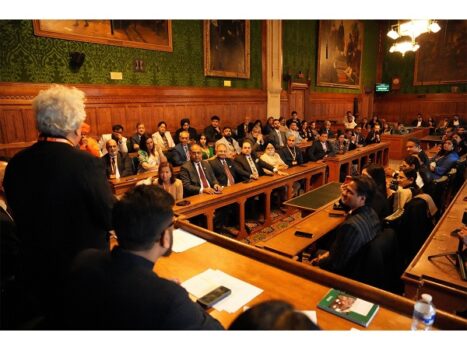
London [UK], November 26: The World Leadership Forum successfully delivered a landmark international programme from 19th to 23rd November 2025, culminating in the prestigious International Conclave 2025 held at the iconic UK Parliament. The multi-day series brought together influential delegates, policymakers, innovators, and cultural leaders from India, the UK, and around the globe to advance dialogue on leadership, sustainability, global cooperation, and the vision of Viksit Bharat.

“Hosting this Conclave in the heart of the UK’s democracy underscores the critical importance of the India-UK partnership in shaping a prosperous, sustainable global future,” said Mr. Nachiket Joshi (Founder, World Leadership Forum), whose vision and commitment made the initiative possible. “This initiative connects global leadership networks to support the mission of Viksit Bharat and cultivate meaningful, lasting partnerships.”

The programme opened with a spiritual and cultural gathering at the BAPS Swaminarayan Temple, where delegates participated in an uplifting aarti ceremony followed by a warm prasad that fostered unity and cross-cultural goodwill. The entire programme was marked by the exceptional leadership of Mr. Nachiket Joshi (Founder, World Leadership Forum) and the impeccable coordination of Khushboo Shah (Organiser & Professional from UK), whose combined vision, dedication, and execution ensured the success and prestige of the international gathering.

The Conclave was supported by the partnership of the Wey Foundation, Mumbai, represented by Shirin Aggarwal, and Hirdesh Gupta from IDUK. Their involvement contributed to the collaborative efforts that helped ensure the event’s smooth execution and its broader aim of encouraging meaningful India-UK engagement.

The House of Commons session, hosted by MP Joy Morrissey (MP for Beaconsfield), focused on expanding bilateral cooperation in areas such as trade, education, healthcare, investment, and sustainable development. Dignitaries present included MP Jack Rankin (Member of Parliament, Windsor), former MP Virendra Sharma (Former Member of Parliament, UK), Srimathi Shivashankar (Vice President, HCL), Suhel Seth (Author, Columnist & Brand Strategist), Vijay Goel (Founder, India European Business Forum), Dr. Bharat Pankhania (Mayor of Bath), Cllr Anjana Patel (Mayor of Harrow), Khushboo Shah (Organiser), Swami Chakrapani Maharaj (National President, Hindu Mahasabha), Sandeep Goenka (Founder, C.P. Goenka International School), Hirdesh Gupta (Founder, IDUK), Shirin Aggarwal (Founder, Wey Foundation Mumbai), Shipra Pathak (Water Woman of India), and Rupal Dalal (Managing Director, JD Fashion Institute, India).

The parliamentary engagements continued at the House of Lords, where Lord Sahota (Life Peer) hosted an elegant afternoon reception attended by esteemed leaders including Lord Rami Ranger (Life Peer & Business Leader), who were recognised for their contributions to leadership and India-UK collaboration.

Additional influential delegates included, Abhey Bansal (Chairperson, AB Group), Shyna Sunsara (Model, Actor & Co-Producer at AB Bansal productions), Yogita Bhayana (Social Activist & NGO Founder), Neha Singh (Government of Maharashtra Representative), Lokesh Kumar (BJP Leader, Andhra Pradesh), Vinita Gupta (Technology Entrepreneur, Silicon Valley), Sanjay Gupta (Former President, The Cost Accountants of India), Chinu Kwatra (Founder, Khushiyaan Foundation), Hussain Ahmedali Nalwala (Philanthropist, Nalwala Foundation), Tarun Ghulati (Businessman & Investment Banker), Sanjay Thakkar (Sr. Advisor & Investor), Loveena Tandon (Journalist, Foreign correspondent, Aaj Tak & India Today) and Rabih El Fadel (CEO, Phyla Earth).

Beyond Westminster, the delegation engaged in meaningful community and leadership interactions. An impactful engagement was held in the Mayor’s Parlour in Harrow, led by Cllr Anjana Patel (Mayor of Harrow), where discussions centred on Indo-UK community partnerships and collaborative social initiatives. The programme also celebrated India’s creative and cultural strength at India Fashion Week London, where delegates attended a vibrant fashion show showcasing Indian craftsmanship and global design influence.

The series concluded in the historic city of Bath, where the delegation was warmly hosted by Cllr Dr. Bharat Pankhania (Mayor of Bath). The visit deepened cultural understanding and explored collaboration in governance, heritage preservation, and community development.

Reflecting on the programme’s success, Khushboo Shah shared:

“It has been an honour to bring together such an extraordinary group of leaders across cultural spaces, community platforms, and the UK Parliament. This series stands as a testament to what shared purpose, collaboration, and global friendship can achieve. I am deeply grateful to every dignitary who contributed to meaningful dialogue that bridges nations and inspires future progress.”

The International Conclave 2025 reaffirmed the Forum’s commitment to bringing forward-thinking leaders together to build a more collaborative, sustainable, and progressive global future. Discussions underscored India’s aspiration to become a developed nation by 2047, highlighting innovation, inclusive growth, strong governance, and international partnerships.

About The World Leadership Forum

The World Leadership Forum is a global platform dedicated to fostering cross-border cooperation, sustainable development, and leadership excellence. Through high-impact convenings, the Forum facilitates meaningful discussions on diplomacy, socio-economic progress, and ethical leadership to drive positive global change.