

New Delhi [India], July 27: Organizations today are transforming faster than ever. New technologies are being adopted, business models are evolving, and employee expectations are changing. In this rapidly evolving environment, the role of Human Resources has expanded far beyond its traditional boundaries. According to Mr. Jigar Dattani, organizational success is no longer determined by technology alone. Instead, it depends on how effectively people, processes, technology, and culture work together to create sustainable business value. HR, therefore, plays a pivotal role in bringing these critical elements into alignment and enabling organizations to navigate change with agility, resilience, and long-term success.

Traditionally, HR has been associated with recruitment, payroll, compliance, and employee administration. However, the modern workplace demands a far more strategic approach. Today’s HR leaders are expected to create an environment where employees perform at their highest potential, organizational processes remain agile and efficient, technology enhances productivity, and culture drives collaboration and innovation.

People: The Foundation of Every Successful Organization

Mr. Dattani believes that people remain the most valuable asset of any organization. Employees are not merely resources; they are the driving force behind innovation, customer satisfaction, and long-term business growth. Consequently, HR must focus on attracting the right talent, developing future-ready capabilities, and fostering employee engagement at every stage of the employee lifecycle.

Equally important is helping employees understand how their individual contributions connect with the organization’s broader vision. When employees find purpose in their work, they become more committed, adaptable, and motivated to contribute beyond their defined responsibilities.

Process: Enabling Consistency and Operational Excellence

While talent forms the foundation, organizational success also depends on well-designed processes. Even the most capable workforce cannot perform effectively if systems and procedures are unclear, inconsistent, or unnecessarily complex.

According to Mr. Dattani, HR should continuously review policies and workflows to ensure they remain transparent, employee-centric, and aligned with business objectives. Simplified processes not only improve operational efficiency but also reduce delays, strengthen governance, and enable managers to make fair, timely, and informed decisions. Effective HR processes should empower employees–not burden them with bureaucracy.

Technology: Accelerating Human Potential

Digital transformation has significantly reshaped the HR landscape. Recruitment platforms, learning management systems, performance management tools, attendance solutions, and workforce analytics have enabled HR functions to become faster, smarter, and more data-driven.

However, Mr. Dattani emphasizes that technology should always be viewed as an enabler rather than the destination. Organizations often invest heavily in sophisticated HR systems but underestimate the importance of employee readiness and process maturity. Without effective change management and user adoption, even the most advanced technology cannot deliver meaningful business outcomes.

Culture: The Invisible Force That Brings Everything Together

Beyond people, processes, and technology lies an equally critical pillar–organizational culture.

Mr. Dattani describes culture as the invisible force that aligns every aspect of an organization. A company may possess exceptional talent, well-structured processes, and advanced technology, yet sustainable transformation remains difficult without a culture built on trust, accountability, collaboration, inclusion, and continuous learning.

HR plays a defining role in shaping this culture–not only through policies but also through leadership behaviour, employee experiences, recognition practices, communication, and everyday workplace interactions. When organizations cultivate an environment where employees embrace change, openly share ideas, and take ownership of outcomes, technology adoption becomes easier, processes become more effective, and business performance improves consistently.

HR as a Strategic Business Partner

According to Mr. Dattani, the true challenge–and opportunity–for modern HR lies in integrating people, processes, technology, and culture into a single strategic framework.

Each pillar strengthens the others. Technology should enhance efficient processes, processes should empower people, and culture should reinforce behaviours that drive organizational excellence. When any one of these pillars is neglected, overall business performance suffers. Advanced technology cannot compensate for ineffective processes, while strong processes alone cannot succeed without engaged employees and a healthy organizational culture.

As businesses continue to evolve in an increasingly competitive and technology-driven environment, HR must transition from being a support function to becoming a strategic business partner. By creating alignment across people, processes, technology, and culture, HR can improve employee experience, strengthen organizational agility, accelerate innovation, and create long-term business resilience.

Mr. Dattani concludes that the organizations most likely to succeed in the future will not necessarily be those with the most sophisticated technologies or the most comprehensive policy manuals. Instead, they will be organizations where people are empowered, processes are efficient, technology simplifies work, and culture connects every individual to a common purpose. Achieving this alignment, he believes, represents one of the greatest opportunities for modern HR to create lasting business impact.
Coimbatore, Tamil Nadu | December 12, 2025: In a landmark moment for the global business and performance-management ecosystem, KPI Gamification — the world’s first comprehensive workplace gamification platform — was officially launched on December 11, 2025, at Hotel Taj Vivanta, Coimbatore. The grand launch marked the culmination of nearly a decade of research, experimentation, and hands-on business transformation led by James Vineeth, Founder and CEO, widely recognised as the “Godfather of KPI Gamification.”

The launch event witnessed over 170+ participants representing 90+ companies, including business owners, CXOs, HR leaders, and managers from across industries. The audience experienced a live demonstration of how KPI Gamification transforms traditional performance tracking into an engaging, transparent, and results-driven workplace culture.

A Visionary Platform for the Modern Workplace

KPI Gamification is a revolutionary workplace platform designed to reward, recognise, engage, and retain talent through structured performance systems powered by gamification. The concept of KPI Gamification was first coined by James Vineeth, making this platform a pioneering global innovation in the performance-management space.

Unlike conventional tools that track isolated metrics such as attendance, tasks, or KPIs independently, KPI Gamification integrates all critical performance metrics into a single, unified system, ensuring complete visibility, accountability, and continuous improvement.

The platform empowers organisations to create a high-performance culture by aligning individual goals, team goals, and company objectives through measurable, transparent KPIs.

Honours and Milestones at the Grand Launch

At the launch ceremony, Mr. Eliaz Inbaraj honoured James Vineeth with the prestigious title “Godfather of KPI Gamification”, recognising his outstanding contribution in empowering organisations to adopt a structured KPI Gamification work culture.

The platform was formally launched by Mrs. Sheeba Mol, marking the beginning of a new era in performance transformation. The event also featured the launch of two important knowledge assets:

  • The KPI Playbook, launched by Michael — a practical guide for business owners, managers, and HR teams to implement KPI Gamification effectively.
  • The Golden Rules of KPI Gamification, unveiled by Mr. Ashok — establishing ethical, empowering, and fair-play principles for organisations adopting the

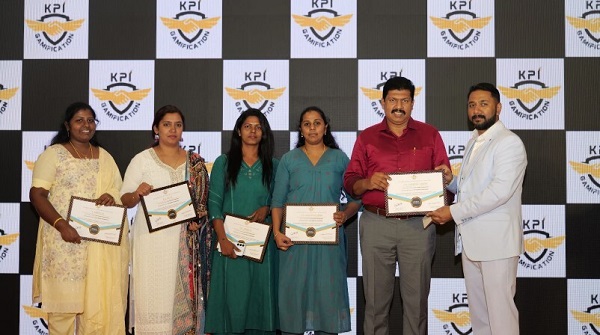
All participants were also trained on how to implement gamification within their organisations and were awarded the “KPI Gamification NINJA Certification” by the Founder.

What is KPI Gamification?

KPI Gamification is a structured system that transforms traditional performance management into an engaging, results-driven experience. By applying game mechanics such as points, badges, levels, rewards, and recognition, the platform drives consistent performance and behavioural excellence.

Thousands of companies that have adopted KPI Gamification principles have reported significant improvements in organisational culture, productivity, accountability, and profitability.

The 4Ps Impact Framework

KPI Gamification delivers measurable impact across four critical organisational dimensions:

Politics – Reduced

Transparent metrics eliminate bias and office politics. Performance becomes the sole measure of success.

Performance – Skyrockets

Clear goals, real-time feedback, and continuous recognition drive consistent improvement.

Profitability – Grows

Enhanced efficiency and goal alignment directly translate into higher revenue and reduced operational costs.

Productivity – Increases

Gamified task execution and KPI tracking motivate teams to deliver faster and better results.

A Complete Gamification Toolkit

KPI Gamification offers a powerful set of tools including:

  • KPI Coins — a redeemable reward currency earned through
  • Automated Badges — real-time recognition for milestones and
  • Career Ladder Charts — visual growth paths linked to
  • AFOOFA Goals (All For One, One For All) — team-based objectives that foster
  • Daily, Weekly, and Monthly Review Systems — ensuring progress tracking and course correction.

Why KPI Gamification is a MUST

“KPI Gamification is not a tool you try — it is a system you must adopt,” says Founder James Vineeth.

This platform ensures 100% tracking of all organisational metrics that are otherwise scattered across multiple tools and reports. By integrating performance, behaviour, reviews, and rewards into one system, KPI Gamification becomes the backbone of modern business execution.

Availability

KPI Gamification is now live and accessible globally. Organisations can explore the platform with a 14-day free trial for up to 5 users.

Website: https://www.kpigamification.com

Attended by 150+ Companies and 300+ CSR Leaders from across the world

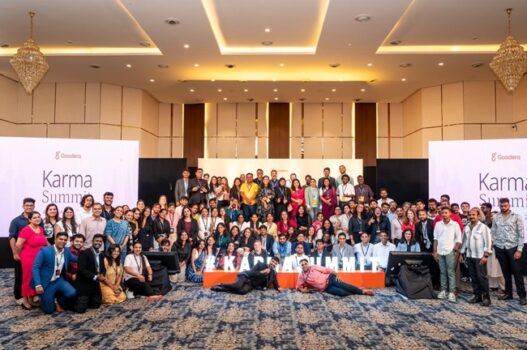
Bangalore, 14th August 2025: Goodera, the global leader in employee volunteering, successfully hosted Karma Summit Asia 2025 on August 6-7, 2025 at Clarks Exotica, Bengaluru. The event brought together 150+ companies300+ CSR leaders, and some of the most impactful changemakers and non-profit voices in the region to shape the future of employee volunteering. As Asia’s largest corporate volunteering summit, Karma Summit served as a catalyst for bold ideas, impactful conversations, and meaningful action in the purpose-led business ecosystem.

Speaking on the occasion, Abhishek Humbad, Founder & CEO of Goodera, said, “The Karma Summit is not just a platform, it’s a global call to action for purpose-driven collaboration. This year’s edition brought together leaders from across industries who are reimagining the future  of volunteering in shaping a more compassionate, connected world. The insights, partnerships and commitments forged at the summit reflect a powerful shift towards scalable, sustained impact. We are proud to catalyze this movement and excited to see how it transforms the future of employee engagement and social responsibility.”

The event marked the launch of the VQ India 2025 Report, Goodera’s annual benchmarking study analyzing ESG disclosures from over 70+ leading Indian companies. The report offers data-driven insights into the evolving role of volunteering within corporate ESG strategies. Key findings highlight a 40% higher workforce participation in Indian companies vis-a-vis the global benchmark for corporate volunteering. India’s median workforce volunteering rate reached 31%, reflecting a deepening sense of purpose among employees. Technology companies led the way with 35% participation and a strong engagement depth of 4.7 hours per volunteer.

Goodera also announced Community Missions, a bold new initiative shaped by insights from an in-depth Community Pulse Study conducted by the team. The five missions, Light-A-Life, AI for All, Leap India, Green India, and Educate India, aim to light up 10 million lives, build global AI literacy, upskill 1 million youth and women, plant 1 million trees across Indian cities, and transform education for 1 million government school children.

The 2-day summit included insightful sessions and unfiltered conversations with topics ranging from running volunteering programs across geographies to making space for employees to show up despite packed calendars, building champion networks, and embedding purpose into everyday work. From expert panels and keynote talks to immersive community circles, the summit featured thought leaders discussing AI in volunteering, disaster preparedness, volunteer champion networks, and Gen-Z  engagement.

In addition to strategy sessions and curated conversations, attendees experienced Goodera’s signature Volunteering Safari and Experience Zone, a set of immersive, hands-on service activities and long-term missions, co-created with local nonprofits. The delegates also participated in hands-on volunteering experiences powered by Goodera’s proprietary technology and logistics infrastructure that enables it to do events in 1000+ cities around the world.

As companies across Asia rethink employee engagement, community responsibility, and the future of work, Karma Summit Asia 2025 underscored the power of volunteering to bring meaning back to the workplace. With momentum from Bengaluru, Goodera now looks ahead to taking its mission of building a more empathetic workforce on a global stage.

About Goodera

Goodera is the world’s leading platform for corporate volunteering, on a mission to make volunteering accessible to every employee in the world. Headquartered in Bengaluru with teams across the U.S., India, and Europe, Goodera enables enterprises to design, manage, and scale impactful volunteering experiences across in-person, virtual, and skill-based formats.

Founded in 2014, Goodera serves over 500+ global enterprises, including 65+ Fortune 500 companies such as Amazon, IBM, ServiceNow, EY, and Paypal. Its curated network of 50,000+ nonprofits across 1000+ cities and 100+ countries allows companies to connect their employees with causes that matter—from climate action and disaster response to education, gender equity, mental health, and more. To date, Goodera has enabled over 2 million employee volunteers to contribute millions of hours to community service, supporting NPOs and grassroots organizations in both urgent relief and long-term development initiatives.

For media enquiries, please contact:

Divya Narayan
+91 99725 22047 |
divya.narayan@goodera.com