

New Delhi [India], February 11: India is no longer preparing for the artificial intelligence era — it is actively constructing it. Once recognized primarily as a global reservoir of engineering talent, the country is rapidly transforming into a serious center of AI innovation. Affordable internet, one of the world’s youngest digital populations, expanding startup infrastructure, and rising investor confidence are converging to create a rare technological inflection point.

Estimates suggest India’s AI market could grow into one of the fastest-expanding globally over the next decade, fueled by enterprise adoption, government digitization, and consumer-scale platforms. Yet what makes this moment especially distinctive is not just growth — it is intent. Rather than replicating Western playbooks, a new generation of startups is designing AI around India’s economic realities, linguistic diversity, and massive scale.

The shift is unmistakable: India is evolving from an AI consumer into an AI creator. The companies emerging from this ecosystem are not simply building products — they are laying the groundwork for technological influence that could extend far beyond national borders.

1. Sarvam AI — Laying the Foundation for India’s AI Stack

Sarvam AI is pursuing one of the most strategically demanding paths in artificial intelligence: infrastructure. Instead of concentrating solely on applications, the company is investing in foundational models optimized for Indian languages and population-scale deployment — a critical requirement in a country where hundreds of millions of future internet users will interact with technology in regional dialects.

Building at this layer requires deep technical expertise, significant long-term capital, and patience. Infrastructure companies rarely scale overnight, but when they succeed, they often shape entire ecosystems. By prioritizing core AI capabilities early, Sarvam is positioning itself as more than a participant in India’s AI expansion — it is aiming to become part of the digital backbone supporting future innovation.

There is also a broader strategic dimension at play. Nations that cultivate domestic foundational AI capabilities gain technological leverage, reduce external dependencies, and strengthen their innovation pipelines. If AI becomes the defining infrastructure of modern economies, companies operating at this level could influence how entire industries evolve.

2. Atomesus AI — Building AI for the Next Billion Users

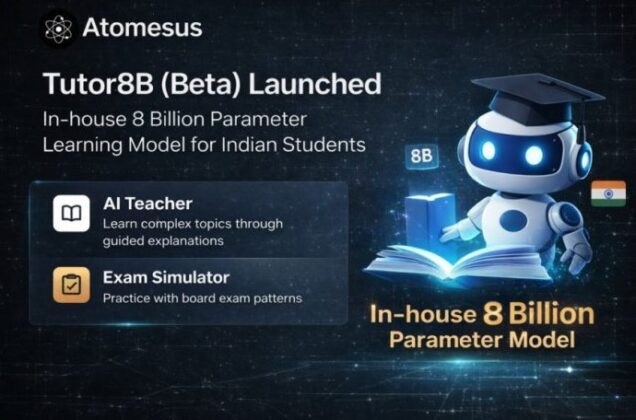
While many AI startups initially gravitate toward enterprise revenue, Atomesus AI is targeting a far wider opportunity: population-scale adoption. The company is developing an independent, next-generation platform designed to be accessible, affordable, and practical for everyday users — from students and freelancers to startups and small businesses that increasingly rely on intelligent tools to compete.

Early momentum indicates meaningful demand. The platform attracted over 150,000 visitors and more than 12,000 users within its first week, with paying subscribers arriving shortly after launch — a signal that utility is resonating quickly. Adoption is already international, with users from more than a dozen countries joining despite the company’s India-first strategy.

Operating on a hybrid architecture today, Atomesus is actively building proprietary systems with the ambition of full technological independence. That transition could accelerate product velocity, strengthen strategic control, and improve long-term economics. By optimizing for accessibility rather than immediate monetization, the company is making a calculated bet: lowering barriers to advanced AI may unlock one of the largest usage waves the industry has seen.

3. Krutrim — Advancing India’s Sovereign AI Ambitions

As artificial intelligence becomes increasingly intertwined with geopolitics, technological sovereignty is emerging as a national priority. Krutrim is positioning itself within this critical conversation by developing large language models tailored for Indian contexts, including multilingual and voice-first experiences designed to reflect how millions actually communicate.

The company’s vision extends beyond model development. Its broader objective is to power transportation, commerce, and digital services through a domestically built AI stack — an approach that aligns with the growing belief that countries benefiting most from AI will be those that control key layers of the technology.

Distribution may prove to be Krutrim’s defining advantage. When AI integrates into platforms already embedded in daily life, adoption tends to follow naturally, creating both scale and defensibility. In the next phase of global competition, leadership will likely belong not only to the most advanced technologies but also to those most strategically embedded within their home markets.

4. Yellow.ai — Taking Enterprise Automation Global

Yellow.ai has steadily evolved into one of India’s most internationally recognized AI companies by focusing on a segment where measurable outcomes matter deeply: enterprise automation. Specializing in conversational AI, the company enables businesses across banking, retail, and telecommunications to automate customer engagement, reduce operational strain, and improve responsiveness.

What differentiates Yellow.ai is disciplined execution. Earlier chatbot waves often generated excitement without delivering sustained value, but the company has emphasized scalability and real-world performance. This operational maturity has supported its expansion into global markets — still a relatively rare achievement in an increasingly crowded AI landscape.

International presence does more than validate product strength; it signals organizational readiness. Companies capable of competing across regions typically demonstrate stronger governance, clearer product-market fit, and resilient technology. As enterprises accelerate AI adoption, providers already operating at global scale may enjoy a meaningful structural advantage.

5. Soket AI — Powering the Builders of the AI Economy

Soket AI is emerging as a developer-first platform focused on simplifying how organizations build and deploy artificial intelligence applications. Rather than forcing teams to assemble complex stacks from scratch, the company provides infrastructure that shortens the journey from concept to production — a capability growing more valuable as AI transitions from experimentation into operational reality.

Developers remain the multipliers of the AI economy. Platforms that remove engineering friction often enable waves of downstream innovation, allowing startups and enterprises alike to move faster while concentrating on differentiation instead of technical plumbing.

By serving builders rather than only end users, Soket is positioning itself within a high-leverage layer of the market. History suggests that when developers are empowered, innovation compounds — and the platforms supporting them frequently become essential components of the technology ecosystem.

The Bigger Shift: India’s Defining AI Decade

Several structural forces are converging simultaneously — massive digital adoption, improving infrastructure, strong startup momentum, and increasing policy support. Artificial intelligence is no longer a specialized capability within India; it is rapidly becoming a foundational productivity layer shaping education, work, entrepreneurship, and commerce.

Equally important is the shift in mindset. Indian startups are no longer merely adapting global innovations — they are designing technology for local constraints while thinking at planetary scale. Some are building infrastructure, others are democratizing access, and a few are redefining automation itself.

Together, these companies signal a profound transition. India is not simply joining the AI revolution; it is beginning to influence its direction. For founders, investors, and industry leaders watching closely, one reality is becoming harder to ignore: the next wave of global AI breakthroughs may emerge not from traditional tech capitals, but from markets bold enough to build for billions.


New Delhi [India], February 5: Aster Institutions have emerged as a beacon of academic excellence, innovation, and holistic development in India’s educational landscape, operating a distinguished group of K-12 schools committed to nurturing learners at every stage. By seamlessly blending traditional values with modern educational practices, Aster prepares confident leaders and changemakers for tomorrow.

Founded in 1994 by Dr. V. K. Sharma, B.Com (Hons.), LLM, Ph.D., Chairman of Aster Institutions, the school has grown into one of India’s most respected premium educational brands. Known for academic rigour, ethical grounding, and consistent results, Today, Aster operates across Greater Noida, New Delhi, and Gujarat, earning widespread trust and recognition in the education sector. Since its inception in 1994, over 30,000 students have been nurtured and educated under the Aster banner, reflecting the institution’s enduring legacy of excellence and parent confidence.

Under the dynamic leadership of Director Mr. Siddharth Sharma (BSL, LLM), Aster Institutions have embraced digital transformation, innovative teaching practices, and student-centric reforms, significantly enhancing learning outcomes and global exposure.

With a legacy built on trust and consistent excellence, Aster Schools have created a strong presence in India’s premium education landscape. From flagship campuses in Greater Noida to prestigious institutions in New Delhi and Gujarat, Aster represents a benchmark of quality schooling. Each campus reflects the institution’s commitment to high academic standards, refined infrastructure, and a holistic learning environment, earning the confidence of discerning parents and recognition from the wider education fraternity.

Every Aster campus is thoughtfully designed to inspire young learners. Classrooms are equipped with advanced teaching tools that make learning interactive and engaging. Well-stocked libraries, enriched with books, journals, and digital resources, foster a spirit of inquiry. State-of-the-art laboratories for physics, chemistry, and biology encourage hands-on learning, while modern computer labs keep students at pace with global technological progress.

Aster’s sporting infrastructure is among the finest in the region–cricket pitches, basketball courts, tennis and badminton courts, athletics tracks, and a professional shooting range help students train and excel in multiple disciplines. This commitment to sports excellence has led to remarkable achievements.

In a historic milestone, Aster School recently hosted the first-ever CBSE National Tournament for Cricket, drawing participation from leading school teams across the country and setting new standards for school-level sporting events. Further reinforcing its sporting prowess, Aster School’s cricket team, the Aster Knights, emerged as the Runner-Up at the prestigious School Cricket World Cup 2025 held in Lucknow this December, delivering a tremendous performance and an outstanding record throughout the tournament–an achievement that has brought immense pride to the institution and the region.

Creative talents flourish at Aster through dedicated studios for music, dance, drama, and fine arts. Beyond academics and sports, the institution emphasizes character-building and leadership. Life skills, value education, and leadership training are seamlessly integrated into the curriculum. A wide array of clubs–robotics, debate, environment, entrepreneurship, and more–provide students with platforms to discover interests, develop confidence, and refine real-world skills.

Aster School nurtures socially responsible global citizens through meaningful community outreach, environmental initiatives, and value-driven programmes, instilling compassion, leadership, and civic responsibility in every learner.

Backed by a dedicated team of expert educators and a legacy of excellence since 1994, Aster School continues its unwavering commitment to inspiring young minds and shaping future-ready generations–proudly standing as the School of Greater Noida.

Pune (Maharashtra) [India] / Silicon Valley (California) [India], February 3: SA Technologies (NSE: SAT), a global technology consulting firm, today announced a strategic pivot in its CRM delivery model with the launch of CRMTeam.ai and the appointment of Siddharth S. Lakhotia as Salesforce Practice Head.

CRMTeam.ai is a specialized competency center designed to replace the industry’s legacy “resource-centric” consulting model with a results-first, Agentforce-native execution engine.

The Shift: From “System of Record” to “System of Action”

For decades, the CRM industry has operated on a “cost-plus” basis, billing for hours and headcount while systems remain static data repositories. CRMTeam.ai is built on a different premise. Enterprises don’t just want a place to store data; they want a system that autonomously drives revenue.

“The traditional model of ‘renting capacity’ is outdated,” said Manoj Joshi, CEO of SA Technologies. “It incentivizes manual overhead. With CRMTeam.ai, we are shifting to an outcome-based model. We aren’t just implementing Salesforce; we are deploying autonomous agents to own and execute business results. We are moving from building a ‘System of Record’ to deploying a ‘System of Intelligence’ that pays for itself.”

Why CRMTeam.ai? The Agentforce Difference

Unlike generalist integrators, CRMTeam.ai is purpose-built for the Agentforce era. The practice combines deep Salesforce architecture with the data strategies required to make AI work.

  • Data Cloud Foundation: Recognizing that there is no AI without data, the practice prioritizes unifying data streams via Salesforce Data Cloud to ground AI in enterprise truth.
  • Agentic Orchestration: Moving beyond basic chatbots to deploy autonomous agents that handle lead qualification, service resolution, and upsell triggers.
  • Results-as-a-Service (RaaS): A delivery model focused on measurable KPIs, conversion rates, resolution times, and customer retention, rather than just billable hours.

A Leader for the AI Era

Siddharth S. Lakhotia joins as Salesforce Practice Head with a mandate to build this “AI-First” delivery engine. With a background in scaling complex global CRM systems, Siddharth will lead the expansion of the practice to a 300+ strong team of AI-certified architects and data engineers.

“Most organizations utilize Salesforce as a glorified filing cabinet,” said Siddharth S. Lakhotia, Salesforce Practice Head. “My goal is to make Salesforce the smartest employee in the building. By bridging Data Cloud with Agentforce, CRMTeam.ai ensures that AI doesn’t just offer advice; it takes action that moves the needle on the P&L.”

Scaling for Global Impact

“With CRMTeam.ai, we are creating a focused execution engine for Salesforce-led transformation,” added Ritesh Sharma, President and Country Head, India, SA Technologies. “This practice brings together delivery rigor with the agility of Agentic AI, allowing enterprises to confidently scale their AI programs with governance and security at the core.”

About SA Tech Software India Ltd.

Headquartered in San Jose, California, with its India headquarters in Pune and offshore delivery centers across Pune, Bengaluru, and Hyderabad, SA Tech Software India Ltd. is a global technology consulting and enterprise delivery firm trusted by leading organizations worldwide.

An Authorized Salesforce Partner, SA Tech Software India Ltd. helps enterprises design, build, operate, and scale digital platforms and Global Capability Centers (GCCs) that drive innovation, efficiency, and long-term business transformation. The company combines deep domain expertise, modern cloud platforms, data, and AI-led solutions to deliver measurable outcomes across enterprise systems and customer-facing technologies.

An NSE Emerge-listed organization and a CMMI Level 5 certified company, SA Tech Software India Ltd. upholds the highest standards of delivery excellence, governance, and operational maturity. Through its proven Build-Operate-Transfer (BOT) model and specialized GCC consulting services, the company enables organizations to confidently expand and optimize offshore operations with speed, scalability, and resilience.

With a strong focus on future-ready enterprise platforms-including Salesforce, AI-driven automation, and managed services-SA Tech Software India Ltd. continues to partner with global enterprises to build intelligent, scalable, and sustainable technology ecosystems.

Stockholm [Sweden]/ Bengaluru (Karnataka) [India], December 19: Acumant, a global leader in Microsoft Dynamics 365 and AI-driven enterprise solutions, today announced its acquisition of Northprim, a Stockholm-based technology innovator specializing in e-commerce, fintech, and agile development. The move positions Acumant as a dominant force in Nordic digital transformation and signals aggressive expansion across Europe’s most digitally advanced markets.

The acquisition unites two companies with complementary DNA: Acumant’s enterprise-grade Microsoft expertise meets Northprim’s agile development culture and fintech prowess. Together, they create a full-stack digital transformation partner capable of taking clients from legacy systems to AI-powered commerce platforms.

The acquisition of Northprim represents a significant milestone in our growth journey. Northprim’s deep expertise combined with their collaborative culture, aligns perfectly with our vision. Together, we will deliver even more comprehensive digital transformation solutions to clients across Europe and beyond.

Nagendra Siddoutam, CEO | Acumant.

The timing is strategic. Nordic enterprises are accelerating technology investments, with the region’s digital economy expected to reach EUR250 billion by 2027. Companies face mounting pressure to modernize legacy systems, implement AI at scale, and build agile e-commerce capabilities – exactly where the combined entity excels.

Northprim brings battle-tested capabilities in digital commerce platforms, fintech applications, and rapid-deployment methodologies that have served clients across Scandinavia since 2017. Their approach to agile development and customer-centric technology aligns with Acumant’s mission to turn data into business outcomes, not just deliver projects.

We chose Acumant because they think like we do – client outcomes first, technology second. Our clients will now benefit from enterprise-grade Microsoft solutions, AI capabilities, and a global delivery network, while keeping the innovation speed they’ve come to expect from us.

Zdenko Jevtic, Co-founder | NorthPrim

The merger will leverage:

  • Enhanced capabilities across Microsoft Dynamics 365, Azure, Power Platform, and AI
  • Expanded service offerings in e-commerce, fintech, and digital commerce
  • Stronger presence across the Nordics
  • A unified team of over 200 professionals dedicated to driving digital transformation

About Acumant

Acumant transforms how organizations compete through data, AI, and Microsoft technologies. Specializing in Dynamics 365, Azure, Power Platform, and artificial intelligence, Acumant delivers solutions that connect systems, unlock insights, and accelerate growth for enterprises in manufacturing, retail, and consumer goods sectors. With 200+ professionals across six countries, Acumant partners with industry leaders who refuse to accept digital mediocrity.

Learn more: www.acumant.com

About Northprim

Founded in 2017, Northprim is a Stockholm-based technology collective known for agile development, e-commerce innovation, and pragmatic AI implementation. The company has built a reputation for delivering complex digital platforms at startup speed with enterprise quality, serving clients across fintech, retail, and technology sectors.

Learn more: www.northprim.com

Pune, India, 21 Nov 2025: VCreaTek, a global data consulting company with offices across India, the UK, and the USA, today announced the launch of its refreshed brand identity, reflecting its transformation into a more agile, design-driven, and insight-led organization poised for accelerated global growth.

The new identity underscores VCreaTek’s evolution in both scale and purpose- from a young consulting team to a trusted transformation partner empowering enterprises worldwide through data intelligence, design thinking, and digital innovation.

The announcement coincides with the company’s 11th Foundation Day, part of its annual tradition of celebrating the people, partnerships, and purpose that have shaped VCreaTek’s journey so far.

The brand transformation was executed in collaboration with Studio Vitamin D, a creative design studio renowned for translating business strategy into visual storytelling. Working closely with VCreaTek’s internal communications and leadership teams, the studio helped craft a cohesive brand narrative, refreshed logo, and visual identity system aligned with the company’s evolving mission.

In line with this evolution, VCreaTek has refined its service offerings to meet the evolving needs of clients in today’s dynamic business and technology landscape. To reflect these enhancements, the company has also launched a renewed website, www.vcreatek.com, showcasing its expanded capabilities across Data Analytics, Artificial Intelligence, Business Consulting, and Digital Transformation, with specialization in Supply Chain, Procurement, and Commercial Business Insight.

This milestone represents more than just a visual change; it signifies a renewed commitment to creating meaningful impact, helping clients navigate complexity, unlock opportunities, and shape a more intelligent, connected future.

About VCreaTek

Founded in 2014, VCreaTek is a next-generation data and AI services company with a global footprint. The company partners with enterprises worldwide to drive digital transformation with speed, agility, and precision. Specializing in Supply Chain, Procurement, and Commercial Business Insights, VCreaTek empowers enterprises through Digital Transformation, Decision Intelligence, and Change Management, helping clients achieve operational excellence and transformative business outcomes.

Abhishek Rathi, Founder & CEO, VCreaTek said, “This new identity is more than just a visual change- it’s a reflection of who we’ve become and where we’re headed.” He added, “Studio Vitamin D brought our ideas to life beautifully. They understood our world, where data meets design and helped us express it with authenticity and energy.”

Media Contact:
Email
connect@vcreatek.com
Website: www.vcreatek.com

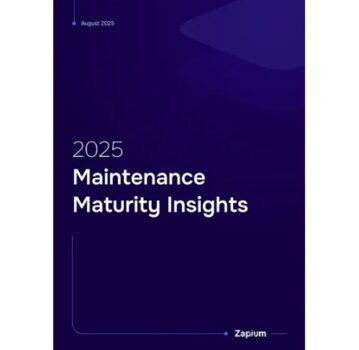
Zapium (Formerly FieldCircle), a leading provider of AI- and IoT-driven maintenance management software, released its 2025 Maintenance Maturity Insights Report, revealing a stark digital divide in how organizations manage maintenance operations. The comprehensive study surveyed more than 1,000 maintenance professionals across the manufacturing, facilities, and utilities sectors, revealing a continued reliance on manual processes despite widespread awareness of digital transformation.

Key Findings: A Sector at a Crossroads

The report reveals five critical gaps in maintenance management maturity:

Manual processes dominate maintenance operations: Over 45% of respondents reported that maintenance requests are still logged manually through verbal communication, WhatsApp, paper forms, or Excel spreadsheets. Only 37% use dedicated software systems to manage maintenance requests, highlighting significant operational inefficiency.

Preventive maintenance remains severely underdeveloped: Nearly 30% of organizations continue to rely solely on breakdown repairs, while another 28% use static Excel-based schedules. Just one in five organizations has implemented fully automated preventive maintenance driven by equipment usage or run-time data.

IoT adoption lags far behind industry potential: When asked about response times to equipment failures, 35% of respondents indicated they only act when someone manually notices and reports an issue. A mere 18% receive real-time IoT-based alerts, leaving the majority vulnerable to costly, unexpected downtime.

Data silos persist across critical functions: Only 25% of organizations operate with integrated systems connecting maintenance, inventory, and finance teams with real-time updates. The remaining 75% rely on fragmented communication channels, such as phone calls, emails, and weekly meetings, to coordinate operations.

Reactive decision-making prevails over data-driven strategy: Despite growing emphasis on analytics, 49% of organizations make maintenance decisions reactively or only during periodic audits. Just 26% leverage real-time dashboards for proactive strategy adjustment and continuous improvement.

Industry Implications

“These findings reflect a critical transition phase for the maintenance industry,” said Yogesh Choudhary, Co-founder and CEO of Zapium. “While awareness of digital transformation is rising, adoption remains uneven and inadequate. Many teams remain trapped in reactive workflows that fundamentally limit efficiency, productivity, and operational visibility. The organizations that will thrive in the coming years are those that successfully integrate AI and IoT into everyday maintenance decisions.”

The report underscores an urgent need for connected maintenance platforms that unify asset data, technician workflows, and vendor management into single, intelligent ecosystems – enabling organizations to evolve from reactive firefighting to predictive, proactive maintenance strategies.

About the Report

The 2025 Maintenance Maturity Insights Report was conducted by Zapium to assess the digital readiness of maintenance teams across industries. The survey analyzed responses from over 1,000 professionals spanning manufacturing, facilities management, utilities, and infrastructure sectors. The insights provide a data-backed perspective on how organizations are evolving – or struggling to evolve- in maintenance planning, execution, and analytics.

About Zapium

Zapium is an AI-powered, IoT-connected Computerized Maintenance Management System (CMMS) that empowers organizations to manage assets, automate maintenance workflows, and improve operational reliability. With intelligent scheduling, condition-based maintenance capabilities, and integrated reporting, Zapium enables facilities and maintenance leaders to optimize performance, reduce costly downtime, and maximize asset lifespan.

For media enquiries, please reach out to hello@zapium.com

Learn more at www.zapium.com

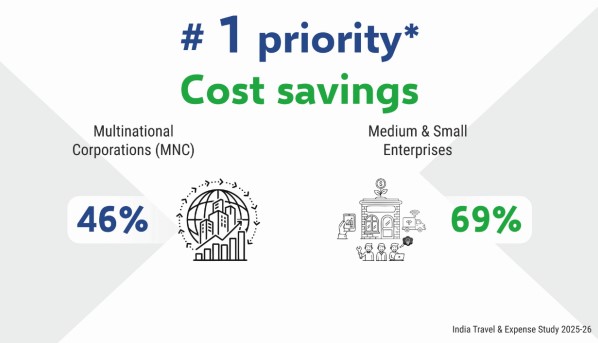
Travel & Entertainment (T&E) costs have emerged as the largest controllable expense within enterprise P&Ls in India, surpassing employee and administrative costs, according to the “India Travel & Expense Study 2025-26”, conducted by TravelSpends. The study uncovers significant contrasts in how multinational corporations (MNCs) and micro, small, and medium enterprises (MSMEs) manage travel, policy compliance, and digital adoption for fulfilment and expensing.

For large enterprises and MNCs, employee costs rank second and third after T&E, while for MSMEs, the order is reversed. With travel costs now the most significant controllable expense across business segments, enterprises are rethinking procurement and fulfilment strategies to enhance efficiency and cost control.

The study reveals that 63% of MNCs have adopted hybrid work models requiring employees to be in the office for at least 12 days monthly, whereas 67% of MSMEs maintain a full-time office presence. MSMEs also find travel approvals and compliance processes nearly twice as burdensome as larger organizations — 70% cite complex approvals and 60% highlight compliance challenges, compared to 40% and 30%, respectively, amongst MNCs.

A substantial digitization gap persists between segments. While 80% of MNCs use digital platforms for travel booking and expense management — over 70% leveraging online tools — 74% of MSMEs still rely on manual processes, with only 20% adopting digital booking solutions. For MSMEs, air travel represents the largest controllable expense (81%), followed by lodging (61%) and ground transportation (53%).

Enterprises are increasingly viewing payment providers as strategic partners rather than transactional vendors, as they navigate the complexities of global Travel & Entertainment (T&E) management, according to the study.

The study reveals that large enterprises and MNCs prioritize global scalability, regulatory compliance, and seamless integration of loyalty programs into unified expense workflows. In contrast, MSMEs seek simplicity, control, and affordability in payment solutions, often relying on personal cards or cash advances to manage cash flow.

With 75% of MSMEs expressing a preference for one-stop solutions, there is a clear demand for affordable, all-in-one payment tools. Among MNCs, 62% view payment providers as strategic advisors, prioritizing corporate cards for travel settlements. Global access (68%), advanced reporting (40%), and loyalty-driven rewards such as cashback and air miles are key satisfaction drivers.

The trend is even stronger among MSMEs, with 77% identifying payment providers as strategic allies and 75% favouring integrated platforms for their simplicity. Their top priorities include spending controls (68%), enhanced credit limits (61%), and ease of integration (71%).

Additional insights from the study reveal that 82% of enterprises are adopting a hybrid travel agency model, combining online and offline services for integrated travel fulfilment. Among MSMEs, 81% rely on historical spend data to drive negotiations and supplier benchmarks, while 75% favour current spend data for real-time optimization.

As enterprises adapt to evolving T&E landscapes, the study highlights a strong shift toward integrated travel and expense platforms. Technology adoption stands at 80% among large enterprises and MNCs, compared to just 26% among MSMEs, with 74% of MSMEs still relying on manual processes. Larger organizations have embraced digital tools to drive efficiency, compliance, and cost control.

The findings reinforce that organizations leveraging automation, real-time tracking, and unified payment solutions are achieving stronger cost control, compliance, and operational efficiency.

TravelSpends is a Travel Analytics, Consulting & Technology company that helps enterprises control Business Travel costs through precisely analyzed decisions. The company offers benchmarking & Intelligence, technology solutions, and consultancy services to optimize Business Travel expenses (https://travelspends.com)