


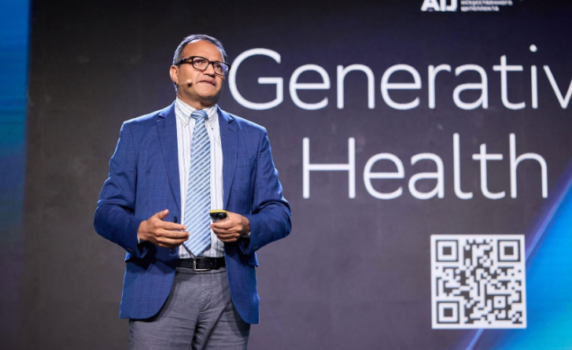
Chennai (Tamil Nadu) [India], December 15: Sai University proudly announces that its Vice Chancellor, Prof. Dr. Ajith Abraham, delivered a highly impactful Plenary Talk on Digital Healthcare Innovation at AI Journey 2025 — one of the world’s largest AI and machine learning conferences, held in Moscow, Russia, from November 19-21, 2025.

The global conference was inaugurated by President Vladimir Putin, followed by a high-profile panel discussion featuring global AI leaders, setting the stage for three days of intensive deliberations on the future of artificial intelligence.

A Vision for the Future of Digital Healthcare

As a plenary speaker, Prof. Abraham presented a compelling vision on how AI-driven digital healthcare can transform global health systems, especially in emerging economies. His talk highlighted the enormous potential of artificial intelligence to:

* Enhance early diagnostics and clinical decision support

* Expand telemedicine and remote patient monitoring

* Enable predictive analytics for disease surveillance

* Deliver personalized, data-driven medical care

* Improve healthcare accessibility for underserved populations

Ethics, Equity, and Human-Centric Innovation

Prof. Abraham emphasized that while AI is revolutionizing healthcare, the transformation must be guided by robust ethical frameworks, data governance, and patient-centered design. He called for stronger collaborations across academia, industry, and government to build responsible, secure, and scalable digital health ecosystems.

He also highlighted the urgent need for interdisciplinary training, where future professionals must bridge AI engineering, biomedical sciences, and public health–an area where Sai University is uniquely positioned to lead.

Strengthening India’s Voice on the Global AI Healthcare Stage

By presenting at AI Journey 2025–a platform hosting global scientists, health-tech innovators, policymakers, and industry visionaries–Prof. Abraham showcased India’s growing leadership in AI-based healthcare innovation.

“Digital healthcare is not just about technology–it is about ensuring dignity, accessibility, and human well-being across communities worldwide.”

— Prof. Dr. Ajith Abraham, Vice Chancellor, Sai University

Sai University’s participation in AI Journey 2025 reinforces the university’s commitment to advancing responsible AI, global research collaborations, and technology for societal benefit.

About Sai University

Sai University, established under Tamil Nadu Act No. 42 of 2018 and recognized under Section 2(f) of the UGC Act, is a forward-looking private university committed to interdisciplinary and multidisciplinary education. Founded by entrepreneur and philanthropist Shri K. V. Ramani, Sai University was envisioned as a global-standard institution that nurtures innovation, critical thinking, and societal impact.

The University offers interdisciplinary programs across eight schools–including Arts & Sciences, Law, Business, Computing & Data Science, Artificial Intelligence, Media Studies, Technology, and Allied Health Sciences.
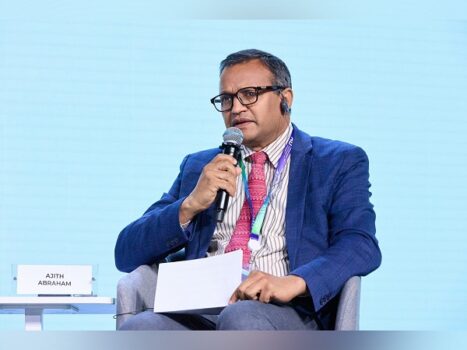

Chennai (Tamil Nadu) [India], December 11: Sai University is proud to announce that its Vice-Chancellor, Prof. Dr. Ajith Abraham, delivered a keynote address at the prominent BRICS Business Forum held on 20 November 2025 at Sberbank HQ, Moscow — as part of the global AI conference, AI Journey 2025.

The BRICS Business Forum gathered distinguished leaders from industry, academia, government, and civil society from across BRICS and partner nations. The session was chaired by Alexander Vedyakhin (First Deputy Chairman of the Executive Board, Sberbank), whose stewardship lent depth and strategic perspective to the discussion.

In his address, Prof. Abraham painted a compelling vision of artificial intelligence as a shared global ecosystem — not merely a technological tool, but a domain requiring coordinated scientific cooperation, ethical frameworks, and inclusive innovation. He argued that BRICS nations, which together represent a substantial segment of the global population and a growing share of worldwide R&D, are uniquely positioned to lead this cooperative effort.

Key themes of his address included:

* The strategic value of cross-national AI research hubs and shared laboratories, enabling scientists from São Paulo, Shanghai, Pretoria, Moscow, New Delhi, and beyond to collaborate on AI solutions.

* Talent mobility and unified research programmes — advocating for researcher exchanges, joint doctoral and postdoctoral initiatives, and continuous lifelong learning, ensuring that AI talent and knowledge flow across borders.

* Education reform and industry-academia integration — stressing the need for modern academic structures and micro-credentialing in specialised AI domains, so the next generation of professionals are ready for real-world challenges.

* Potential impact of collaborative AI on critical sectors: digital healthcare, agriculture automation, sustainable manufacturing, financial inclusion, regulatory compliance, and more — helping BRICS nations address socio-economic challenges while leapfrogging traditional development constraints.

Prof. Abraham concluded with a call for equitable, human-centered AI development: AI should serve as a force for global good — combining technological excellence with societal responsibility.

This important participation underscores Sai University’s commitment to shaping global AI discourse and fostering collaborative research and innovation across borders. It also strengthens the University’s position as a thought leader in AI, aligned with India’s vision of inclusive, sustainable, and globally competitive scientific development.

About Sai University

Sai University, established under Tamil Nadu Act No. 42 of 2018 and recognized under Section 2(f) of the UGC Act, offers interdisciplinary programs across eight schools–including Arts & Sciences, Law, Business, Computing & Data Science, Artificial Intelligence, Media Studies, Technology, and Allied Health Sciences.

A special mention to the School of AI, which blends world-class research with real-world application, preparing students to drive the next wave of intelligent innovation through its UG AI programs.