


Chennai (Tamil Nadu) [India], July 31: Most of Victoria Isaac’s violin is played in care homes, not concert halls. In June, the social impact of that work won her a Changemaker Award in Gurugram.

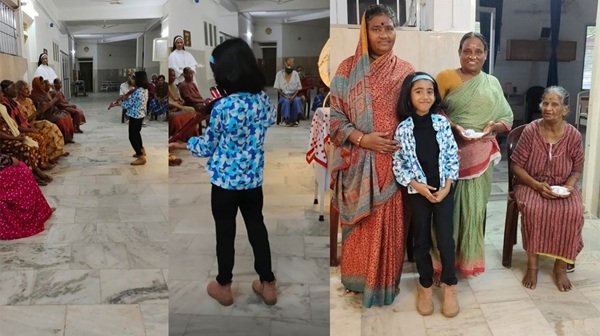
There is no stage. There are no lights, no backdrop, no LED wall. There is a corridor with a marble floor, plastic chairs set along one wall, and about twenty women in cotton saris sitting in them, some of them turned in their seats to see better. A sister from the home stands at the far end. In the middle of the floor, a nine-year-old in a blue-and-white jacket lifts a violin to her chin and begins to play.

This is where most of Victoria Isaac’s violin actually goes.

She is better known for the things that come with certificates. What she does on the average week does not come with any. She calls it Melodies of Memories, and it means going into senior care centres, palliative care centres and community halls and, when someone cannot get out of bed, into their room, and playing for them without charge.

The problem she picked

What Melodies of Memories is aimed at is not illness. It is the emptiness of the days.

Old age in a city like Chennai increasingly happens away from family. Residents in long-term care see the same few faces, eat at the same hours, and can go weeks with nothing much to mark one day off from the next. Music does not fix that. It does interrupt it, and it reaches people whose sight, memory or mobility have narrowed to the point where very little else does.

The catch is that somebody has to turn up. Care homes are not a booking anyone chases. There is no audience to win over, no photographer at the back, nothing waiting at the end of it. Victoria goes anyway, and has been going long enough that staff at some of the homes now know when to expect her.

When a resident cannot get out of bed, she plays in the room, for one person. It takes the longest, and her family says it is the part she will not have cut from a visit.

She wants it made into a foundation, under the name Music for Healing, and carried on until every senior care facility in the region has been covered. For now it runs on her own time and her parents’ time, and nothing else.

The other kind of room

Not all of it is old age. Part of the work is done in palliative care, among cancer patients, and those visits are a different proposition. Nobody there is short of company because their week is empty. Some of the people she plays for will not be there the next time she comes.

She goes anyway, into the ward or up to the bed, and plays the same way she plays anywhere else. Whether a nine-year-old belongs in rooms like that is a fair question, and her family has been asked it. Their answer has been that the patients are not frightening, only ill, and that a few minutes of live music costs the person in the bed nothing at all.

It is the least photogenic part of what she does, and the reason the initiative is named the way it is.

Recognition, two thousand kilometres away

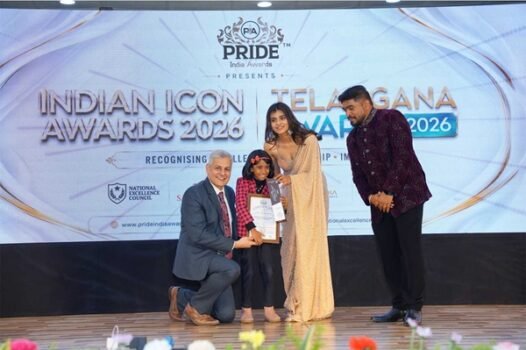
On 27 June 2026, in a ballroom at the DoubleTree by Hilton in Gurugram, Victoria was given a Changemaker Impact Award under the Heroes of Tomorrow Action Campaign, which is run in partnership with the United Nations and linked to the SDG Action Awards. The citation covers her social impact through music and names both Melodies of Memories and her civic work.

A ballroom in Haryana is a long way from a corridor in Chennai. The award is useful for a practical reason rather than a sentimental one, though. Music for Healing will need institutions to open doors, and a citation with the United Nations attached to it is the sort of thing that gets a letter answered.

Asking adults to vote

The second strand of her public work has nothing to do with care homes and everything to do with the same instinct.

In April 2026 the Chengalpattu District Collectorate ran a voter-awareness campaign under the banner VOTE 100% CHENGELPATTU, ahead of the state elections. Victoria worked with the Collectorate and with District Collector Mrs. Malathi Helen, IAS, performing the Collectorate’s anthem live and appearing as the central performer in the official anthem video. She was honoured on stage during the campaign.

Put plainly: a nine-year-old who cannot vote until 2035 was asked by a district administration to persuade adults who can. Turnout drives usually reach for a film star or an official. Chengalpattu reached for a child with a violin and built the film around her.

Why it works is not complicated. There is nothing in it to argue with. There is a child, an instrument and a request.

What the two things have in common

Put the two side by side and a fairly plain idea about music shows through.

One takes it to people who have dropped out of public life. The other uses it to pull people back in. Neither needs her to be extraordinary. Both need her to show up.

She is nine. The foundation does not exist yet, there is no staff and no funding, and the plan is still only a plan. But the method is already there, and it needs nobody’s permission: go to a room where music is not expected, and play.

Hyderabad (Telangana) [India], July 30: Pride India Awards honoured surgeons, founders and educators at the Indian Icon and Telangana Awards 2026 in Hyderabad. The youngest name on the list was nine years old.

Read the Indian Icon Awards 2026 citation list from top to bottom and it starts to sound like a directory of things you did not know were professions.

There is an award for robotic hernia surgery. One for canine training. One for marine algal biotechnology. Elevator systems. Hologram communication. A federation devoted to a chess variant played on an unusual board.

And then, without ceremony, a line that reads: Young Prodigy of the Year, Music and Creative Innovation. Victoria Isaac (Victoriastic).

The recipient had turned nine.

Pride India Awards stages the Indian Icon Awards and the Telangana Awards on the same night, and this year’s edition filled the Institution of Engineers auditorium in Hyderabad with several hundred people whose citations had taken most of a working life to earn. Vinaykumar Narayanaswamy, who founded the platform and runs it as managing director, has said the intention is to mark persistence rather than to distribute silverware. There was a film presence on the guest list as well: the actor Hebah Patel attended as celebrity guest, with Babu Rao of Cafe Niloufer and Elton Nathon also present.

None of which describes an easy audience for a primary-school-age soloist. Long ceremonies flatten a room. Three hours of applauding people you have never met and the phones start coming out.

She walked on to a wall of light, an LED screen carrying white line drawings of violins, each of them taller than she is, and began.

The phones went away.

Then the hall came up. Not the polite vertical shuffle that ends every awards ceremony, but an ovation given while she was still playing, by an audience that had arrived expecting to be the accomplished people in the building. The guests brought in to lend the evening its glamour stood along with everyone else. Film actors are used to being the reason a room turns around. That night they were part of the room.

She is a small performer and she uses the whole stage, moving as she plays rather than standing at a mark, which is unusual in a violinist of any age and disarming in one who has to reach up to a microphone. The surgeons and the engineers had spent the evening being told what each other had built. For four or five minutes they were simply an audience.

The second half of the citation

The interesting word in her award is not “prodigy”. Prodigies are common enough at prize-givings. The interesting word is “innovation”, and it is the reason her name belonged on a list otherwise dominated by surgeons and engineers.

Consider what she has actually made rather than what she has played.

She invented a performance discipline. After a skating competition in 2024 she began playing instruments live while moving on roller skates, a form she now calls Skate-Dance Music. The idea was hers; her parents let her test it with her skating coach watching. Seven minutes of Vivaldi’s The Four Seasons, delivered on wheels, is the version of it that best explains the citation, and no violinist younger has been recorded doing it.

She built a record rather than performed one. The Guinness World Records title she carries, Youngest Music Producer (Female), was not awarded for playing. It was awarded for construction: twelve tracks of Musically Fantastic, written, arranged, recorded and mixed by a child of eight years and 160 days with no studio team standing behind her. The certificate arrived in Chennai last October, and only after Guinness had turned earlier versions of the claim away more than once.

And she incorporated. Victoriastic Limited is a registered company with an independent music label underneath it, which makes her the youngest music entrepreneur recorded as having launched one.

Three inventions, in other words: a form, a body of work, and a business. That is a different kind of entry from a competition win, and it is what the phrase “creative innovation” was doing on a Hyderabad stage.

The rest of the file

The supporting record is substantial and mostly national. The India Book of Records lists her four separate times; the entries include nineteen instruments played inside seventeen minutes, a professional band’s stage shared before she turned nine, and a three-year tally of sixty-two solo performances at district, state and national level. She has skate-danced to gold at all three of those levels in two consecutive years.

Internationally, Classical Music Stars placed her first among violinists and the World’s Best Musicians Competition made her a laureate. Domestically, 2026 has brought her a Femina cover, a Rotary Club of Chennai Spotlight young achiever award, and, since Hyderabad, further honours in Chennai and Bengaluru.

Where the violin goes when nobody is filming

The part of her week that generates no certificates involves care homes and palliative wards.

She calls it Melodies of Memories: unpaid live violin for elderly residents and patients nearing the end of their lives, played in institutions and community halls across Chennai. She wants it constituted as a foundation. It is the work behind her Changemaker Impact Award, given under the Heroes of Tomorrow campaign conducted with the United Nations, and it predates most of the trophies.

Her music has also been put to civic use. The Chengalpattu district administration commissioned her to record the district anthem for its voter-awareness drive before the state elections, and Collector Malathi Helen’s office ran it in the campaign.

In Hyderabad, on a list of people recognised for making things that did not previously exist, none of that looked out of place. She simply happened to be the only one on it who still needed help reaching the microphone.

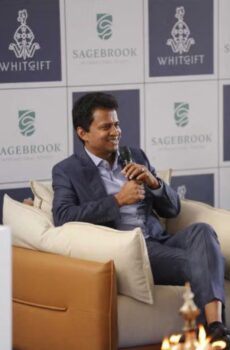
Hyderabad (Telangana) [India], July 1: Praveen Raju is opening Sagebrook International School in July 2026, his fourth and most ambitious school after nearly two decades of building some of India’s top-ranked academic institutions. The new IB PYP candidate school in Hyderabad’s Financial District, founded in partnership with Whitgift School in the United Kingdom, brings together everything he has learned across that journey.

Praveen’s path into education began in 2007 at Indus International School Hyderabad, where he served as Executive Director. He went on to become the Founding Chairman of Indus Early Years, the group’s early childhood arm. In 2011, he founded Suchitra Academy, the school that would put him on the national map. Today, all three institutions sit among India’s top ten in their respective categories.

“Every school I have built has started with the same question,” Praveen says. “What does this generation of Indian children actually need to thrive in the world they will inherit?”

At Suchitra Academy, the answer became one of India’s most distinctive school models. The K-12 institution serves over 2,200 students and has been ranked the number one multi-sport school in India by Education World. It is featured in Fortune Magazine’s Future 50 Schools, sits among Forbes’ Great Indian Schools and is certified as a Great Place to Work. Praveen also founded the Suchitra Badminton Academy in 2016, where he personally mentored Badminton World Champion PV Sindhu through her early competitive years and trained world-class athletes including Boxing World Champion Nikhat Zareen.

His contributions extend well beyond the schools he has built. The Economic Times honoured him as a Technology Trailblazer. Education World featured him among the 25 Leaders Reinventing K-12 Education. He served as Co-Chairman of FICCI ARISE through 2023 and is now President of ARISE, the country’s largest network of school leaders working to transform Indian school education. He was also a key contributor to India’s National Education Policy.

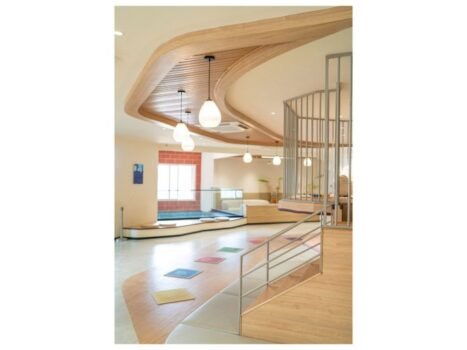
Sagebrook is the natural next chapter. The school brings together the IB Primary Years Programme framework, the academic legacy of Whitgift School in the United Kingdom and a research-led approach to early childhood development. Designed by internationally recognised school architect Prakash Nair, the campus is built around biophilic and neuro-inclusive principles. Praveen sees it as the most complete expression yet of his core conviction.

“Sagebrook is where knowledge meets kindness,” he says. “Where education becomes a lifelong journey of meaning.”

Sagebrook International School welcomes its first cohort from Beginnings through Grade 2 in July 2026. Admissions are open. Visit www.sagebrook.in.